 Back
Blood: Structure, Function, and Formation – Study Notes for ANP College Students
Study Guide - Smart Notes
 Tailored notes based on your materials, expanded with key definitions, examples, and context.
Blood: Structure, Function, and Formation
Introduction to Blood and the Cardiovascular System
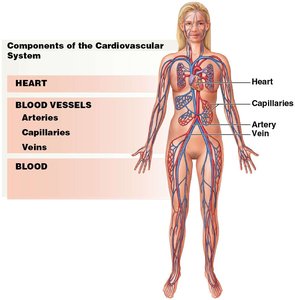
The cardiovascular system is essential for transporting substances throughout the body and maintaining homeostasis. Blood, a fluid connective tissue, is a critical component of this system, working alongside the heart and blood vessels.
Heart: Pumps blood and maintains blood pressure.
Blood Vessels: Arteries carry blood away from the heart, capillaries permit exchange with interstitial fluids, and veins return blood to the heart.
Blood: Transports materials and plays a role in defense and regulation.
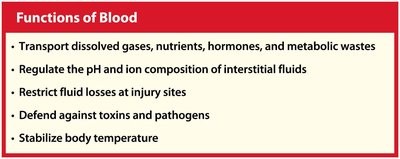
Functions of Blood
Blood performs several vital functions necessary for survival and homeostasis:
Transport: Moves dissolved gases (O2, CO2), nutrients, hormones, and metabolic wastes.
Regulation: Maintains pH and ion composition of interstitial fluids.
Restriction of Fluid Loss: Initiates clotting to prevent blood loss at injury sites.
Defense: Transports white blood cells and antibodies to fight infection.
Stabilization of Body Temperature: Distributes heat throughout the body.
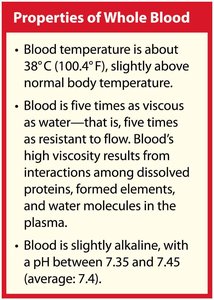
Properties and Composition of Whole Blood
Whole blood is a specialized connective tissue with unique physical and chemical properties:
Temperature: About 38°C (100.4°F), slightly above normal body temperature.
Viscosity: Five times more viscous than water due to dissolved proteins and formed elements.
pH: Slightly alkaline, between 7.35 and 7.45 (average: 7.4).
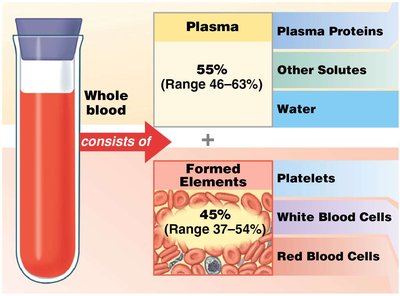
Major Components of Blood
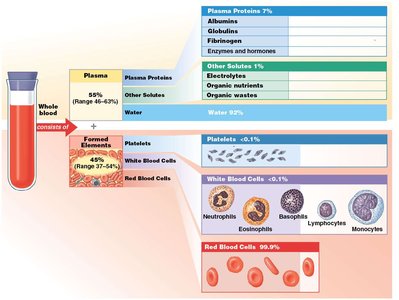
Blood consists of plasma (liquid matrix) and formed elements (cells and cell fragments):
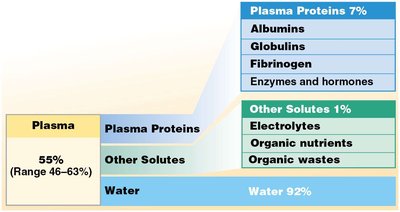
Plasma: 55% of blood volume; contains water, plasma proteins, and other solutes.
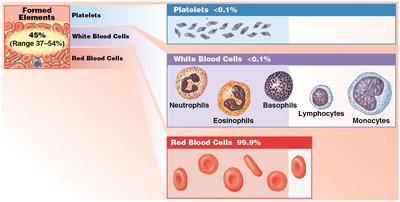
Formed Elements: 45% of blood volume; includes red blood cells (RBCs), white blood cells (WBCs), and platelets.
Plasma Composition
Plasma is primarily water (92%) and contains proteins and solutes:
Plasma Proteins (7%): Albumins (osmotic pressure), globulins (antibodies, transport), fibrinogen (clotting), enzymes, and hormones.
Other Solutes (1%): Electrolytes (Na+, K+, Ca2+, etc.), organic nutrients, and organic wastes (urea, uric acid, etc.).
Formed Elements
The formed elements of blood include:
Red Blood Cells (Erythrocytes): 99.9% of formed elements; transport oxygen and carbon dioxide.
White Blood Cells (Leukocytes): <0.1%; body defense; five types (neutrophils, eosinophils, basophils, lymphocytes, monocytes).
Platelets: <0.1%; cell fragments involved in clotting.
Hematopoiesis: Formation of Blood Cells
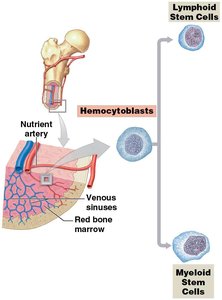
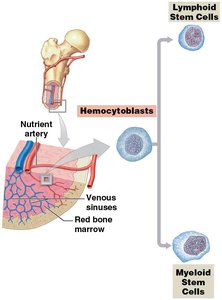
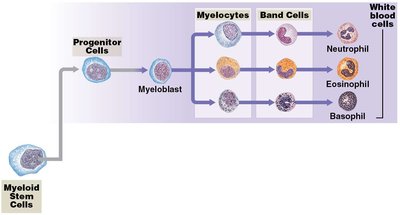
Blood cells are produced in red bone marrow through a process called hematopoiesis. Hematopoietic stem cells (hemocytoblasts) give rise to all formed elements:
Lymphoid Stem Cells: Produce lymphocytes (immune response).
Myeloid Stem Cells: Produce RBCs, platelets, and other WBCs.
Lymphoid Lineage
Lymphoid stem cells differentiate into lymphoblasts, then prolymphocytes, and finally lymphocytes.
Myeloid Lineage
Myeloid stem cells differentiate into several cell types:
Monoblasts: Develop into monocytes.
Myeloblasts: Develop into neutrophils, eosinophils, and basophils.
Megakaryocytes: Fragment to form platelets.
Proerythroblasts: Develop into erythrocytes (RBCs).

Summary Table: Structure and Function of Platelets
Appearance in a Stained Blood Smear | Abundance (Average Number per μL) | Function | Remarks |
|---|---|---|---|
Flattened discs, spindle-shaped in section | 350,000 (range: 150,000–500,000) | Clump together, stick to damaged vessels, release clotting chemicals | Continuously replaced; circulate for 9–12 days |
Complete Blood Count (CBC)
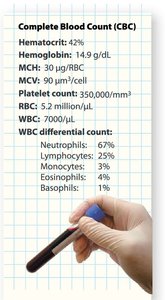
A CBC is a common laboratory test that provides important information about blood health:
Hematocrit: Percentage of blood volume from formed elements.
Hemoglobin: Oxygen-carrying protein in RBCs.
RBC, WBC, and Platelet Counts: Quantify the main formed elements.
WBC Differential: Percentage of each type of WBC.
Key Terms and Definitions
Hematocrit: The percentage of whole blood volume occupied by formed elements (mainly RBCs).
Hemopoiesis (Hematopoiesis): The process of blood cell formation in red bone marrow.
Hemocytoblast: A multipotent stem cell in bone marrow that gives rise to all blood cells.
Plasma: The liquid matrix of blood, containing water, proteins, and solutes.
Formed Elements: The cellular components of blood: RBCs, WBCs, and platelets.
Summary Table: Composition of Whole Blood
Component | Percentage of Whole Blood | Main Constituents |
|---|---|---|
Plasma | 55% (Range 46–63%) | Water (92%), Plasma Proteins (7%), Other Solutes (1%) |
Formed Elements | 45% (Range 37–54%) | Red Blood Cells (99.9%), White Blood Cells & Platelets (<0.1% each) |
Additional info: These notes cover the structure, function, and formation of blood, as well as its major components and laboratory assessment. This content is directly relevant to Chapter 17: Blood, in an Anatomy & Physiology course.
