 Back
BackBlood Vessel Structure: Layers and Functions
Study Guide - Smart Notes
 Tailored notes based on your materials, expanded with key definitions, examples, and context.
Q1. Name and describe the three layers that form the wall of blood vessels (arteries, capillaries, and veins), state the function of each, and define endothelium and vasa vasorum.
Background
Topic: Structure of Blood Vessels
This question tests your understanding of the anatomy of blood vessels, including the different layers that make up their walls, and the specialized structures within them. This is foundational for understanding how blood vessels function in the cardiovascular system.
Key Terms and Concepts:
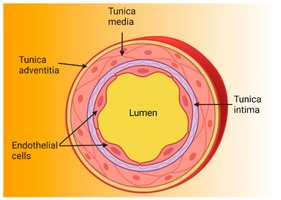
Tunica intima: The innermost layer, composed of endothelium (simple squamous epithelium) that lines the lumen of all vessels.
Tunica media: The middle layer, primarily made of smooth muscle and elastic fibers; responsible for vasoconstriction and vasodilation.
Tunica adventitia (externa): The outermost layer, made of connective tissue that protects and anchors the vessel.
Endothelium: The thin layer of cells lining the interior surface of blood vessels, minimizing friction as blood flows.
Vasa vasorum: Small blood vessels that supply the walls of larger blood vessels.
Step-by-Step Guidance
Identify the three main layers of a typical blood vessel wall: tunica intima, tunica media, and tunica adventitia (externa).
Describe the composition and function of each layer: - Tunica intima: Contains the endothelium; provides a smooth surface for blood flow. - Tunica media: Contains smooth muscle and elastic fibers; controls vessel diameter. - Tunica adventitia: Composed of connective tissue; provides structural support and protection.
Explain the role of the endothelium within the tunica intima, focusing on its function in reducing friction and maintaining vessel health.
Define the vasa vasorum and describe its importance in nourishing the outer layers of large blood vessels.
Try solving on your own before revealing the answer!
Final Answer:
The three layers of blood vessel walls are: 1. Tunica intima: Innermost layer, contains endothelium, minimizes friction. 2. Tunica media: Middle layer, smooth muscle and elastic fibers, controls vessel diameter. 3. Tunica adventitia (externa): Outermost layer, connective tissue, protects and anchors vessel. Endothelium: Thin layer of cells lining the lumen, found in the tunica intima. Vasa vasorum: Small vessels that supply blood to the walls of large vessels.
Each layer has a specific structure and function that supports the overall role of blood vessels in circulation.
