 Back
BackBlood Vessels and Cardiovascular Dynamics: ANP Study Guide
Study Guide - Smart Notes
 Tailored notes based on your materials, expanded with key definitions, examples, and context.
Blood Vessels: Structure and Function
Overview of the Closed Transport System
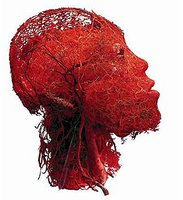
The cardiovascular system is a closed transport network composed of arteries, arterioles, capillaries, venules, and veins. These vessels facilitate the movement of blood throughout the body, ensuring the delivery of oxygen and nutrients and the removal of waste products.
Associated Great Vessels: Arteries and Veins
The great vessels are major arteries and veins directly connected to the heart, including the aorta, pulmonary arteries, pulmonary veins, and vena cava. Arteries carry blood away from the heart, while veins return blood to the heart.
Comparison of Arteries, Veins, and Capillaries
Functional Classification
Blood vessels are classified based on their function:
Efferent vessels: Arteries, which carry blood away from the heart.
Afferent vessels: Veins, which carry blood toward the heart.
Exchange vessels: Capillaries, which facilitate the exchange of gases, nutrients, and waste.
Structural Differences
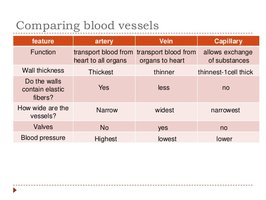
Arteries, veins, and capillaries differ in wall thickness, presence of elastic fibers, vessel width, valves, and blood pressure.
Feature | Artery | Vein | Capillary |
|---|---|---|---|
Function | Transport blood from heart to all organs | Transport blood from organs to heart | Allows exchange of substances |
Wall thickness | Thickest | Thinner | Thinnest (1-cell thick) |
Elastic fibers | Yes | Less | No |
Vessel width | Narrow | Widest | Narrowest |
Valves | No | Yes | No |
Blood pressure | Highest | Lowest | Lower |
Microscopic Anatomy of Arteries and Veins
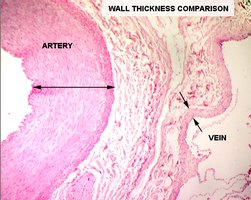
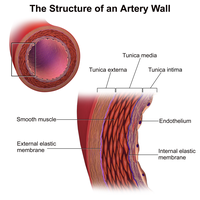
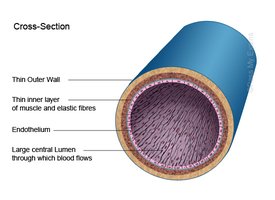
Both arteries and veins have three layers: tunica intima, tunica media, and tunica externa. Arteries have thicker walls, especially the tunica media, due to higher blood pressure.
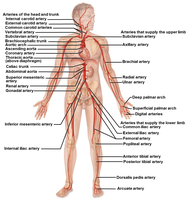
Major Arteries and Veins of Systemic Circulation
Major Arteries
Systemic arteries distribute oxygenated blood from the heart to the body. Key arteries include the aorta, carotid, subclavian, femoral, and others.
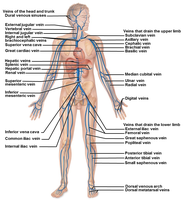
Major Veins
Systemic veins return deoxygenated blood to the heart. Important veins include the superior and inferior vena cava, jugular, subclavian, femoral, and others.
Hepatic Portal System
Function and Components
The hepatic portal system drains blood from the digestive organs, spleen, and pancreas, delivering it to the liver for processing. The liver regulates nutrients, detoxifies substances, and removes bacteria and debris.
Hepatic portal vein: Brings blood to the liver
Gastric vein: Drains the stomach
Splenic vein: Drains spleen, pancreas, and part of the stomach
Inferior mesenteric vein: Drains large intestine
Superior mesenteric vein: Drains small intestine and colon
Hepatic vein: Returns blood from liver to circulation via inferior vena cava
Pulse and Blood Pressure
Pulse
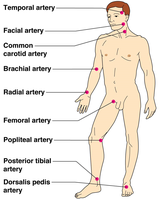
The pulse is the pressure wave of blood felt at certain points in arteries, known as pressure points. The average resting pulse is 70–76 beats per minute.
Blood Pressure
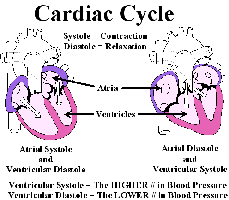
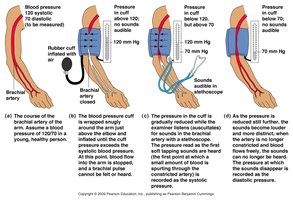
Blood pressure is the force exerted by blood on vessel walls, measured in arteries. It is recorded as systolic (peak contraction) over diastolic (relaxation) pressure, e.g., 120/80 mm Hg. Blood pressure decreases with distance from the heart.
Systolic pressure: Pressure during ventricular contraction
Diastolic pressure: Pressure during ventricular relaxation
Measuring Arterial Blood Pressure
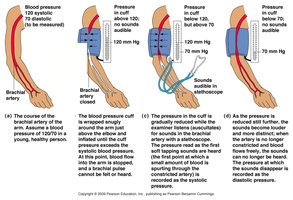
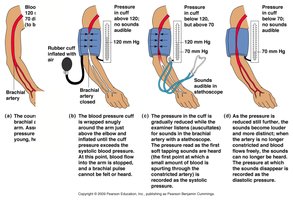
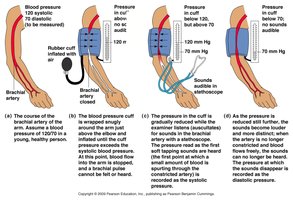
Blood pressure is measured using a sphygmomanometer and auscultation of the sounds of Korotkoff over the brachial artery. The process involves inflating a cuff and listening for sounds as pressure is released.
Variations in Blood Pressure
Blood pressure varies among individuals and can be classified as:
Normal: 140–110 mm Hg systolic, 80–75 mm Hg diastolic
Hypotension: Low systolic (below 110 mm Hg), often associated with illness
Hypertension: High systolic (above 140 mm Hg), can be dangerous if chronic
Cardiovascular Dynamics
Blood Flow and Peripheral Resistance
Cardiovascular dynamics involve the physiology of blood circulation. Key terms include:
Blood flow: Amount of blood moving through a body area per unit time
Peripheral resistance: Opposition to blood flow due to friction in vessels
Blood viscosity: Thickness of blood, influenced by proteins and formed elements
Factors Influencing Blood Flow
Blood flow is affected by vessel radius/diameter, blood viscosity, and vessel length. The most significant factor is vessel diameter, as small changes greatly impact resistance and flow.
The relationship between blood flow, pressure, and resistance is described by:
Changes in one part of the cardiovascular system affect the entire circuit due to its series arrangement.
Example: Narrowing of an artery increases resistance and decreases blood flow to downstream tissues.
Additional info: The notes have been expanded to include definitions, examples, and equations for clarity and completeness.
