 Back
BackBlood Vessels and Circulation: Structure, Function, and Major Pathways
Study Guide - Smart Notes
 Tailored notes based on your materials, expanded with key definitions, examples, and context.
Blood Vessels and Circulation
Overview of Blood Vessels
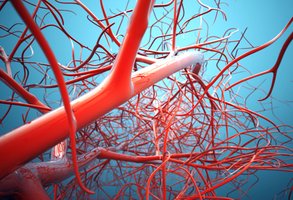
The circulatory system is composed of a network of blood vessels that transport blood throughout the body. These vessels include arteries, arterioles, capillaries, venules, and veins, each with distinct structures and functions.
Arteries: Carry blood away from the heart under high pressure.
Arterioles: Smaller branches of arteries that regulate blood flow into capillaries.
Capillaries: Microscopic vessels where exchange of substances occurs between blood and tissues.
Venules: Collect blood from capillaries and transport it to veins.
Veins: Return blood to the heart under lower pressure, often equipped with valves to prevent backflow.
Pathways of Circulation
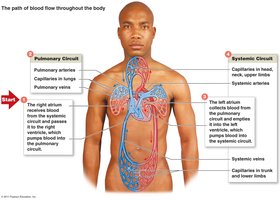
Blood circulates through two main circuits: the pulmonary circuit and the systemic circuit. The pulmonary circuit carries blood between the heart and lungs, while the systemic circuit delivers blood to the rest of the body.
Pulmonary Circuit: Right ventricle → pulmonary arteries → lungs → pulmonary veins → left atrium.
Systemic Circuit: Left ventricle → systemic arteries → body tissues → systemic veins → right atrium.
Structure of Blood Vessel Walls
Comparing Arteries and Veins
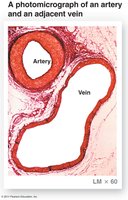
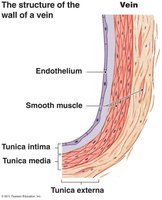
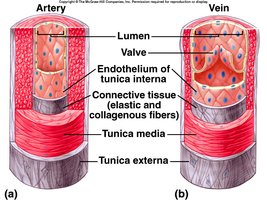
Arteries and veins have similar basic structures but differ in wall thickness, elasticity, and the presence of valves. These differences reflect their functions in the circulatory system.
Arteries: Thick, muscular, and elastic walls to withstand high pressure.
Veins: Thinner walls, larger lumens, and valves to prevent backflow.
Layers of Vessel Walls
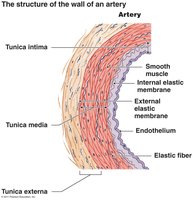
Both arteries and veins have three main layers:
Tunica intima: Innermost layer, composed of endothelium.
Tunica media: Middle layer, primarily smooth muscle and elastic fibers.
Tunica externa (adventitia): Outermost layer, connective tissue for support and protection.
Arterioles and Capillaries
Arterioles
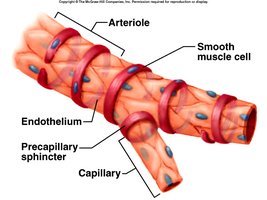
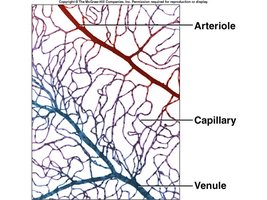
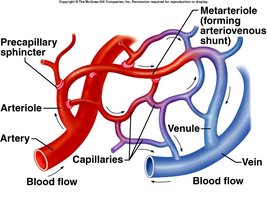
Arterioles are small branches of arteries that regulate blood flow into capillaries by constricting or dilating their smooth muscle layer.
Control blood pressure and distribution of blood to tissues.
Respond to signals such as oxygen demand and hormonal influences.
Capillaries and Capillary Networks
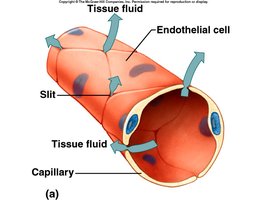
Capillaries are the smallest blood vessels, consisting of a single layer of endothelial cells. They form extensive networks to maximize exchange between blood and tissues.
Allow exchange of gases, nutrients, and waste products by diffusion and filtration.
Precapillary sphincters regulate blood flow into capillary beds based on tissue needs.
Exchange Across Capillary Walls
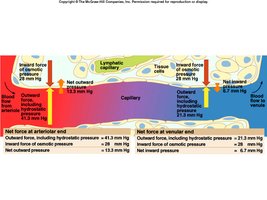
Substances move in and out of capillaries according to their concentration gradients. This exchange is essential for tissue health and homeostasis.
Oxygen and nutrients diffuse from blood to tissues.
Carbon dioxide and metabolic wastes move from tissues to blood.
Veins and Venules
Structure and Function
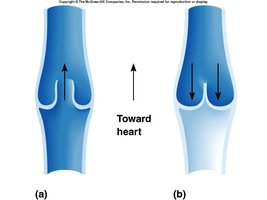
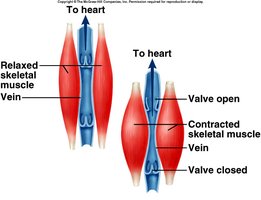
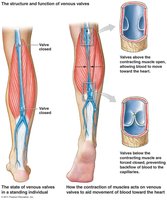
Veins and venules return blood to the heart. Veins have thinner walls and larger lumens than arteries, and contain valves to prevent backflow, especially in the limbs.
Venules: Collect blood from capillaries and merge to form veins.
Veins: Rely on skeletal muscle contraction and valves to move blood toward the heart.
Major Blood Vessels of the Body
Major Arteries
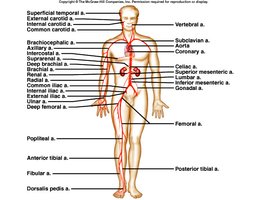
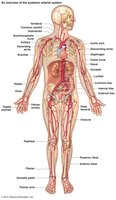
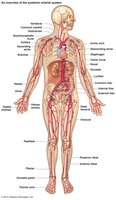
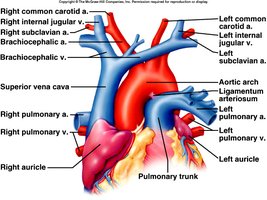
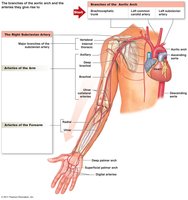
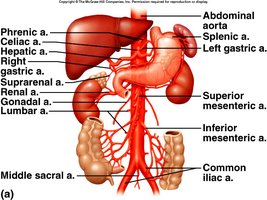
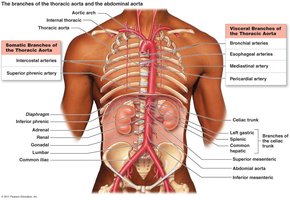
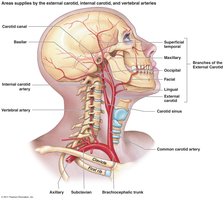
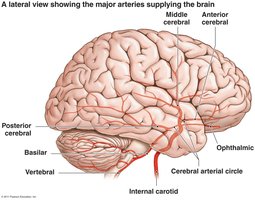
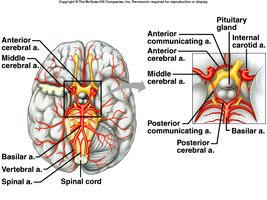
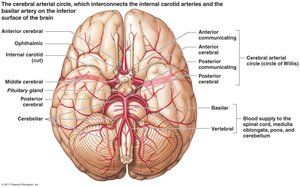
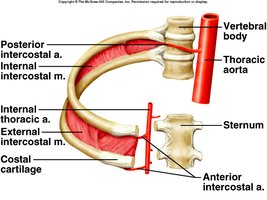
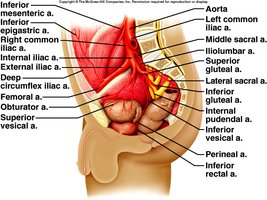
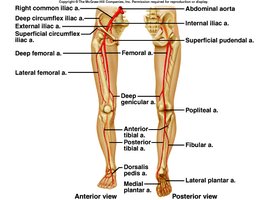
The arterial system branches extensively to supply all regions of the body. Major arteries include the aorta and its branches, which deliver oxygenated blood to the head, neck, upper limbs, thorax, abdomen, pelvis, and lower limbs.
Aorta: Main artery leaving the heart, with ascending, arch, thoracic, and abdominal portions.
Major branches: Brachiocephalic, carotid, subclavian, renal, mesenteric, iliac, femoral, and others.
Major Veins
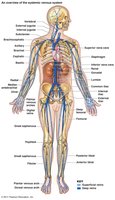
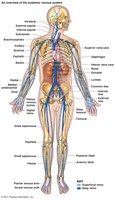
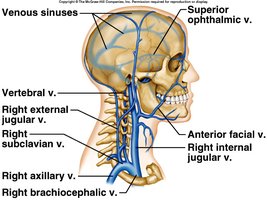
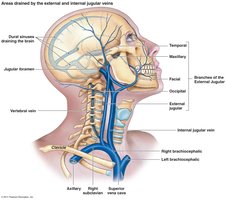
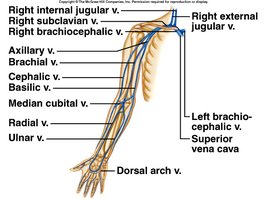
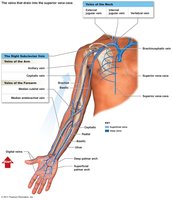
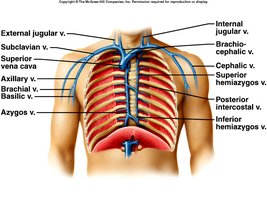
The venous system returns deoxygenated blood to the heart. Major veins include the superior and inferior vena cava, jugular, subclavian, brachiocephalic, and iliac veins, among others.
Superficial and deep veins drain blood from all body regions.
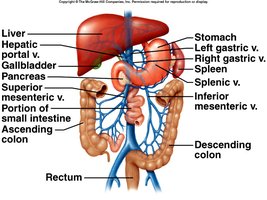
Venous sinuses in the brain and hepatic portal system in the abdomen are specialized venous structures.
Cardiovascular Physiology
Arterial Blood Pressure
Blood pressure is the force exerted by circulating blood on the walls of blood vessels. It is highest in the arteries and is a key indicator of cardiovascular health.
Systolic pressure: Maximum pressure during ventricular contraction.
Diastolic pressure: Minimum pressure during ventricular relaxation.
Equation:
Pulse
The pulse is the rhythmic expansion and recoil of an artery as blood is forced through it by the heart's contractions. It can be felt at various points on the body, such as the wrist and neck.
Factors Affecting Blood Pressure
Several factors influence blood pressure, including cardiac output, blood volume, resistance of blood vessels, and elasticity of arterial walls.
Cardiac output: Volume of blood pumped by the heart per minute.
Peripheral resistance: Resistance to blood flow in the vessels, mainly due to vessel diameter.
Blood volume: Total amount of blood in the circulatory system.
Elasticity of arteries: Ability of arteries to expand and contract with pressure changes.
Regulation of Blood Pressure
Blood pressure is regulated by neural, hormonal, and local mechanisms. The autonomic nervous system, kidneys, and various hormones (e.g., adrenaline, angiotensin II) play key roles in maintaining homeostasis.
Vasodilation: Widening of blood vessels decreases resistance and lowers blood pressure.
Vasoconstriction: Narrowing of blood vessels increases resistance and raises blood pressure.
Example: During exercise, vasodilation in skeletal muscles increases blood flow to meet metabolic demands.
