 Back
Bone Composition and the Skeletal System: Structure, Function, and Regulation
Study Guide - Smart Notes
 Tailored notes based on your materials, expanded with key definitions, examples, and context.
Bone Composition and Skeletal System
Overview of Bone Function
The human skeletal system is essential for providing structure, protection, and movement, as well as serving as a reservoir for minerals and a site for blood cell formation. Bones contribute to body shape and form, and their functions are diverse and vital for overall physiology.
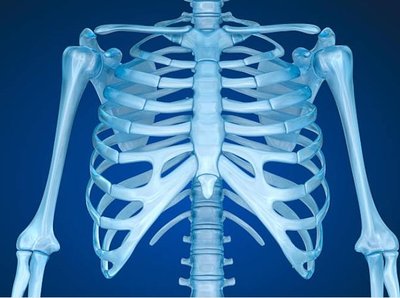
Support: Bones form a hard framework that supports and cradles soft organs.
Protection: The skeleton provides protective casing for soft organs against external forces.
Movement: Muscles use bones as anchors and levers for movement.
Mineral Storage: Bones act as a mineral reservoir, especially for calcium (Ca2+) and potassium (K+).
Blood Cell Formation: Blood cell formation occurs within marrow cavities.
Classification of Bones and the Skeleton
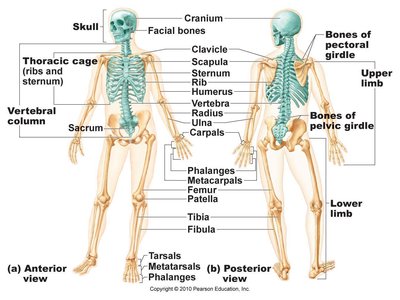
The human skeleton consists of 206 bones, grouped into two main divisions: the axial and appendicular skeleton. Bones are also classified by their shape and size.
Axial Skeleton (80 bones): Forms the long axis (trunk) of the body; includes the skull, vertebral column, and rib cage. Functions in protection, support, and carrying body parts.
Appendicular Skeleton (126 bones): Forms the appendages; includes upper and lower limbs, shoulders, and hips. Functions in locomotion and environmental manipulation.
Bone Classification by Shape
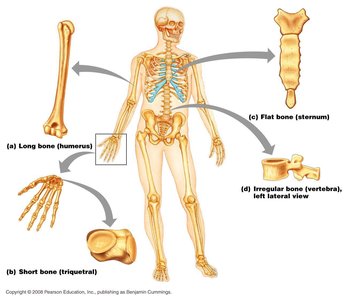
Long Bones: Elongated shaft and two ends (e.g., femur, finger bones).
Short Bones: Cube-shaped and stubby (e.g., wrist, ankle, patella).
Flat Bones: Thin, flattened, and slightly curved (e.g., skull, ribs, sternum, shoulder blades).
Irregular Bones: Complicated shapes not fitting other classes (e.g., vertebrae, pelvis).
Skeletal Cartilage
Types and Functions of Cartilage
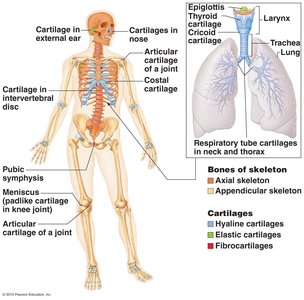
Cartilage is a resilient tissue that resists outward expansion and provides support, flexibility, and strength at various locations in the skeleton.
Hyaline Cartilage: Contains collagen; provides support, flexibility, and resilience. Found in ribs and joint surfaces.
Elastic Cartilage: Contains elastin; provides flexibility. Found in the external ear and epiglottis.
Fibrocartilage: Contains thick collagen; provides great tensile strength. Found in menisci of the knee and vertebral discs.
Bone Structure
Macrostructure of Long Bones
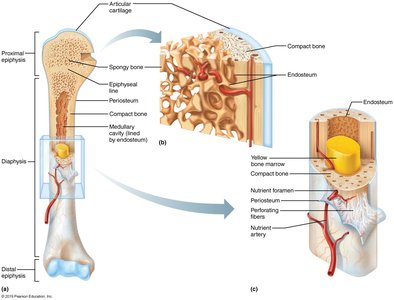
Long bones have a distinct structure, consisting of a shaft (diaphysis), ends (epiphyses), and membranes (periosteum).
Diaphysis: The shaft or long axis, with a thick external collar of compact bone and a central medullary cavity containing bone marrow.
Epiphyses: Expanded ends of the shaft, mainly composed of spongy bone.
Periosteum: Dual-layer membrane covering the external bone surface, supplied with nerves, lymphatic, and blood vessels.
Microstructure of Bone
Bones consist of two main layers: compact bone and spongy bone, each with specialized structures and functions.
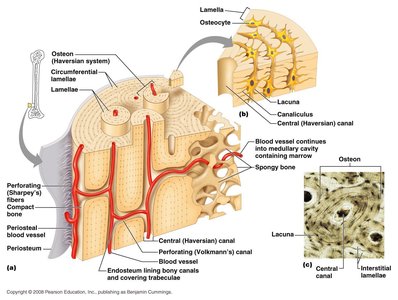
Compact Bone: Hard, dense layer containing osteons (Haversian systems), Haversian canals (capillary and nerve supply), and Volkmann’s canals (link blood and nerves to periosteum).
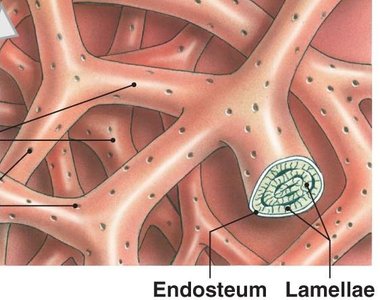
Spongy Bone (Cancellous): Contains trabeculae aligned along stress lines, lamellae deposited by osteocytes, canaliculi joining lamellae and osteocytes, and endosteum surrounding trabeculae for nutrition.
Bone Composition
Matrix and Cellular Components
The bone matrix is composed of organic and inorganic components, maintained by specialized cells and regulated by hormones.
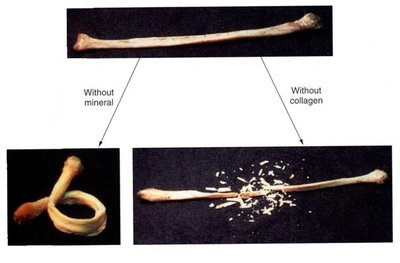
Osteoid: Organic component (mainly collagen) providing flexibility.
Mineral Salts: Inorganic component (mainly Ca3(PO4)2) providing durability.
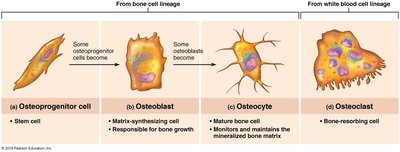
Osteocytes: Mature bone cells, former osteoblasts, maintain bone matrix.
Osteoblasts: Bone-forming cells, synthesize matrix.
Osteoclasts: Bone-degrading cells, remove matrix.
Hormonal Regulation of Bone
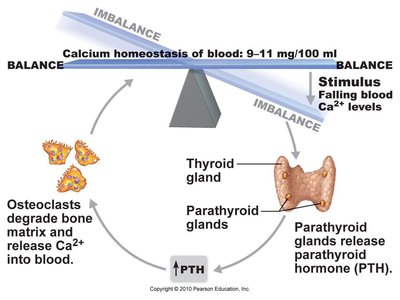
Bone remodeling and calcium homeostasis are regulated by hormones, primarily parathyroid hormone (PTH) and calcitonin.
Parathyroid Hormone (PTH): Released when blood Ca2+ levels decrease; stimulates osteoclasts to degrade bone matrix and release Ca2+ into blood.
Calcitonin: Released when blood Ca2+ levels increase; stimulates Ca2+ deposition in bones and absorption.
Calcium Homeostasis Equation:
Summary Table: Bone Types and Functions
Bone Type | Shape | Example | Function |
|---|---|---|---|
Long Bone | Elongated shaft, two ends | Femur, finger bones | Movement, support |
Short Bone | Cube-shaped, stubby | Wrist, ankle, patella | Stability, support |
Flat Bone | Thin, flattened, curved | Skull, ribs, sternum | Protection, muscle attachment |
Irregular Bone | Complex shapes | Vertebrae, pelvis | Protection, support |
Conclusion
The skeletal system is a complex structure composed of various bone types, cartilage, and specialized cells. Its functions are integral to support, protection, movement, mineral storage, and blood cell formation. Understanding bone composition, structure, and regulation is essential for comprehending human anatomy and physiology.
