 Back
Bone Remodeling and Repair: Structure, Regulation, and Fracture Healing
Study Guide - Smart Notes
 Tailored notes based on your materials, expanded with key definitions, examples, and context.
Chap 6 - part 4 - Bone Remodeling
Overview of Bone Remodeling
Bone remodeling is a continuous process in which mature bone tissue is removed from the skeleton (a process called bone resorption) and new bone tissue is formed (bone deposition). This process is essential for the maintenance of bone strength and mineral homeostasis.
Osteoblasts are cells responsible for bone formation (deposition).
Osteoclasts are cells responsible for bone resorption (breakdown).
In healthy adults, bone formation and bone loss occur simultaneously, maintaining bone mass.
In children, bone formation exceeds bone resorption, allowing for growth.
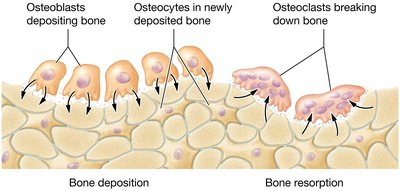
Bone Deposition
Bone deposition is the process by which osteoblasts build new bone matrix. This occurs primarily in the periosteum and endosteum.
Osteoblasts secrete proteoglycans and glycoproteins that bind calcium ions.
They release vesicles containing calcium ions, ATP, and enzymes, which bind to collagen fibers.
Calcium ions crystallize, causing vesicle rupture and initiating calcification of the bone matrix.
Bone Resorption
Bone resorption is the process by which osteoclasts break down bone tissue, releasing minerals into the blood.
Osteoclasts secrete hydrogen ions (H+) and enzymes onto the bone extracellular matrix (ECM).
Hydrogen ions lower the pH, dissolving hydroxyapatite crystals in the inorganic matrix.
Enzymes break down organic components (proteoglycans, glycosaminoglycans, glycoproteins), which are then taken up by osteoclasts for reuse.
Bone Remodeling in Response to Mechanical Stress
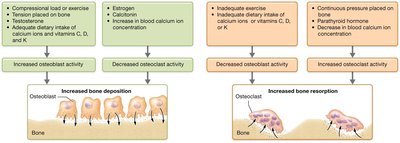
Bones adapt to the loads placed upon them through remodeling. The type and amount of mechanical stress influence whether bone is deposited or resorbed.
Compression (pressing together): Stimulates bone deposition.
Tension (stretching force): Also stimulates bone deposition.
Pressure (continuous downward force): Stimulates bone resorption.
Other Factors Influencing Bone Remodeling
Bone remodeling is regulated by a variety of factors, including hormones, age, and nutrient intake.
Hormones: Testosterone promotes bone deposition; estrogen inhibits osteoclast activity.
Age: Declining hormone levels (e.g., growth hormone, estrogen) with age reduce bone formation and increase risk of bone loss.
Nutrient Intake:
Calcium: Essential for bone deposition.
Vitamin D: Promotes calcium absorption and retention; deficiency leads to rickets in children.
Vitamin K: Required for osteocalcin function and osteoblast activity; inhibits osteoclasts.
Vitamin C: Needed for collagen synthesis.
Protein: Necessary for collagen production, but excessive intake may increase bone resorption due to acid load.
Calcium Ion Intake and Fracture Risk
Calcium intake recommendations vary, but studies suggest that extremely high calcium intake does not necessarily reduce fracture risk and may be associated with other health risks. Adequate vitamin D and K are also important for bone health.
Recommended intake: 700–1,200 mg/day depending on age and individual needs.
High calcium intake has not been conclusively linked to lower fracture rates and may increase prostate cancer risk in men.
Bone Remodeling and Calcium Ion Homeostasis
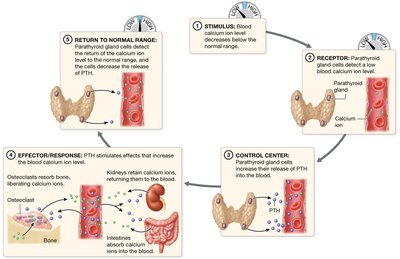
Calcium ions are vital for muscle contraction, nerve transmission, and blood clotting. Blood calcium levels are tightly regulated by hormones through negative feedback mechanisms.
Parathyroid Hormone (PTH): Increases blood calcium by stimulating bone resorption, increasing calcium reabsorption in kidneys, and enhancing intestinal absorption.
Calcitonin: Decreases blood calcium by inhibiting osteoclast activity; less significant in adults.
Negative Feedback Loop for Blood Calcium Regulation
The regulation of blood calcium involves a classic negative feedback loop:
Stimulus: Blood calcium drops below normal.
Receptor: Parathyroid gland cells detect low calcium.
Control Center: Parathyroid gland releases more PTH.
Effector/Response: PTH increases blood calcium by acting on bone, kidneys, and intestines.
Return to Normal: Parathyroid gland reduces PTH secretion as calcium normalizes.
Bone Repair
Steps of Fracture Healing
Bone repair after a fracture is a multi-step process that restores bone integrity and function.
Hematoma Formation: Blood vessels rupture, forming a hematoma that fills the gap between bone fragments. Bone cells in the area die due to loss of blood supply.
Soft Callus Formation: Fibroblasts produce dense irregular connective tissue, and chondroblasts secrete hyaline cartilage, forming a soft callus that bridges the fracture.
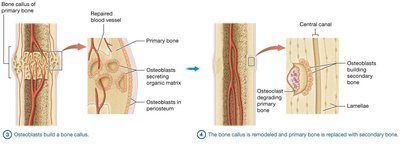
Bone Callus Formation: Osteoblasts from the periosteum lay down a collar of primary bone, forming a hard (bony) callus.
Bone Remodeling: The bone callus is remodeled over months, with primary bone replaced by secondary bone. The callus may remain visible after healing.
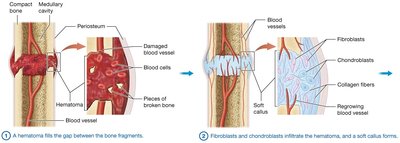
Classes of Fractures
Fractures are classified based on the nature of the break and the involvement of surrounding tissues.
Simple (Closed) Fracture: Bone breaks but skin remains intact.
Compound (Open) Fracture: Bone breaks through the skin, increasing risk of infection.
Treatment: Involves stabilization and immobilization. Closed reduction aligns bone ends without surgery; open reduction uses surgical fixation.
Types of Fractures
Fracture Type | Description |
|---|---|
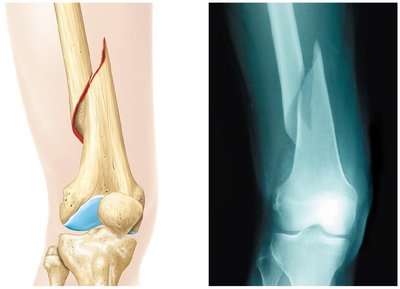
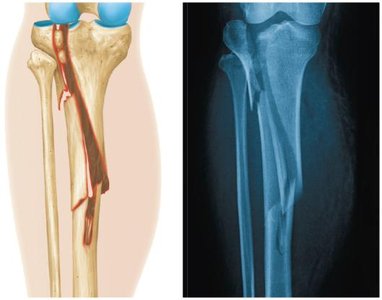
Spiral | Resulting from twisting forces; bone is twisted apart. |
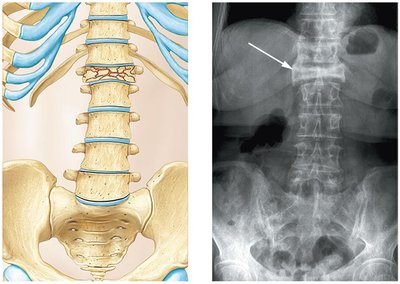
Compression | Bone is crushed under weight; common in vertebrae of elderly or those with low bone mass. |
Comminuted | Bone is shattered into multiple fragments; difficult to repair. |
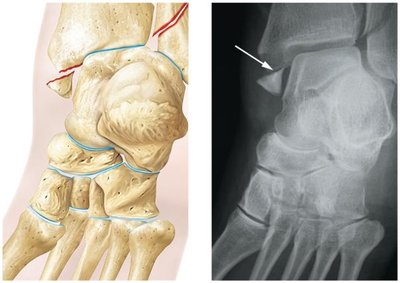
Avulsion | Tendon or ligament pulls off a fragment of bone; often seen in ankle injuries. |
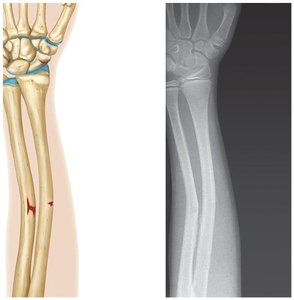
Greenstick | Bone breaks on one side and bends on the other; common in children. |
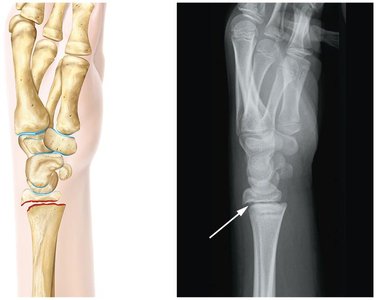
Epiphyseal Plate | Fracture involves the growth plate; occurs in children and young adults, may affect growth. |
Summary Table: Factors Affecting Bone Remodeling
Factor | Effect on Bone |
|---|---|
Mechanical load/exercise | Increases bone deposition |
Testosterone | Increases bone deposition |
Estrogen | Decreases osteoclast activity |
Inadequate exercise | Decreases bone deposition |
Continuous pressure | Increases bone resorption |
Parathyroid hormone | Increases bone resorption |
