Back
Ch 6 Bones and Skeletal Tissue: Structure, Function, and Development
Study Guide - Smart Notes
 Tailored notes based on your materials, expanded with key definitions, examples, and context.
Bones and Skeletal Tissue
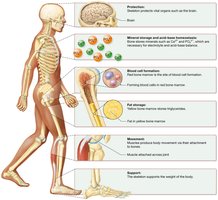
Functions of the Skeletal System
The skeletal system is essential for multiple physiological functions that support life and movement. It provides structural support, protection, and serves as a reservoir for minerals and blood cell formation.
Protection: The skeleton protects vital organs such as the brain, heart, and lungs.
Mineral Storage and Acid-Base Balance: Bones store minerals like calcium (Ca2+) and phosphate (PO43-), which are released into the bloodstream as needed for physiological processes.
Blood Cell Formation: Hematopoiesis occurs in the red bone marrow, producing blood cells.
Fat Storage: Yellow bone marrow stores triglycerides, serving as an energy reserve.
Movement: Bones act as levers for muscles, facilitating movement.
Support: The skeleton supports the body’s weight and maintains posture.
Classification of Bones and the Skeleton
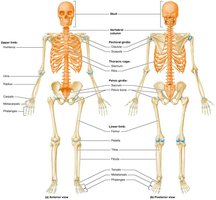
The human skeleton consists of 206 named bones, divided into two main groups: the axial and appendicular skeleton. Bones are also classified by their shape, which relates to their function and location.
Axial Skeleton: Includes the skull, vertebral column, and thoracic cage. Provides central support and protection.
Appendicular Skeleton: Includes the limbs and girdles, facilitating movement.
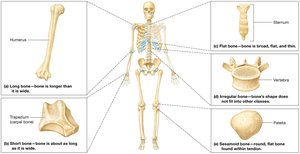
Long Bones: Longer than they are wide (e.g., humerus).
Short Bones: Nearly equal in length and width (e.g., carpals).
Flat Bones: Thin, flattened, and often curved (e.g., sternum).
Irregular Bones: Complex shapes that do not fit other categories (e.g., vertebrae).
Sesamoid Bones: Small, round bones found within tendons (e.g., patella).
Bone Structure: Gross Anatomy
Bones have two main textures: compact and spongy. The structure varies depending on the bone type and its function.
Compact Bone: Dense outer layer providing strength.
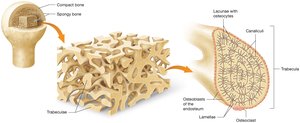
Spongy Bone (Trabecular): Honeycomb structure with trabeculae, reducing weight and housing marrow.
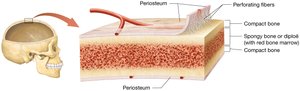
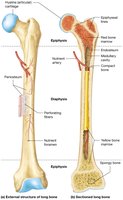
Structure of Typical Long Bone
Diaphysis: Tubular shaft forming the long axis.
Epiphyses: Bone ends, often wider than the shaft.
Cavities: Medullary cavity (contains yellow marrow) and spongy bone cavity (contains red marrow).
Membranes: Periosteum (outer covering) and endosteum (lining internal surfaces).
Microscopic Structure of Bone
Extracellular Matrix
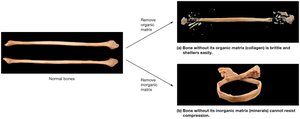
The bone matrix consists of organic and inorganic components, each contributing to bone strength and flexibility.
Organic Matrix (Osteoid): Composed of collagen fibers and proteins, secreted by osteoblasts. Provides flexibility and tensile strength.
Inorganic Matrix (Hydroxyapatites): Mineral salts, mainly calcium phosphate, make up 65% of bone mass and provide hardness.
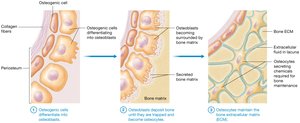
Cells of Bone Tissue
Osteoblasts: Bone-forming cells that secrete osteoid.
Osteocytes: Mature bone cells maintaining bone matrix.
Osteoclasts: Bone-resorbing cells breaking down bone tissue.
Compact Bone: Osteon (Haversian System)
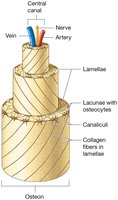
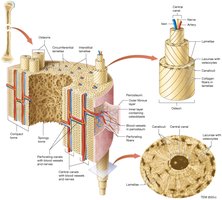
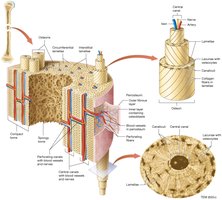
The osteon is the structural unit of compact bone, consisting of concentric lamellae surrounding a central canal.
Lamellae: Hollow tubes of bone matrix.
Central Canal: Contains blood vessels and nerves.
Lacunae: Small cavities housing osteocytes.
Canaliculi: Hairlike canals connecting lacunae and central canal.
Spongy Bone
Spongy bone consists of trabeculae, which align along lines of stress and contain marrow spaces.
Bone Development and Growth
Ossification
Ossification is the process of bone tissue formation, occurring during embryonic development and throughout life for growth and repair.
Formation of Bony Skeleton: Begins in the embryo.
Postnatal Bone Growth: Continues after birth.
Bone Remodeling and Repair: Occurs throughout life.
Types of Ossification
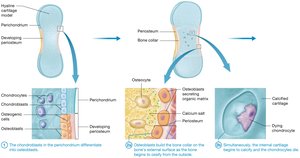
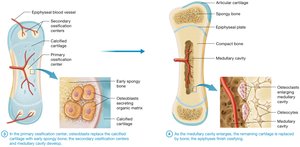
Endochondral Ossification: Bone forms by replacing hyaline cartilage. Most bones develop this way.
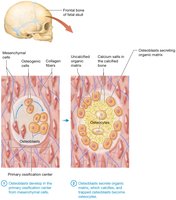
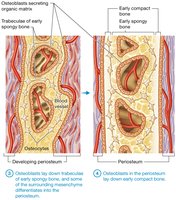
Intramembranous Ossification: Bone develops from fibrous membrane. Forms flat bones like the clavicle and cranial bones.
Postnatal Bone Growth
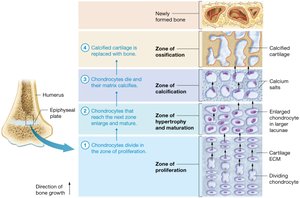
Longitudinal Growth: Increase in length of long bones, requiring epiphyseal cartilage.
Appositional Growth: Increase in bone thickness, involving osteoblasts and osteoclasts.
Longitudinal Growth
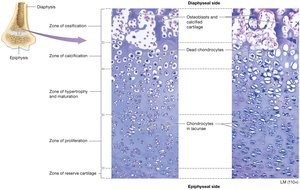
Occurs at the epiphyseal plate, which consists of several zones: reserve cartilage, proliferation, hypertrophy, calcification, and ossification.
Bone Homeostasis
Bone Remodeling
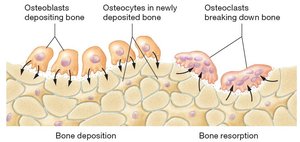
Bone remodeling is a continuous process involving bone deposit and resorption, maintaining bone integrity and calcium homeostasis.
Bone Deposit: Osteoblasts secrete new bone matrix.
Bone Resorption: Osteoclasts break down bone tissue.
Hormonal Control of Blood Calcium
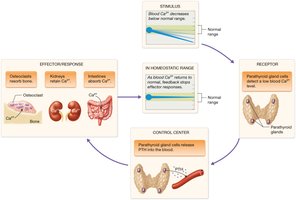
Calcium homeostasis is regulated by a negative feedback loop involving parathyroid hormone (PTH), which increases blood calcium by stimulating osteoclast activity.
Parathyroid Hormone (PTH): Released when blood calcium is low, promoting bone resorption.
Bone Repair
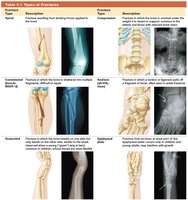
Types of Fractures
Fractures are classified by their characteristics, including the nature of the break and involvement of surrounding tissues.
Fracture Type | Description | Example |
|---|---|---|
Spiral | Twisting force causes spiral-shaped break | Sports injury |
Comminuted | Bone fragments into several pieces | Severe trauma |
Greenstick | Bone breaks incompletely | Children |
Compression | Bone is crushed | Osteoporotic bones |
Epiphyseal | Epiphysis separates from diaphysis | Growth plate injury |
Depressed | Bone is pressed inward | Skull fracture |
Fracture Repair
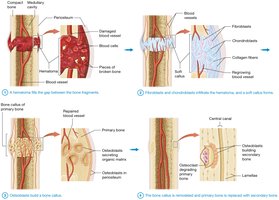
Bone repair involves four main stages: hematoma formation, fibrocartilaginous callus formation, bony callus formation, and bone remodeling.
Hematoma Formation: Blood vessels break, forming a clot.
Fibrocartilaginous Callus Formation: Fibroblasts and chondroblasts form a soft callus.
Bony Callus Formation: Osteoblasts create new bone.
Bone Remodeling: Bone is reshaped to its original form.
Bone Disorders
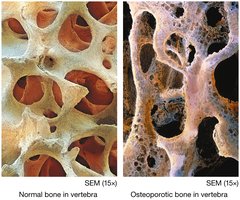
Osteoporosis
Osteoporosis is a condition characterized by decreased bone mass and increased fragility, often resulting in fractures. It is common in older adults, especially postmenopausal women.