Back
Cell Chemistry & Cell Components: Atoms, Molecules, and Biochemistry
Study Guide - Smart Notes
 Tailored notes based on your materials, expanded with key definitions, examples, and context.
Atoms and Atomic Structure
Subatomic Particles
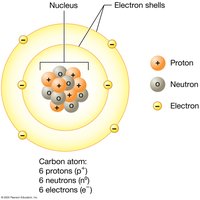
Atoms are the fundamental units of matter, composed of three main subatomic particles: protons, neutrons, and electrons. Their arrangement and properties determine the behavior of elements and compounds in biological systems.
Protons (p+): Positively charged, reside in the nucleus, 1 atomic mass unit (AMU), define the atomic number and element identity.
Neutrons (n0): Uncharged, slightly larger than protons, reside in the nucleus, 1 AMU, contribute to atomic mass and isotopes.
Electrons (e-): Negatively charged, orbit the nucleus in energy shells, negligible mass, determine chemical bonding.
Electron Shells and Stability
Electrons occupy shells around the nucleus. The arrangement of electrons in these shells, especially the outermost (valence) shell, determines an atom's reactivity and stability.
1st shell: holds 2 electrons
2nd shell: holds 8 electrons
3rd shell: holds 18 electrons
Octet Rule: Atoms are most stable when their valence shell contains 8 electrons.
Atomic Number, Mass Number, Isotopes
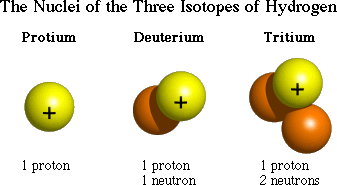
Each element is defined by its atomic number (number of protons). The mass number is the sum of protons and neutrons. Isotopes are atoms of the same element with different numbers of neutrons, and radioisotopes are unstable isotopes that emit radiation.
Atomic Number: Number of protons in the nucleus.
Mass Number: Sum of protons and neutrons.
Isotope: Same number of protons, different number of neutrons.
Radioisotope: Unstable isotope, emits radiation.
Elements, Molecules, and Compounds
Major Elements in the Human Body
Four elements make up 96% of the human body: oxygen, carbon, hydrogen, and nitrogen. Mineral and trace elements are also essential for physiological functions.
Oxygen (O): 65%
Carbon (C): 18%
Hydrogen (H): 10%
Nitrogen (N): 3%
Mineral elements: Na, K, Ca, Cl, Mg, P, S
Trace elements: Fe, Cu, I, Zn, others
Types of Mixtures
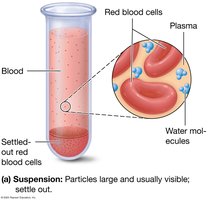
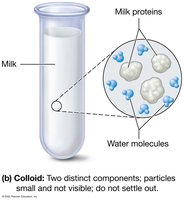
Mixtures are combinations of substances that are not chemically bonded. They are classified as suspensions, colloids, or solutions based on particle size and behavior.
Suspensions: Large particles, settle out (e.g., blood).
Colloids: Small particles, do not settle, opaque (e.g., milk).
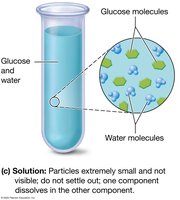
Solutions: Very small particles, dissolve, translucent (e.g., glucose in water).
Solvent and Solute
The solvent is the substance in which the solute dissolves. In biological systems, water is the primary solvent.
Solvent: Usually water in the body.
Solute: Substance dissolved in the solvent.
Molecules, Compounds, and Ions
A molecule is formed when two or more atoms bond chemically. A compound is a molecule made of different elements. Ions are charged atoms or molecules.
Molecule: Two or more atoms bonded.
Compound: Molecule with different elements.
Ion: Atom or molecule with a net charge.
Chemical Bonds
Ionic Bonds
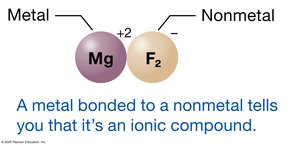
Ionic bonds form when electrons are transferred from a metal to a nonmetal, resulting in charged ions (cations and anions) that attract each other. Ionic compounds often dissociate in water.
Cation: Positively charged ion.
Anion: Negatively charged ion.
Covalent Bonds
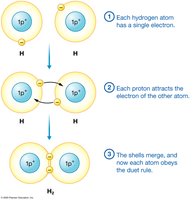
Covalent bonds involve the sharing of electrons between nonmetal atoms. They are the strongest type of chemical bond and can be single, double, or triple bonds.
Single bond: One pair of electrons shared.
Double bond: Two pairs shared.
Triple bond: Three pairs shared.
Polar and Nonpolar Covalent Bonds
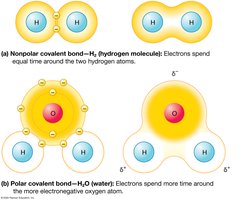
Polar covalent bonds share electrons unequally, creating partial charges and dipoles. Nonpolar covalent bonds share electrons equally, resulting in no charge separation.
Polar covalent: Unequal sharing, hydrophilic, dipole formation.
Nonpolar covalent: Equal sharing, hydrophobic, no dipole.
Hydrogen Bonds
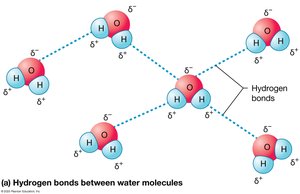
Hydrogen bonds are weak attractions between the partially positive hydrogen of one polar molecule and the partially negative atom of another. They are crucial for water's surface tension and many biological structures.
Occur between polar covalent molecules.
Responsible for water's unique properties.
Chemical Reactions
Types of Chemical Reactions
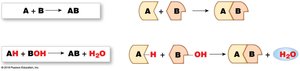
Chemical reactions involve the making and breaking of bonds. The main types are anabolic (building), catabolic (breaking down), and exchange (rearranging).
Anabolic: Build larger molecules, require energy (endergonic).
Catabolic: Break down molecules, release energy (exergonic).
Exchange: Atoms or electrons are transferred between molecules.


Oxidation-Reduction (Redox) Reactions
Redox reactions involve the transfer of electrons. The substance losing electrons is oxidized, and the one gaining electrons is reduced.
Oxidation: Loss of electrons (OIL).
Reduction: Gain of electrons (RIG).
Reaction Rates and Enzymes
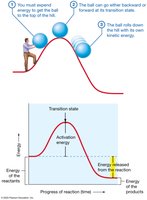
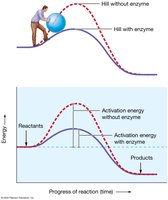
Reaction rates depend on factors such as concentration, temperature, properties of reactants, and the presence of catalysts. Enzymes are biological catalysts that lower activation energy and speed up reactions.
Activation Energy: Minimum energy required to start a reaction.
Enzymes: Proteins that catalyze reactions, highly specific, reusable, and not altered by the reaction.
Enzyme Mechanism of Action
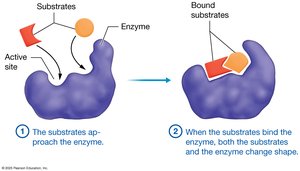
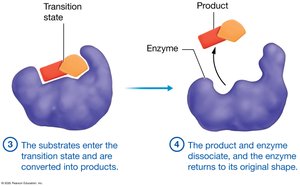
Enzymes operate via the induced fit mechanism, where the substrate binds to the enzyme's active site, causing a conformational change that facilitates the reaction.
Substrate binds to active site.
Enzyme changes shape to fit substrate.
Reaction occurs, product is released.
Inorganic Compounds: Water, Acids, Bases, and Salts
Properties of Water
Water is essential for life due to its unique properties: high heat capacity, evaporative cooling, cushioning, lubrication, and its role as a solvent.
Absorbs heat without significant temperature change.
Evaporative cooling.
Cushions and protects structures.
Acts as a lubricant.
Primary solvent for hydrophilic substances.
Hydrophilic vs. Hydrophobic Molecules
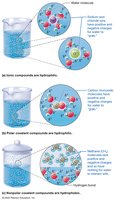
Hydrophilic molecules dissolve in water, while hydrophobic molecules do not. This distinction is crucial for cellular structure and function.
Hydrophilic: Polar or ionic compounds.
Hydrophobic: Nonpolar compounds.
Acids, Bases, and pH
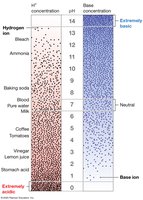
Acids donate hydrogen ions (H+), while bases accept them. The pH scale measures the concentration of H+ in a solution, ranging from 0 (acidic) to 14 (basic).
Acid: Increases H+ concentration.
Base: Decreases H+ concentration.
pH 7: Neutral (pure water).
pH < 7: Acidic.
pH > 7: Basic.
Buffers
Buffers are chemical systems that resist changes in pH, maintaining homeostasis. The carbonic acid–bicarbonate system is a major buffer in blood.
Consist of weak acid and its anion.
Prevent large swings in pH.
Blood pH must remain between 7.35 and 7.45.

Salts and Electrolytes
Salts are formed from the combination of a metal cation and a nonmetal anion. When dissolved in water, they dissociate into electrolytes, which conduct electricity and are vital for physiological processes.
Electrolytes: Na+, K+, Ca2+, Cl-, etc.
Essential for nerve impulses, muscle contraction, and fluid balance.
Organic Compounds
Functional Groups
Functional groups are specific groups of atoms within molecules that determine the chemical properties and reactions of organic compounds.
Hydroxyl (-OH): Alcohols.
Carboxyl (-COOH): Acids, H+ donor.
Amino (-NH2): Contains nitrogen.
Phosphate (-PO4): Energy transfer.
Polymers and Monomers
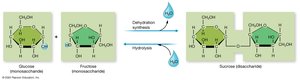
Polymers are large molecules made of repeating monomer units. They are formed by dehydration synthesis and broken down by hydrolysis.
Dehydration Synthesis: Removes water to link monomers.
Hydrolysis: Adds water to split polymers.
Carbohydrates
Structure and Function
Carbohydrates are composed of carbon, hydrogen, and oxygen in a 1:2:1 ratio. They are polar and hydrophilic, serving as fuel and structural components.
Monosaccharides: Simple sugars (glucose, fructose, galactose).
Disaccharides: Two monosaccharides linked.
Polysaccharides: Complex carbohydrates (glycogen, starch, fiber).
Glycoproteins/Glycolipids: Specialized carbohydrates in cell membranes.
Lipids
Structure and Types
Lipids are hydrophobic molecules composed mainly of carbon and hydrogen. They serve as fuel, insulation, protection, and are key components of cell membranes and hormones.
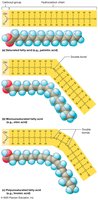
Fatty Acids: Saturated (no double bonds), monounsaturated (one double bond), polyunsaturated (multiple double bonds).
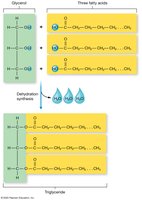
Triglycerides: Three fatty acids linked to glycerol, storage form of fat.
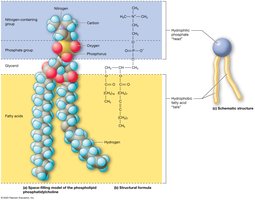
Phospholipids: Main component of cell membranes, with a hydrophilic head and hydrophobic tails.
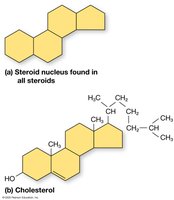
Steroids: Four-ring structure, includes cholesterol and hormones.
Proteins
Structure and Function
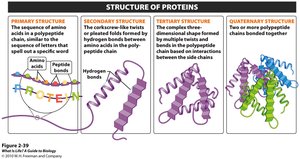
Proteins are polymers of amino acids, containing carbon, hydrogen, oxygen, and nitrogen. They may be hydrophilic or hydrophobic and are essential for structure, function, and regulation in cells.
Peptide Bond: Polar covalent bond between amino acids.
Four Levels of Structure: Primary, secondary, tertiary, quaternary.
Protein Denaturation
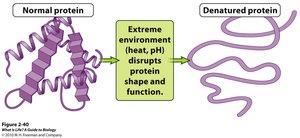
Denaturation disrupts protein structure, causing loss of function. It can be caused by heat, pH changes, or chemicals.
Nucleotides and Nucleic Acids
Structure and Function
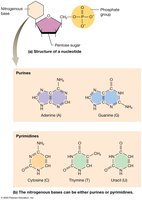
Nucleotides are the building blocks of nucleic acids (DNA and RNA). They contain a sugar, phosphate group, and nitrogenous base. ATP is a modified nucleotide used for energy storage.
DNA: Genetic material, chromosomes, genes.
RNA: Protein synthesis.
ATP: Cellular energy currency.