 Back
BackCell Membrane Structure, Transport Mechanisms, and Cell Communication
Study Guide - Smart Notes
 Tailored notes based on your materials, expanded with key definitions, examples, and context.
Cell Membrane Structure and Function
Overview of Cellular Membranes
The cellular membrane is a dynamic structure that separates the internal environment of the cell from the external environment. It is primarily composed of a lipid bilayer, embedded with various proteins, and serves as a selective barrier for the movement of substances. - Lipid Bilayer: Provides structural integrity and semi-permeability. - Membrane Proteins: Facilitate transport, communication, and structural support. - Membrane Permeability: Determines which molecules can cross the membrane. 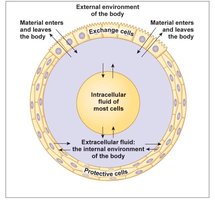
Membrane Proteins: Structure and Function
Membrane proteins are categorized by their structure and function. They play essential roles in transport, signaling, and maintaining cell shape. - Structural Types: Lipid-anchored, integral, and peripheral proteins. - Functional Types: Carrier proteins, channel proteins, membrane enzymes, and receptors. - Channel Proteins: Include open and gated channels (mechanically, voltage, or chemically gated). - Carrier Proteins: Facilitate movement of molecules without forming open channels. 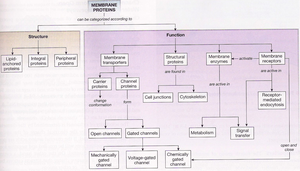
Membrane Transport Mechanisms
Types of Membrane Transport
The cell membrane regulates the movement of substances via several transport mechanisms: - Passive Diffusion: Movement down a concentration gradient without energy input. - Facilitated Diffusion: Uses carrier proteins to move substances down their gradient. - Active Transport: Requires energy (usually ATP) to move substances against their gradient. - Vesicle-Mediated Transport: Includes endocytosis, exocytosis, and transcytosis.
Channel vs. Carrier Proteins
Channel proteins create water-filled pores for rapid movement, while carrier proteins undergo conformational changes to transport molecules. - Open Channels: Allow continuous flow. - Carriers: Alternate between open states to either side of the membrane. 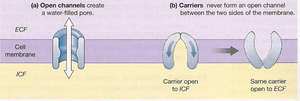
Active Transport and Ion Gradients
Active transport is crucial for maintaining ion gradients across the membrane, especially for sodium (Na+) and potassium (K+). - Na+/K+ ATPase: Pumps Na+ out and K+ into the cell, using ATP. - Intracellular Fluid: High K+, low Na+. - Extracellular Fluid: High Na+, low K+. 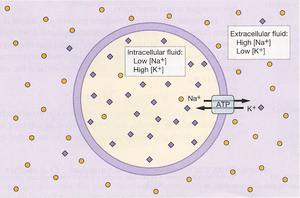
Carrier Protein Types
Carrier proteins are classified based on the number and direction of substrates transported: - Uniport: Transports one type of molecule. - Symport: Moves two or more substrates in the same direction. - Antiport: Moves substrates in opposite directions. 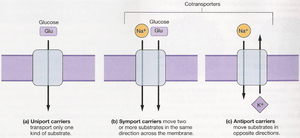
Osmolarity and Tonicity
Definitions and Clinical Relevance
Osmolarity and tonicity describe the concentration of solutes and their effect on cell volume. - Osmolarity: Total concentration of solute particles in a solution. - Tonicity: Effect of a solution on cell volume (isotonic, hypotonic, hypertonic). - Isotonic: Equal solute concentration inside and outside the cell; no net water movement. - Hypotonic: Lower solute concentration outside; water enters cell, causing swelling. - Hypertonic: Higher solute concentration outside; water leaves cell, causing shrinkage. Example: 0.9% NaCl solution is isotonic to human blood.
Electrochemical Gradients and Ion Channels
Principles of Electrochemical Gradients
Electrochemical gradients drive ion movement and are fundamental to membrane potential regulation. - Chemical Gradient: Difference in ion concentration across the membrane. - Electrical Gradient: Difference in charge across the membrane. - Membrane Potential: The voltage difference due to ion distribution.
Cell Communication
Mechanisms of Cell-to-Cell Communication
Cells communicate via direct and indirect mechanisms: - Gap Junctions: Direct cytoplasmic connections for electrical and chemical signals. - Contact-Dependent Signals: Require membrane-bound molecules. - Local Signals: Paracrine (to nearby cells) and autocrine (to self). - Long-Distance Signals: Neurotransmitters and hormones.
Signal Transduction Pathways
Signal transduction involves converting extracellular signals into cellular responses. - G-Protein Coupled Receptors: Activate second messengers (e.g., cAMP, Ca2+). - Second Messengers: Amplify and propagate signals inside the cell. - Intracellular Effectors: Enzymes and proteins that execute the response. Example: Insulin receptor is a tyrosine kinase; muscarinic and adrenergic receptors are GPCRs.
Modulation of Signaling Pathways
Receptor properties can be modulated to alter cell responsiveness: - Competition: Multiple ligands for the same receptor. - Saturation: Maximum response when all receptors are occupied. - Specificity: Receptors respond to specific ligands. - Down Regulation: Decrease in receptor number or affinity (e.g., drug tolerance).
Summary Table: Types of Membrane Transport
Transport Type | Energy Requirement | Direction | Example |
|---|---|---|---|
Passive Diffusion | No | Down gradient | O2 across membrane |
Facilitated Diffusion | No | Down gradient | Glucose via GLUT |
Primary Active Transport | Yes (ATP) | Against gradient | Na+/K+ ATPase |
Secondary Active Transport | Indirect | Against gradient | Na+-Glucose cotransporter |
Vesicle-Mediated | Yes | Variable | Endocytosis, exocytosis |
Key Equations
Osmolarity Calculation
Membrane Potential (Nernst Equation)
Na+/K+ ATPase Stoichiometry
Clinical Application
Renal Failure and Hemodialysis
Disruption of membrane transport and signaling can lead to electrolyte imbalances, requiring clinical intervention such as hemodialysis to restore homeostasis. Example: Isotonic solutions are used to prevent cell swelling or shrinkage during fluid replacement.
Conclusion
Understanding membrane structure, transport mechanisms, and cell communication is fundamental to physiology and pathophysiology, with direct clinical relevance to fluid and electrolyte management.
