 Back
Cell Membrane Transport: Active Processes and Membrane Potential
Study Guide - Smart Notes
 Tailored notes based on your materials, expanded with key definitions, examples, and context.
Cells: The Living Units – Membrane Transport and Membrane Potential
Membrane Transport: Active Processes
Active processes are essential for moving substances across the plasma membrane against their concentration gradients. These processes require energy, typically in the form of ATP, and are crucial for maintaining cellular homeostasis.
Active Transport: Utilizes carrier proteins (solute pumps) to move solutes against their concentration gradient. Two main types are primary and secondary active transport.
Vesicular Transport: Involves the movement of large particles, macromolecules, and fluids via vesicles. This includes exocytosis, endocytosis, transcytosis, and vesicular trafficking.
Active Transport
Active transport mechanisms are responsible for moving ions and molecules against their electrochemical gradients, which is vital for cell function.
Primary Active Transport: Directly uses energy from ATP hydrolysis to change the shape of transport proteins, allowing the movement of ions such as Na+ and K+ across the membrane.
Secondary Active Transport: Utilizes the energy stored in ionic gradients created by primary active transport to drive the movement of other substances.
Sodium-Potassium Pump (Na+-K+ ATPase)
The sodium-potassium pump is a primary active transport mechanism found in all plasma membranes. It is essential for maintaining the electrochemical gradients necessary for muscle and nerve function.
Function: Pumps 3 Na+ ions out of the cell and 2 K+ ions into the cell per ATP molecule hydrolyzed.
Importance: Maintains cell volume, osmotic balance, and the resting membrane potential.
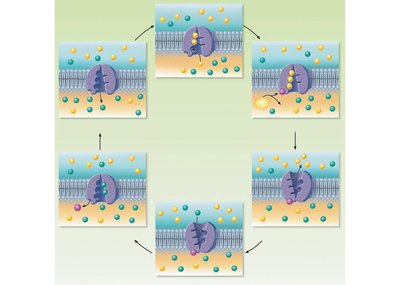
Cycle Steps:
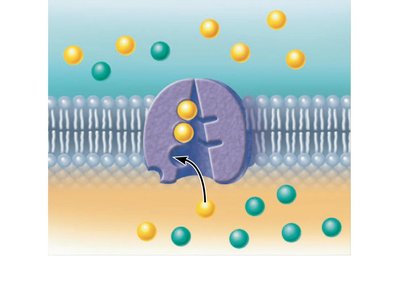
Cytoplasmic Na+ binds to the pump protein.
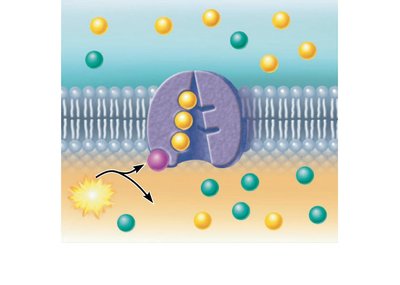
Binding of Na+ promotes phosphorylation by ATP.
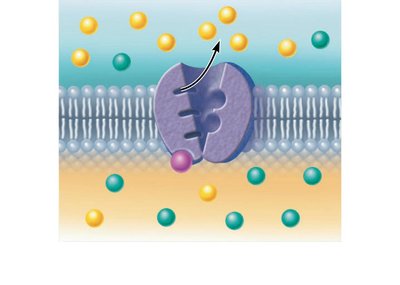
Phosphorylation causes the protein to change shape, expelling Na+ to the outside.
Extracellular K+ binds to the pump protein.
K+ binding triggers release of the phosphate group, returning the protein to its original conformation.
K+ is released into the cytoplasm, and the cycle repeats.
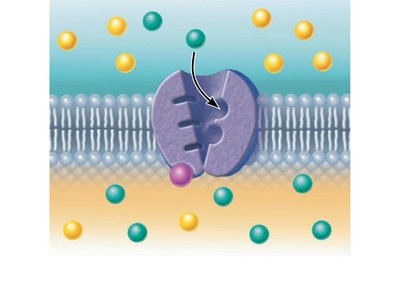
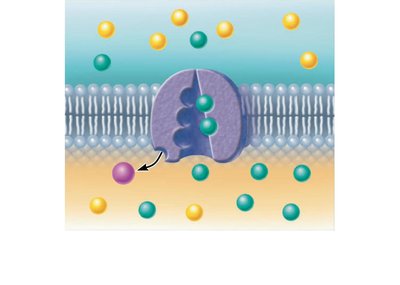
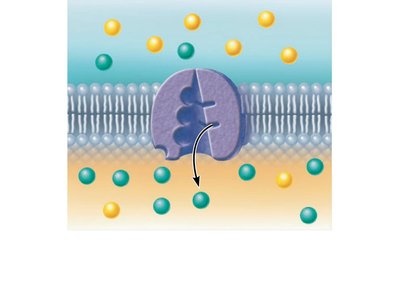
Vesicular Transport
Vesicular transport is responsible for moving large particles and fluids across the plasma membrane using vesicles. This process is energy-dependent and includes several key mechanisms:
Exocytosis: Transport of substances out of the cell (e.g., hormone secretion, neurotransmitter release).
Endocytosis: Transport of substances into the cell. Includes phagocytosis (cell eating) and pinocytosis (cell drinking).
Transcytosis: Movement of substances into, across, and out of the cell.
Vesicular Trafficking: Movement of substances from one area or organelle to another within the cell.
Endocytosis
Phagocytosis: The cell engulfs large particles by extending pseudopods, forming a phagosome that fuses with a lysosome for digestion. Common in macrophages and some white blood cells.
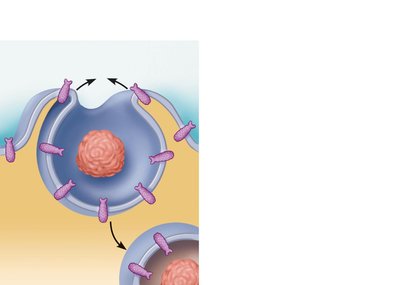
Pinocytosis (Fluid-phase Endocytosis): The cell engulfs extracellular fluid and dissolved solutes into small vesicles. This process is nonspecific and important for nutrient absorption in the small intestine.
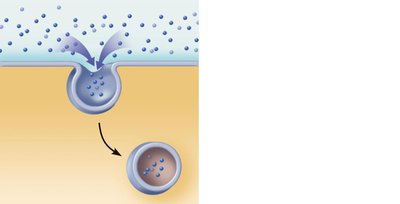
Exocytosis
Exocytosis is the process by which cells expel materials in vesicles that fuse with the plasma membrane. Examples include hormone secretion, neurotransmitter release, mucus secretion, and ejection of wastes.
Summary Table of Active Processes
Process | Energy Source | Example |
|---|---|---|
Primary active transport | ATP | Pumping of ions across membranes |
Secondary active transport | Ion gradient | Movement of polar or charged solutes across membranes |
Exocytosis | ATP | Secretion of hormones and neurotransmitters |
Phagocytosis | ATP | White blood cell phagocytosis |
Pinocytosis | ATP | Absorption by intestinal cells |
Receptor-mediated endocytosis | ATP | Hormone and cholesterol uptake |
Membrane Potential
The membrane potential is the voltage difference across the plasma membrane, resulting from the separation of oppositely charged ions. This potential energy is crucial for nerve impulse transmission and muscle contraction.
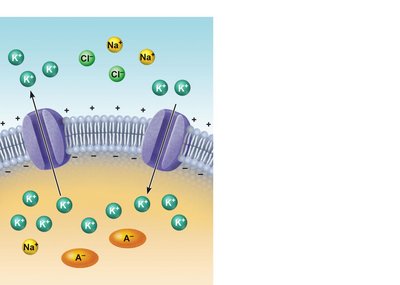
Resting Membrane Potential (RMP): The voltage measured in a cell at rest, typically ranging from –50 to –100 mV. It is primarily established by the diffusion and active transport of K+ ions.
Generation and Maintenance of RMP
The Na+-K+ pump continuously ejects Na+ from the cell and brings K+ back in.
K+ diffuses out of the cell through leakage channels, making the cell interior more negative.
Large anions trapped inside the cell contribute to the negative charge.
The electrochemical gradient attracts K+ back into the cell.
RMP is established when the electrical and concentration gradients for K+ are balanced.
A steady state is maintained as the rate of active transport equals the rate of Na+ diffusion into the cell.
Key Equation:
The Nernst equation describes the equilibrium potential for a particular ion:
Additional info: R = gas constant, T = temperature in Kelvin, z = charge of the ion, F = Faraday's constant.
