 Back
BackCell Structure, Organelles, and Membrane Transport: ANP College Study Guide
Study Guide - Smart Notes
 Tailored notes based on your materials, expanded with key definitions, examples, and context.
Cell Structure and Function
Overview of Cell Anatomy
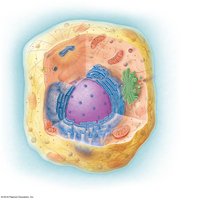
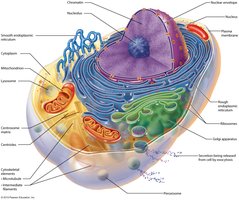
The cell is the basic structural and functional unit of life. Each cell is surrounded by a plasma membrane and contains cytoplasm, which is composed of cytosol and organelles. The study of cell structure and function is called cytology. Cells vary greatly in structure and function, but share common features.
Plasma membrane: Encloses the cell, providing protection and regulating entry/exit of substances.
Cytoplasm: The material inside the cell, consisting of cytosol (fluid) and organelles (specialized structures).
Nucleus: The control center of the cell, containing genetic material.
Diversity of Cell Types
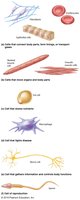
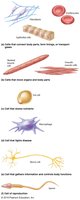
Cells are specialized for various functions in the body, such as movement, storage, defense, and reproduction. Examples include muscle cells, nerve cells, and sperm cells.
Muscle cells: Specialized for contraction and movement.
Nerve cells: Specialized for communication and control.
Sperm cells: Specialized for reproduction.
Cell Organelles
Classification of Organelles
Organelles are classified based on the presence or absence of a membrane:
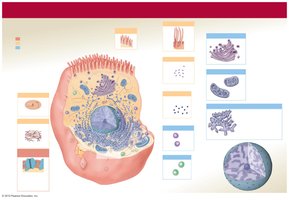
Membranous organelles: Surrounded by a membrane, allowing compartmentalization (e.g., nucleus, mitochondria, lysosomes, endoplasmic reticulum, Golgi apparatus, peroxisomes).
Non-membranous organelles: Not surrounded by a membrane; components are in direct contact with cytoplasm (e.g., ribosomes, cytoskeleton, cilia).
Nucleus
The nucleus is typically the largest organelle and acts as the control center for cell function. It stores and protects DNA, which contains instructions for protein synthesis. The nucleus is composed of:
Nuclear envelope: Double membrane with nuclear pores for transport.
DNA: Organized into chromosomes; 23 pairs in human cells.
Nucleoplasm: Fluid inside the nucleus.
Nucleolus: Site of ribosomal RNA synthesis.
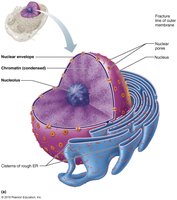
Chromatin is the loosely coiled form of DNA and proteins when the cell is not dividing. The nucleolus produces ribosomal RNA, which forms ribosomes.
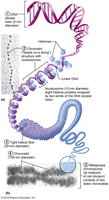
Ribosomes
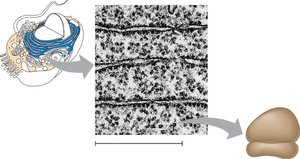
Ribosomes are non-membranous organelles responsible for protein synthesis. They consist of two subunits (large and small), each made of RNA and protein. Ribosomes can be free in the cytoplasm or attached to the rough endoplasmic reticulum (RER).
Function: Synthesize proteins by translating messenger RNA (mRNA).
Endoplasmic Reticulum (ER)
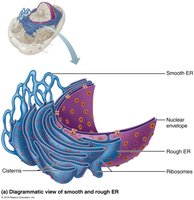
The ER is a network of membranous sheets and channels, continuous with the nuclear envelope. There are two types:
Smooth ER (SER): Lacks ribosomes; synthesizes and breaks down fats and carbohydrates, synthesizes steroids, detoxifies toxins and drugs.
Rough ER (RER): Studded with ribosomes; processes and modifies proteins, forms membranes.
Golgi Apparatus
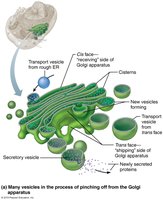
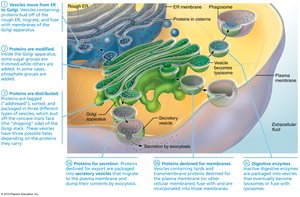
The Golgi apparatus is a stack of flat membrane sacs. It functions as the cell's 'post office,' collecting, sorting, packaging, and distributing proteins and lipids. Proteins made in the RER are tagged and sent to the Golgi for further processing.
Function: Modifies, sorts, and packages proteins and lipids for secretion or delivery to other organelles.
Lysosomes
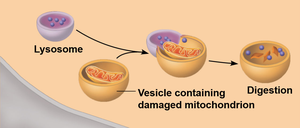
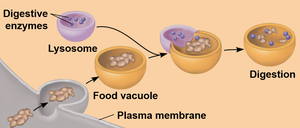
Lysosomes are vesicles produced by the Golgi apparatus containing hydrolytic (digestive) enzymes. They act as the cell's garbage disposal, breaking down ingested food, damaged organelles, and foreign particles.
Function: Digestion and recycling of cellular waste.
Mitochondria
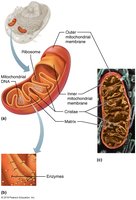
Mitochondria are rod-shaped organelles with a double membrane. The inner membrane has folds called cristae that increase surface area. The matrix and cristae house enzymes for cellular respiration and ATP synthesis.
Function: Site of cellular respiration and ATP production.
Cytoskeleton
The cytoskeleton is a network of filaments and tubules that organizes cell structure and activities. It consists of microtubules, microfilaments, and intermediate filaments.
Function: Maintains cell shape, anchors organelles, assists in movement, and is dynamic (constantly assembled/disassembled).
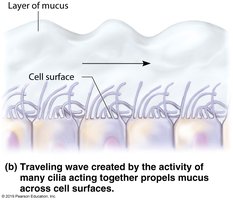
Cilia and Flagella
Cilia and flagella are extensions of the cell surface made of microtubules. Cilia are shorter and more numerous, moving substances over the cell surface. Flagella are longer and fewer, moving the cell itself (e.g., sperm cell).
Cilia: Move mucus and dust in respiratory passages.
Flagella: Propel sperm cells.

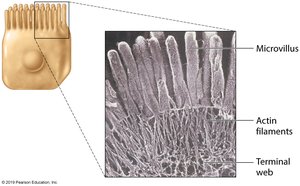
Microvilli
Microvilli are finger-shaped projections formed by folding of the plasma membrane. They increase the surface area for efficient absorption of substances.
Location: Exposed surface of cells actively absorbing substances.
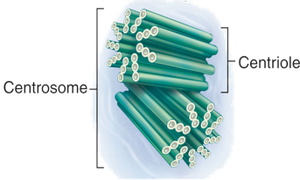
Centrioles and Centrosome
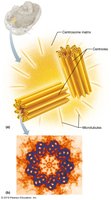
Centrosomes are made of two centrioles at right angles and other microtubules in a star pattern. They are essential for movement of chromosomes during cell division.
Function: Organize microtubules and facilitate chromosome movement during mitosis.
Plasma Membrane Structure and Function
Fluid Mosaic Model
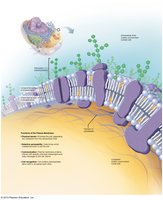
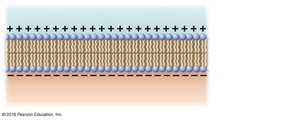
The plasma membrane is described by the Fluid Mosaic model, composed of lipids, proteins, and carbohydrates. It is strong, flexible, and selectively permeable, controlling entry and exit of molecules.
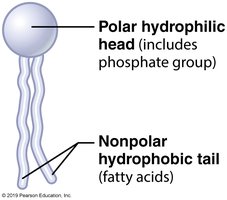
Phospholipid bilayer: Primary component, with hydrophilic heads facing water and hydrophobic tails facing inward.
Cholesterol: Maintains membrane fluidity.
Glycolipids/glycoproteins: Identify cells to immune system.
Proteins: Peripheral and integral (transmembrane) proteins with various functions.
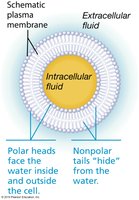
Permeability of the Plasma Membrane
The plasma membrane is selectively permeable, allowing some substances to cross while restricting others. Factors affecting permeability include electric charge, size, and lipid solubility.
Nonpolar (lipophilic) molecules: Pass freely through the membrane.
Polar molecules and ions: Require channel proteins.
Smaller molecules: Cross faster than larger ones.
Membrane Transport
Types of Membrane Transport
Substances cross the plasma membrane by passive or active transport:
Passive transport: No energy required (simple diffusion, facilitated diffusion, osmosis).
Active transport: Energy required (primary and secondary active transport, vesicular transport).
Passive Transport: Diffusion
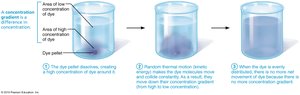
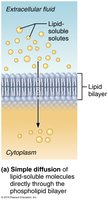
Diffusion is the movement of solute molecules from higher to lower concentration, driven by kinetic energy. Simple diffusion occurs directly across the phospholipid bilayer for lipid-soluble molecules.
Example: Dye spreading in water.
Facilitated Diffusion
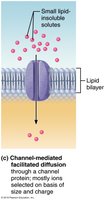
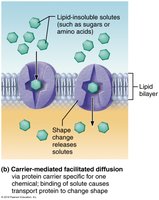
Facilitated diffusion allows hydrophilic or large molecules to cross the membrane with the help of transmembrane proteins. Two types:
Ion channels: Create tunnels for small ions.
Carrier proteins: Bind and transport larger molecules like glucose and amino acids.
Osmosis
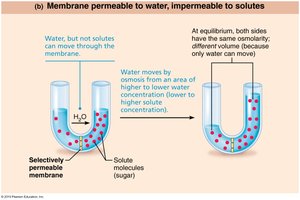
Osmosis is the diffusion of water across a selectively permeable membrane, from higher to lower concentration. Osmotic pressure is determined by the concentration of non-penetrating solutes.
Water moves toward higher osmotic pressure.
Tonicity
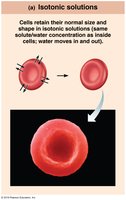
Tonicity describes the effect of extracellular solution on cell volume, based on solute concentration:
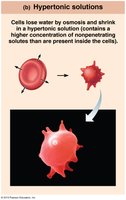
Hypertonic: Higher solute concentration outside; cells shrink.
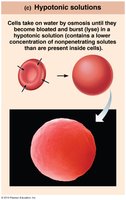
Hypotonic: Lower solute concentration outside; cells swell.
Isotonic: Equal solute concentration; no change in cell volume.
Osmolarity
Osmolarity measures the concentration of all solute particles in a solution (penetrating and non-penetrating), expressed in Osmoles (Osm) per liter. Body fluids have an osmolarity of 300 mOsm.
Hyperosmotic: Higher osmolarity than body fluids.
Hypoosmotic: Lower osmolarity than body fluids.
Active Transport
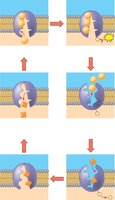
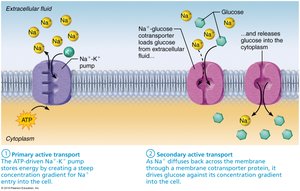
Active transport requires energy (ATP) to move substances against their concentration gradient. It involves carrier proteins called pumps.
Primary active transport: Pump directly hydrolyzes ATP (e.g., Na+/K+ pump).
Secondary active transport: Uses energy stored in ion gradients (e.g., SGLT for glucose).
Vesicular Transport
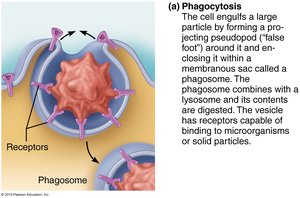
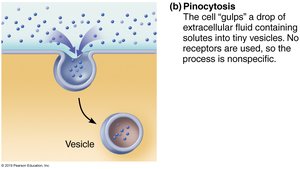
Vesicular transport moves large molecules or groups of molecules in membrane sacs (vesicles), requiring ATP. Two main types:
Endocytosis: Vesicles enter cells (phagocytosis, pinocytosis, receptor-mediated).
Exocytosis: Vesicles exit cells, releasing substances into the extracellular fluid.
Summary Table: Cell Organelles and Membrane Transport
Organelle/Process | Structure | Function |
|---|---|---|
Nucleus | Double membrane, nucleolus, chromatin | Stores DNA, controls cell function |
Ribosomes | Two subunits, RNA & protein | Protein synthesis |
ER (SER/RER) | Membranous sheets, ribosomes (RER) | SER: lipid metabolism; RER: protein processing |
Golgi Apparatus | Stacked membrane sacs | Modifies, sorts, packages proteins/lipids |
Lysosomes | Vesicles with enzymes | Digestion, waste removal |
Mitochondria | Double membrane, cristae | ATP synthesis, cellular respiration |
Cytoskeleton | Filaments, tubules | Shape, movement, organization |
Plasma Membrane | Phospholipid bilayer, proteins | Protection, selective permeability |
Membrane Transport | Passive/Active, proteins, vesicles | Movement of substances |
