 Back
Cells and Tissues: Structure, Function, and Membrane Transport
Study Guide - Smart Notes
 Tailored notes based on your materials, expanded with key definitions, examples, and context.
Cells and Tissues
Overview of the Cellular Basis of Life
Cells are the fundamental structural and functional units of all living organisms. The human body contains approximately 50 to 100 trillion cells, each performing essential biochemical activities dictated by their structure. The cell theory states that the activity of an organism depends on the collective activities of its cells, and the continuity of life has a cellular basis.
Key Elements: Most cells are composed of carbon, hydrogen, oxygen, and nitrogen.
Water Content: Cells are about 60% water, which is crucial for biochemical reactions.
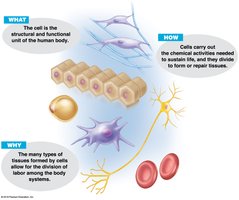
Anatomy of a Generalized Cell
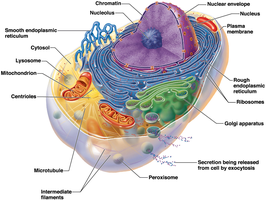
A typical cell consists of three main regions: the plasma membrane, nucleus, and cytoplasm. Organelles are specialized structures within the cytoplasm that perform distinct functions, while the cytoskeleton maintains cell shape and facilitates movement.
Plasma Membrane: Acts as a semipermeable barrier, controlling the entry and exit of substances.
Nucleus: Contains genetic material (DNA) and directs cellular activities.
Cytoplasm: Site of most cellular activities, containing cytosol, inclusions, and organelles.
Plasma Membrane Structure and Function
Fluid Mosaic Model
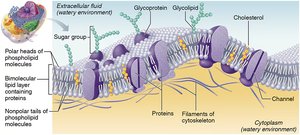
The plasma membrane is constructed of a phospholipid bilayer arranged tail-to-tail, with cholesterol and proteins interspersed. Sugar groups may attach to phospholipids, forming glycolipids. The membrane's polar heads face the watery environments inside and outside the cell, while nonpolar tails form the interior, making the membrane relatively impermeable to most water-soluble molecules.
Phospholipid Bilayer: Provides structural integrity and selective permeability.
Proteins: Serve as enzymes, receptors, channels, or carriers.
Glycocalyx: A sugar-rich area on the cell surface, important for cell recognition and adhesion.
Cell Membrane Junctions
Cells are bound together by glycoproteins, wavy membrane contours, and specialized junctions. The main types of cell junctions include:
Tight Junctions: Impermeable, bind cells into leakproof sheets.
Desmosomes: Anchoring junctions that prevent cells from being pulled apart.
Gap Junctions: Communicating junctions allowing molecules to pass directly between cells.
The Nucleus
Structure and Function
The nucleus is the control center of the cell, containing DNA necessary for protein synthesis and cell reproduction. It consists of the nuclear envelope, nucleolus, and chromatin.
Nuclear Envelope: Double membrane with pores for material exchange.
Nucleolus: Site of ribosome assembly.
Chromatin: DNA wound around histones; condenses into chromosomes during cell division.
The Cytoplasm
Components
The cytoplasm is the cellular material outside the nucleus and inside the plasma membrane. It includes cytosol (fluid), inclusions (stored nutrients or products), and organelles (metabolic machinery).
Mitochondria
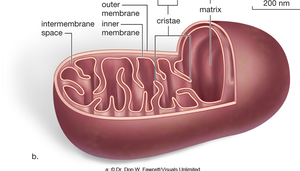
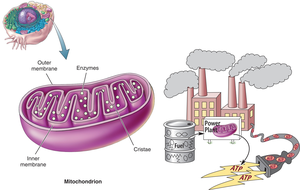
Mitochondria are the "powerhouses" of the cell, carrying out reactions that use oxygen to break down food and produce ATP, the cell's energy currency.
Structure: Double membrane with inner folds called cristae.
Function: Cellular respiration and energy production.
Ribosomes and Endoplasmic Reticulum (ER)
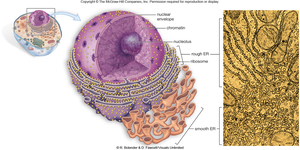
Ribosomes are sites of protein synthesis, found free in the cytoplasm or attached to the rough ER. The ER is a network of fluid-filled tunnels; rough ER is studded with ribosomes and synthesizes proteins, while smooth ER lacks ribosomes and functions in lipid metabolism and detoxification.
Golgi Apparatus
The Golgi apparatus modifies and packages proteins from the rough ER, producing secretory vesicles, in-house proteins/lipids, and lysosomes.
Lysosomes and Peroxisomes
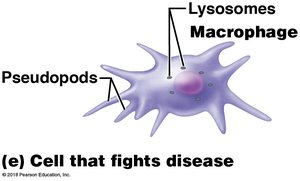
Lysosomes: Contain digestive enzymes to break down worn-out cell structures and debris.
Peroxisomes: Detoxify harmful substances; abundant in the liver.
Cytoskeleton and Centrioles
The cytoskeleton is a network of protein structures providing internal support and facilitating movement. It consists of microfilaments, intermediate filaments, and microtubules. Centrioles generate microtubules and direct mitotic spindle formation during cell division.
Cell Extensions
Cilia, Flagella, and Microvilli
Some cells have surface extensions:
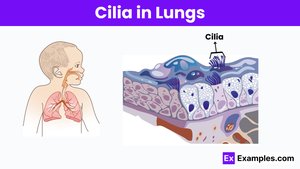
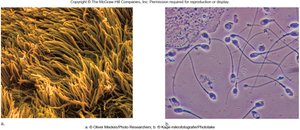
Cilia: Move materials across the cell surface, especially in the respiratory system.
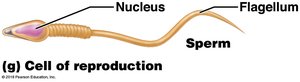
Flagella: Propel the cell; the only flagellated cell in humans is sperm.
Microvilli: Increase surface area for absorption, especially in the intestines.
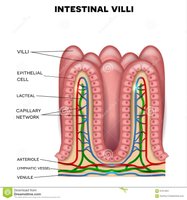
Cell Diversity
Types of Cells and Their Functions
Cells vary in structure and function to perform specialized roles:
Fibroblasts: Connect body parts.
Erythrocytes: Transport oxygen; lack organelles.
Epithelial Cells: Cover and line body organs.
Muscle Cells: Move organs and body parts.
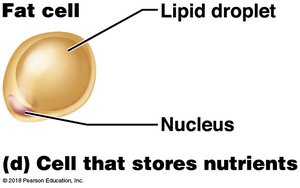
Fat Cells: Store nutrients.
Macrophages: Fight disease.
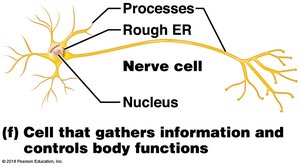
Nerve Cells: Gather information and control functions.
Sperm Cells: Reproduction.
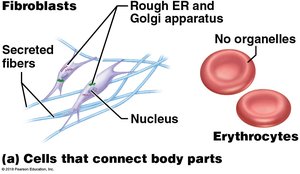
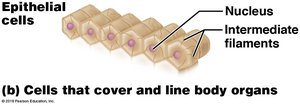
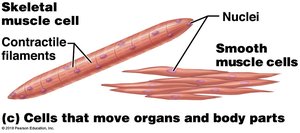
Cell Physiology and Membrane Transport
Cellular Functions
Cells can metabolize, digest food, dispose of wastes, reproduce, grow, move, and respond to stimuli.
Membrane Transport
The plasma membrane is selectively permeable, allowing some materials to pass while excluding others. Transport occurs via passive or active processes.
Passive Processes: Do not require energy (ATP). Include diffusion, osmosis, facilitated diffusion, and filtration.
Active Processes: Require energy (ATP). Include active transport and vesicular transport (endocytosis and exocytosis).
Passive Transport Mechanisms
Diffusion: Movement from high to low concentration, down a concentration gradient.
Simple Diffusion: Unassisted movement of lipid-soluble or small molecules.
Osmosis: Diffusion of water across a selectively permeable membrane.
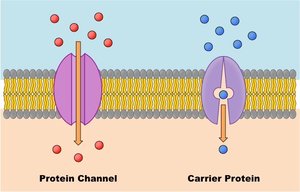
Facilitated Diffusion: Uses protein channels or carriers for substances too large or charged to cross the membrane directly.
Filtration: Movement due to hydrostatic pressure, important in kidney function.
Osmosis and Tonicity
Isotonic Solutions: Equal solute and water concentrations; cells gain and lose water at the same rate.
Hypertonic Solutions: More solutes than cells; water leaves the cell.
Hypotonic Solutions: Fewer solutes; water enters the cell.
Active Transport Mechanisms
Active Transport: Uses solute pumps and ATP to move substances against concentration gradients (e.g., sodium-potassium pump).
Vesicular Transport: Moves substances in bulk via exocytosis (secretion) and endocytosis (engulfing).
Phagocytosis: "Cell eating" of large particles.
Pinocytosis: "Cell drinking" of fluid droplets.
Receptor-mediated Endocytosis: Uptake of specific molecules.
Summary Table: Cell Parts and Functions
Cell Part | Structure | Function |
|---|---|---|
Plasma Membrane | Phospholipid bilayer with proteins | Selective barrier, communication |
Nucleus | Double membrane, nucleolus, chromatin | Genetic control, ribosome production |
Mitochondria | Double membrane, cristae | ATP production |
Ribosomes | Protein and rRNA | Protein synthesis |
ER (Rough/Smooth) | Membranous network | Protein/lipid synthesis, detoxification |
Golgi Apparatus | Stacked membranes | Protein modification, packaging |
Lysosomes | Membranous sacs | Digestion, waste removal |
Peroxisomes | Membranous sacs | Detoxification |
Cytoskeleton | Protein filaments | Support, movement |
Centrioles | Microtubule triplets | Cell division |
Key Equations
Diffusion: (Fick's Law: flux J is proportional to concentration gradient)
Osmosis: (Osmotic pressure: van't Hoff equation)
Sodium-Potassium Pump: per ATP hydrolyzed
Additional info: Academic context was added to clarify cell junctions, membrane transport mechanisms, and the summary table for completeness.
