 Back
Cells: Structure, Function, and Membrane Transport (Chapter 3 Study Notes)
Study Guide - Smart Notes
 Tailored notes based on your materials, expanded with key definitions, examples, and context.
Cells: The Structural Units of Life
Introduction to Cells
Cells are the fundamental structural and functional units of all living organisms. The adult human body contains over 100 trillion cells, each specialized for particular roles essential to life. Understanding cell structure and function is foundational to the study of anatomy and physiology.
Anatomy of a Generalized Cell
Main Regions of a Cell
Plasma Membrane: The outer boundary that separates the cell from its environment.
Nucleus: The control center containing genetic material (DNA).
Cytoplasm: The intracellular fluid and organelles between the nucleus and plasma membrane.
The Plasma Membrane
Structure and Function
The plasma membrane acts as a selective barrier, maintaining the internal environment of the cell. It is described by the fluid mosaic model, which highlights its dynamic and complex structure.
Phospholipid Bilayer: Two layers of phospholipids arranged tail-to-tail, with hydrophilic heads facing outward and hydrophobic tails inward, making the membrane selectively permeable.
Proteins: Scattered throughout the membrane, functioning as enzymes, receptors, or transport channels/carriers.
Cholesterol: Stabilizes membrane fluidity.
Glycolipids and Glycoproteins: Sugar groups attached to lipids or proteins, contributing to cell recognition and adhesion (glycocalyx).
Cell Junctions
Glycoproteins: Act as cellular glue.
Membrane Contours: Fit together in a tongue-and-groove fashion.
Specialized Junctions: Tight junctions, desmosomes, and gap junctions, each with unique structural and functional roles.
The Nucleus
Structure and Function
The nucleus directs cellular activities and stores genetic information necessary for protein synthesis and cell division.
Nuclear Envelope: Double membrane with pores for material exchange.
Nucleolus: Site of ribosome synthesis.
Chromatin: DNA and protein complex; condenses to form chromosomes during cell division.
The Cytoplasm
Components of the Cytoplasm
Cytosol: Fluid containing nutrients and electrolytes.
Inclusions: Stored nutrients or cell products.
Organelles: Specialized structures performing distinct cellular functions.
Major Organelles
Mitochondria: "Powerhouses" of the cell; site of ATP production via aerobic respiration.
Ribosomes: Sites of protein synthesis; found free in cytoplasm or attached to rough ER.
Endoplasmic Reticulum (ER): Network of membranes; rough ER synthesizes proteins, smooth ER is involved in lipid metabolism and detoxification.
Golgi Apparatus: Modifies, sorts, and packages proteins and lipids for secretion or internal use.
Lysosomes: Contain digestive enzymes for breaking down waste and cellular debris.
Cytoskeleton: Protein network (microfilaments, intermediate filaments, microtubules) providing structural support and facilitating movement.
Cell Extensions
Specialized Surface Structures
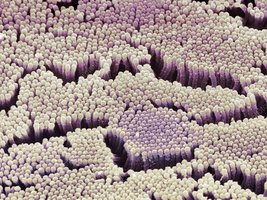
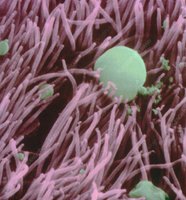
Cilia: Hair-like projections that move substances across the cell surface (e.g., mucus in the respiratory tract).
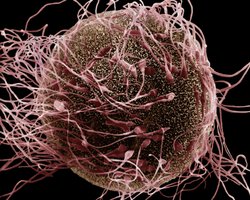
Flagella: Long, whip-like structures for cell movement; in humans, only sperm cells have flagella.
Microvilli: Fingerlike extensions that increase surface area for absorption, especially in the small intestine.
Cell Diversity
Types and Functions of Human Cells
The human body contains over 200 different cell types, each specialized for unique functions. Cell shape and structure reflect their roles:
Fibroblasts: Connect body parts by secreting fibers.
Erythrocytes (Red Blood Cells): Carry oxygen in the bloodstream.
Epithelial Cells: Cover and line body organs, forming protective sheets.
Muscle Cells: Contract to produce movement (skeletal, cardiac, smooth muscle).
Fat Cells: Store nutrients as lipid droplets.
White Blood Cells (e.g., Macrophages): Fight disease by engulfing pathogens.
Nerve Cells (Neurons): Gather information and control body functions by transmitting electrical signals.
Reproductive Cells: Oocytes (female) and sperm (male) are specialized for fertilization and reproduction.
Cell Physiology
Basic Functions of Cells
Metabolism: Chemical reactions that sustain life.
Digestion: Breakdown of nutrients for energy and building materials.
Excretion: Removal of waste products.
Reproduction: Cell division for growth and repair.
Growth: Increase in cell size or number.
Movement: Locomotion or movement of substances within the cell.
Responsiveness: Ability to respond to stimuli.
Membrane Transport
Solutions and Cellular Fluids
Solution: Homogeneous mixture of solvent (major component, usually water) and solutes (minor components).
Intracellular Fluid: Fluid within cells (nucleoplasm, cytosol).
Extracellular Fluid: Fluid outside cells (interstitial fluid), containing nutrients, hormones, and waste products.
Selective Permeability of the Plasma Membrane
The plasma membrane allows some substances to pass while excluding others, maintaining homeostasis.
Methods of Membrane Transport
Passive Processes: Do not require cellular energy (ATP).
Active Processes: Require energy input from the cell.
Passive Processes
Diffusion: Movement of molecules from high to low concentration (down a concentration gradient). Includes:
Simple Diffusion: Unassisted movement of lipid-soluble or small molecules.
Osmosis: Diffusion of water through a selectively permeable membrane via aquaporins.
Facilitated Diffusion: Movement of larger or charged molecules via protein carriers or channels (e.g., glucose, chloride ions).
Filtration: Water and solutes are forced through a membrane by hydrostatic pressure; important in kidney function.
Osmosis and Tonicity
Isotonic Solution: Equal solute and water concentration as the cell; no net water movement.
Hypertonic Solution: Higher solute concentration outside the cell; water moves out, causing cell shrinkage.
Hypotonic Solution: Lower solute concentration outside the cell; water moves in, causing cell swelling.
Active Processes
Active Transport: Movement of substances against their concentration gradient using ATP and protein pumps (e.g., sodium-potassium pump).
Vesicular Transport: Bulk movement of substances via vesicles; includes exocytosis and endocytosis.
Active Transport Example: Sodium-Potassium Pump
Sodium ions are pumped out of the cell, potassium ions are pumped in, both against their concentration gradients.
Essential for nerve impulse transmission.
Vesicular Transport
Exocytosis: Secretion of materials out of the cell via vesicles that fuse with the plasma membrane.
Endocytosis: Uptake of materials into the cell by engulfing them in vesicles.
Phagocytosis: "Cell eating" of large particles (e.g., bacteria).
Pinocytosis: "Cell drinking" of extracellular fluid and dissolved substances.
Receptor-Mediated Endocytosis: Highly selective uptake of specific molecules via receptor proteins.
Summary Table: Major Cell Parts and Their Functions
Cell Part | Structure | Function |
|---|---|---|
Plasma Membrane | Phospholipid bilayer with proteins and carbohydrates | Selective barrier, cell communication |
Nucleus | Double membrane, nucleolus, chromatin | Genetic control, ribosome synthesis |
Cytoplasm | Cytosol, inclusions, organelles | Site of metabolic activity |
Mitochondria | Double membrane, cristae | ATP production |
Ribosomes | Protein and rRNA | Protein synthesis |
Endoplasmic Reticulum | Membranous network | Protein/lipid synthesis, detoxification |
Golgi Apparatus | Stack of membranes | Protein modification and packaging |
Lysosomes | Membranous sacs with enzymes | Digestion of waste |
Cytoskeleton | Microfilaments, intermediate filaments, microtubules | Support, movement |
Cilia/Flagella/Microvilli | Surface extensions | Movement, absorption |
Key Equations
Diffusion Rate (Fick's Law):
Osmotic Pressure:
Where is the flux, is the diffusion coefficient, is the concentration gradient, is osmotic pressure, is the van 't Hoff factor, is molarity, is the gas constant, and is temperature in Kelvin.
Additional info: The above equations are provided for academic completeness and are not explicitly detailed in the original slides but are fundamental to understanding membrane transport processes.
