 Back
Cells: Structure, Function, and Processes
Study Guide - Smart Notes
 Tailored notes based on your materials, expanded with key definitions, examples, and context.
Cells: The Living Units
Introduction to Cells
Cells are the fundamental units of life, forming the basic building blocks of all living organisms. Human cells vary in size and shape, but all are microscopic and share common structural features.
Size and Shape: Human cells are microscopic and differ notably in shape, which is related to their function.
Cell Composition: Each cell contains cytoplasm, specialized organelles, and is surrounded by a plasma membrane.
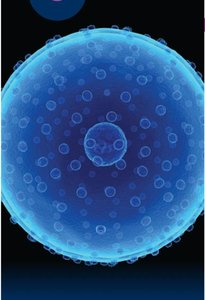
Cell Structure
Main Parts of the Cell
Cells are composed of three main parts: the plasma membrane, cytoplasm, and nucleus. Each part plays a critical role in maintaining cell function and integrity.
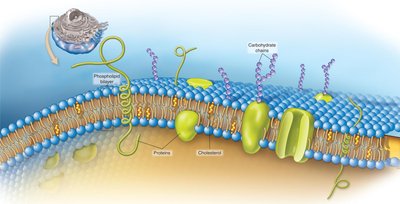
Plasma Membrane: Forms the outer boundary, composed of a phospholipid bilayer with embedded proteins. It is selectively permeable, controlling the movement of substances in and out of the cell.
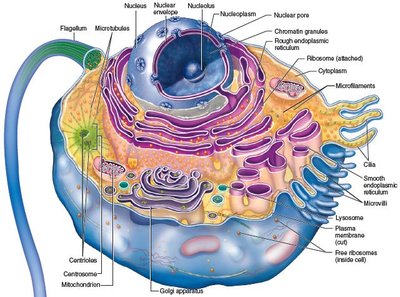
Cytoplasm: The internal living material of the cell, filling the space between the plasma membrane and nucleus, and containing organelles.
Nucleus: Surrounded by a nuclear envelope, it contains the cell's genetic material and controls cellular activities.
Organelles and Their Functions
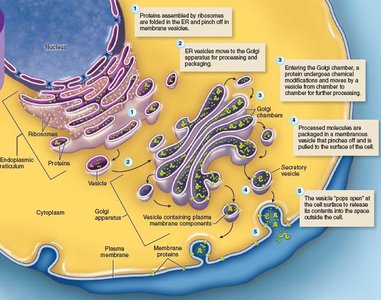
Ribosomes: Sites of protein synthesis, found attached to rough endoplasmic reticulum (ER) or free in cytoplasm.
Endoplasmic Reticulum (ER): Network of membranes; rough ER is involved in protein synthesis and transport, while smooth ER synthesizes lipids and detoxifies chemicals.
Golgi Apparatus: Processes and packages proteins and lipids for export or delivery to other organelles.
Mitochondria: The "powerhouse" of the cell, responsible for energy production through cellular respiration.
Lysosomes: Contain digestive enzymes to break down waste and cellular debris.
Centrosome and Centrioles: Organize microtubules and play a role in cell division.
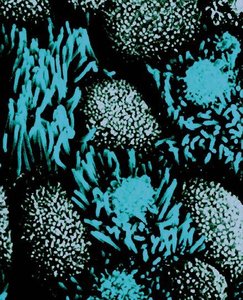
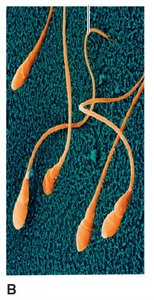
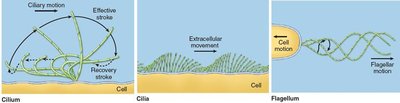
Cell Extensions: Microvilli (increase surface area), cilia (move substances across cell surface), and flagella (enable cell movement, e.g., sperm cells).
Nucleus: Control Center of the Cell
The nucleus contains the cell's DNA, which holds the genetic instructions for protein synthesis and cell function. It is surrounded by a double membrane called the nuclear envelope, which contains nuclear pores for molecular transport.
Nucleolus: Site of ribosome subunit synthesis.
Chromatin: DNA and associated proteins; condenses into chromosomes during cell division.
Cell Membrane Transport Mechanisms
Passive Transport Processes
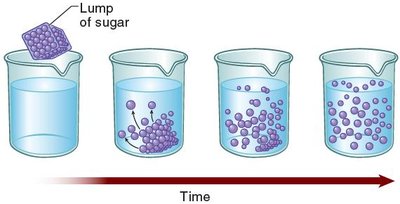
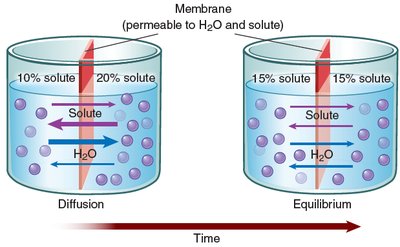
Passive transport does not require cellular energy and involves the movement of substances down their concentration gradients.
Diffusion: Movement of molecules from high to low concentration until equilibrium is reached.
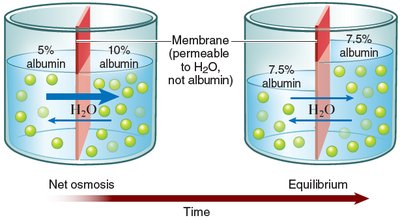
Osmosis: Diffusion of water across a selectively permeable membrane.
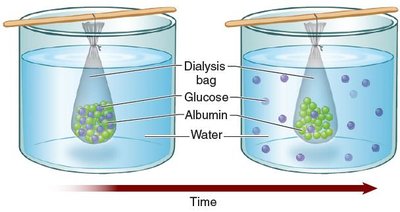
Dialysis: Diffusion of solutes across a selectively permeable membrane.
Filtration: Movement of water and solutes due to hydrostatic pressure.
Active Transport Processes
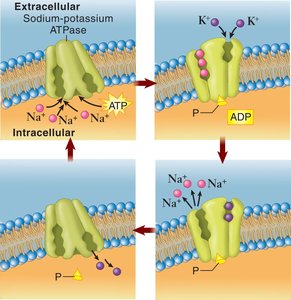
Active transport requires energy (usually from ATP) to move substances against their concentration gradients.
Ion Pumps: Protein complexes that transport ions such as sodium and potassium across the membrane (e.g., sodium-potassium pump).
Phagocytosis: "Cell eating"; the cell engulfs large particles or microorganisms.
Pinocytosis: "Cell drinking"; the cell engulfs extracellular fluid and dissolved substances.
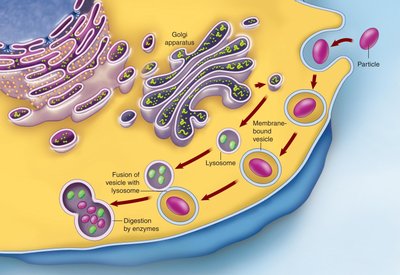
Cell Transport and Disease
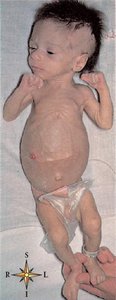
Defects in cell transport mechanisms can lead to diseases such as cystic fibrosis (defective chloride ion transport) and cholera (excessive loss of chloride and water from intestinal cells).
Cell Growth, Reproduction, and Protein Synthesis
DNA Structure and Function
DNA is a double helix composed of nucleotides (sugar, phosphate, and nitrogenous base). The sequence of bases encodes genetic information, which is organized into genes.
Complementary Base Pairing: Adenine pairs with thymine, and cytosine pairs with guanine.
Genes: Segments of DNA that code for proteins.
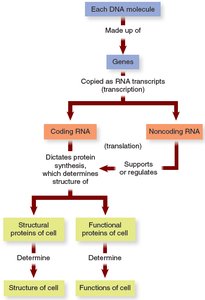
Protein Synthesis: Transcription and Translation
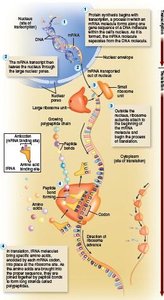
Protein synthesis involves two main steps: transcription (copying DNA to mRNA) and translation (using mRNA to assemble proteins at ribosomes).
Transcription: DNA is used as a template to synthesize messenger RNA (mRNA) in the nucleus.
Translation: mRNA is decoded by ribosomes in the cytoplasm to build proteins from amino acids.
Codon: A sequence of three mRNA bases that codes for a specific amino acid.
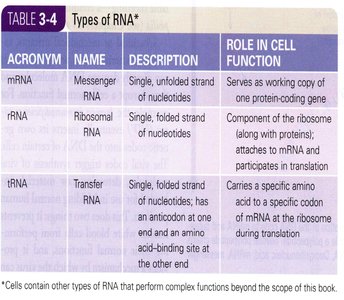
Acronym | Name | Description | Role in Cell Function |
|---|---|---|---|
mRNA | Messenger RNA | Single, unfolded strand of nucleotides | Serves as working copy of one protein-coding gene |
rRNA | Ribosomal RNA | Single, folded strand of nucleotides | Component of the ribosome; attaches to mRNA and participates in translation |
tRNA | Transfer RNA | Single, folded strand of nucleotides with an anticodon and amino acid binding site | Carries specific amino acids to the ribosome during translation |
Genetic Disorders and Disease
Mutations or damage to DNA can disrupt normal cell function and lead to diseases, including genetic disorders and cancer. Environmental factors such as chemicals, radiation, and viruses can cause DNA damage.
Cell Life Cycle and Division
Mitosis and the Cell Cycle
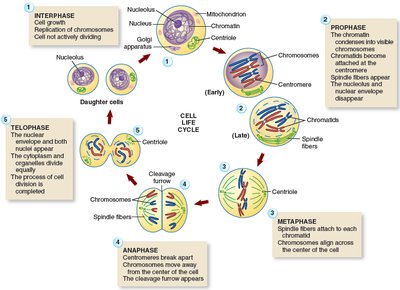
The cell life cycle includes interphase (growth and DNA replication) and mitosis (nuclear division), resulting in two genetically identical daughter cells. Mitosis consists of four stages: prophase, metaphase, anaphase, and telophase.
Interphase: Cell grows and replicates DNA.
Prophase: Chromosomes condense, nuclear envelope dissolves, spindle fibers form.
Metaphase: Chromosomes align at the cell's equator.
Anaphase: Chromatids separate and move to opposite poles.
Telophase: Nuclear envelopes reform, cytokinesis divides the cytoplasm.
Changes in Cell Growth and Reproduction
Cellular Adaptations
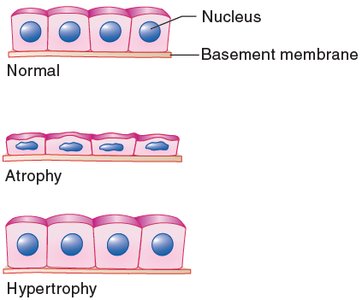
Cells can undergo various changes in response to physiological or pathological stimuli:
Hypertrophy: Increase in cell size.
Atrophy: Decrease in cell size.
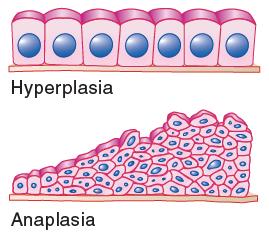
Hyperplasia: Increase in cell number.
Anaplasia: Loss of differentiation, leading to abnormal cell structure and function (often seen in cancer).
Clinical Application: Stem Cells
Stem Cells and Differentiation
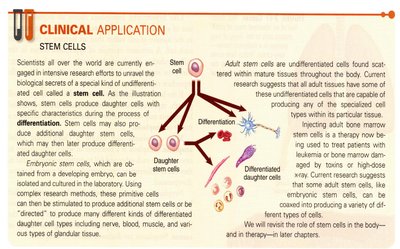
Stem cells are undifferentiated cells capable of giving rise to various cell types. They play a crucial role in growth, repair, and research into regenerative medicine.
Review Questions
The three main parts of a cell are: Plasma membrane, cytoplasm, nucleus.
The organelle most often referred to as the "power plant" of the cell is the mitochondrion.
Cell transport processes are classified as passive and active transport.
All human cells that reproduce do so by mitosis.
Before a cell divides, each DNA molecule forms another identical DNA molecule in a process called DNA replication.
If the body loses control of mitosis, abnormal hyperplasia may occur, forming a mass of cells called a neoplasm (tumor).
Additional info: This guide covers the essential structure and function of cells, their organelles, transport mechanisms, genetic control, cell division, and clinical relevance, providing a comprehensive overview for ANP college students.
