 Back
Cells: The Living Units – Structure and Function
Study Guide - Smart Notes
 Tailored notes based on your materials, expanded with key definitions, examples, and context.
Cells: The Living Units
Cell Theory
The cell is the fundamental structural and functional unit of all living organisms. All physiological processes of an organism are the result of the activities of its cells, and the continuity of life is maintained at the cellular level.
Smallest living unit: Cells are the basic units of life.
Functional dependence: The function of an organism depends on the combined activities of its cells.
Structure determines function: The biochemical activities of cells are determined by their specific subcellular structures.
Cellular continuity: Life continues through cellular reproduction.
Cell Diversity
Human bodies contain over 200 different types of cells, each specialized in size, shape, and function. Examples include fibroblasts, erythrocytes, epithelial cells, muscle cells, macrophages, nerve cells, fat cells, and sperm cells.
Structural diversity: Cells vary greatly in appearance and internal composition.
Functional diversity: Each cell type is adapted to perform specific roles in the body.
Generalized Cell Structure
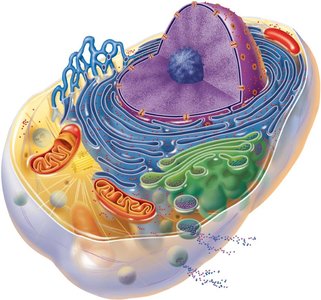
Despite their diversity, all human cells share three basic components:
Plasma membrane: The flexible outer boundary that separates the cell from its environment.
Cytoplasm: The intracellular fluid containing organelles.
Nucleus: The control center containing genetic material.
Plasma Membrane Structure and Function
Overview of the Plasma Membrane
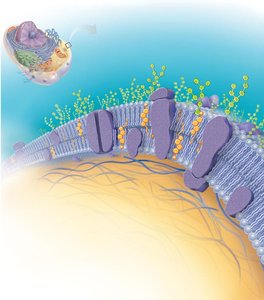
The plasma membrane is a dynamic, selectively permeable barrier composed of a bimolecular layer of lipids and proteins. It separates the intracellular fluid (ICF) from the extracellular fluid (ECF), including the interstitial fluid (IF) that bathes cells.
Membrane Lipids
The lipid bilayer forms the basic structure of the membrane and is composed of:
Phospholipids (75%): Have polar, hydrophilic heads and nonpolar, hydrophobic tails, creating a bilayer.
Glycolipids (5%): Lipids with attached sugar groups, found on the outer surface.
Cholesterol (20%): Stabilizes membrane fluidity and structure.
Membrane Proteins
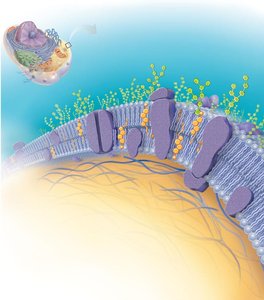
Proteins embedded in or attached to the membrane perform various functions:
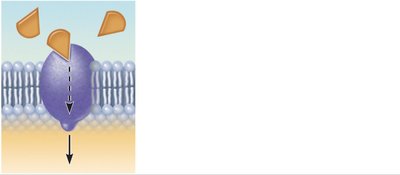
Integral proteins: Firmly inserted, often spanning the membrane (transmembrane); function as transporters, enzymes, or receptors.
Peripheral proteins: Loosely attached to integral proteins; function as enzymes, motor proteins, or in cell-to-cell connections.
Functions of Membrane Proteins
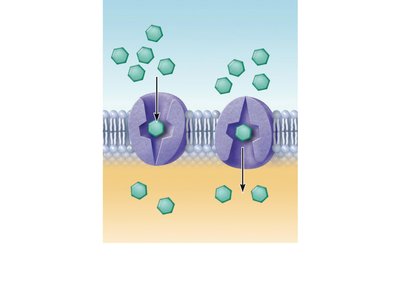
Transport: Move substances across the membrane via channels or carriers.
Receptors for signal transduction: Bind chemical messengers and initiate cellular responses.
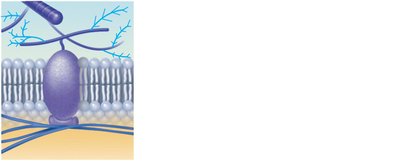
Attachment to cytoskeleton and extracellular matrix (ECM): Maintain cell shape and stabilize membrane proteins.
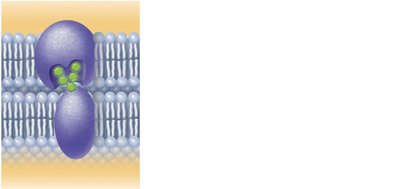
Enzymatic activity: Catalyze metabolic reactions at the membrane surface.
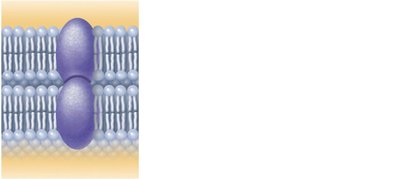
Intercellular joining: Form cell junctions for tissue integrity.
Cell-cell recognition: Allow cells to identify each other via glycoproteins.
Membrane Junctions
Types of Membrane Junctions
Cells are connected by specialized junctions that maintain tissue structure and function:
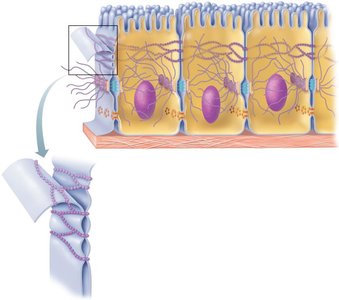
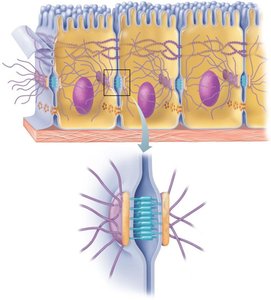
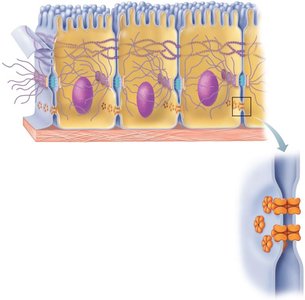
Tight junctions: Impermeable barriers that prevent passage of molecules between cells.
Desmosomes: Anchoring junctions that bind cells together and provide mechanical stability.
Gap junctions: Communicating junctions that allow ions and small molecules to pass between cells.
Membrane Transport
Selective Permeability
The plasma membrane is selectively permeable, allowing some substances to cross easily while restricting others. Transport occurs via passive or active processes.
Types of Membrane Transport
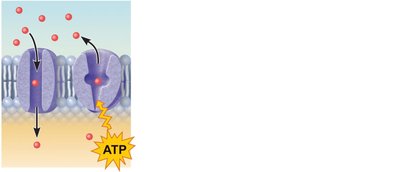
Passive processes: Do not require cellular energy (ATP); substances move down their concentration gradient.
Active processes: Require energy (ATP); substances move against their concentration gradient.
Passive Processes
Whether a substance can passively permeate the membrane depends on its lipid solubility, the presence of channels of appropriate size, and the availability of carrier proteins.
Simple diffusion: Nonpolar, lipid-soluble substances diffuse directly through the lipid bilayer.
Facilitated diffusion: Lipophobic molecules (e.g., glucose, amino acids, ions) use carrier or channel proteins.
Osmosis: Diffusion of water through the membrane, either directly or via aquaporins.
Osmosis and Tonicity
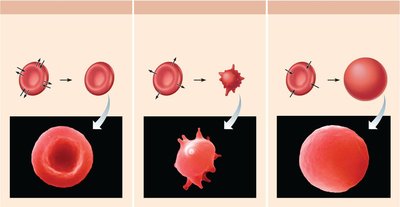
Osmosis is the movement of water across a selectively permeable membrane, driven by differences in solute concentration (osmolarity). Tonicity describes a solution's ability to cause a cell to shrink or swell:
Isotonic: Same solute concentration as cytosol; cell volume remains unchanged.
Hypertonic: Higher solute concentration than cytosol; cells lose water and shrink.
Hypotonic: Lower solute concentration than cytosol; cells gain water and may burst (lyse).
Additional info: The concepts of membrane structure, transport, and cell junctions are foundational for understanding tissue organization, organ function, and physiological regulation in human anatomy and physiology.
