 Back
BackCells: The Living Units – Structure, Function, and Membrane Dynamics
Study Guide - Smart Notes
 Tailored notes based on your materials, expanded with key definitions, examples, and context.
Cells: The Living Units
Introduction to Cells
Cells are the fundamental structural and functional units of all living organisms. Understanding their structure and function is essential for comprehending how the human body operates at the microscopic level.
Cell Theory: All living things are composed of cells, which arise only from pre-existing cells. The cell is the smallest unit of life.
Cell Diversity: The human body contains over 250 different types of cells, varying in size, shape, and function.
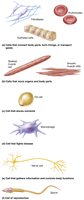
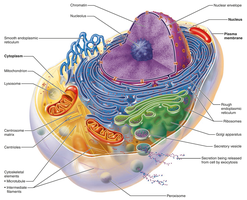
Generalized Cell Structure
Despite their diversity, all human cells share three basic structural components:
Plasma membrane: The flexible outer boundary that separates the cell from its environment.
Cytoplasm: The intracellular fluid containing organelles.
Nucleus: The control center containing DNA.
Plasma Membrane Structure and Function
Fluid Mosaic Model
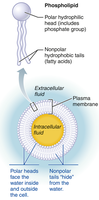
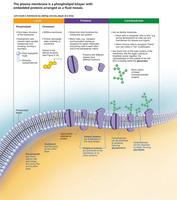
The plasma membrane is a dynamic structure composed of a double layer of phospholipids with embedded proteins, cholesterol, and carbohydrates. This arrangement allows selective permeability and communication with the environment.
Phospholipid bilayer: Polar, hydrophilic heads face outward; nonpolar, hydrophobic tails face inward.
Cholesterol: Stabilizes membrane fluidity.
Proteins: Integral and peripheral proteins perform various functions.
Glycocalyx: Carbohydrate-rich area on the cell surface for recognition and protection.
Membrane Proteins and Their Functions
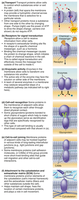
Membrane proteins are essential for cell communication, transport, and structural support. They are classified as integral (embedded in the membrane) or peripheral (attached to the membrane surface).
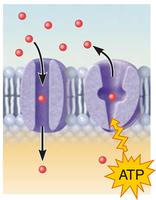
Transport: Channels and carriers move substances across the membrane.
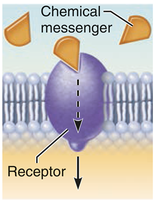
Receptors: Bind chemical messengers and initiate signal transduction.
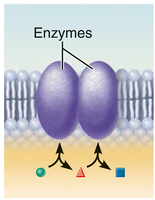
Enzymatic activity: Catalyze reactions at the membrane surface.
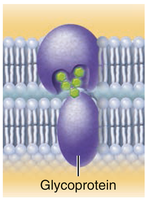
Cell-cell recognition: Glycoproteins serve as identification tags.
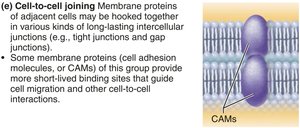
Cell-to-cell joining: Form intercellular junctions for tissue integrity.
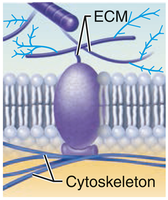
Attachment: Anchor the cytoskeleton and extracellular matrix.
Membrane Transport Mechanisms
Passive Transport
Passive transport moves substances across the membrane without energy input, relying on concentration gradients.
Simple diffusion: Movement of nonpolar and lipid-soluble substances directly through the bilayer.
Facilitated diffusion: Movement of polar or charged substances via protein channels or carriers.
Osmosis: Diffusion of water through a selectively permeable membrane.
Key factors affecting diffusion speed: Concentration gradient, molecular size, and temperature.
Active Transport
Active transport requires ATP to move substances against their concentration gradients.
Primary active transport: Direct use of ATP (e.g., sodium-potassium pump).
Secondary active transport: Indirect use of ATP via ion gradients.
Vesicular transport: Movement of large particles via vesicles (endocytosis, exocytosis).
Cytoplasmic Organelles
Overview of Organelles
Organelles are specialized structures within the cytoplasm that perform distinct cellular functions. Membranous organelles allow compartmentalization, which is crucial for cellular efficiency.
Mitochondria: ATP production via aerobic respiration.
Ribosomes: Protein synthesis.
Endoplasmic reticulum (ER): Rough ER synthesizes proteins; smooth ER synthesizes lipids and detoxifies chemicals.
Golgi apparatus: Modifies, sorts, and packages proteins and lipids.
Lysosomes: Digestive enzymes for breakdown of waste.
Peroxisomes: Detoxification and lipid metabolism.
Cytoskeleton: Structural support and intracellular transport.
Centrosome and centrioles: Organize microtubules and cell division.
Nucleus and Genetic Control
Nucleus Structure and Function
The nucleus is the largest organelle, containing the genetic material (DNA) necessary for protein synthesis and cell regulation.
Nuclear envelope: Double membrane with nuclear pores for molecular exchange.
Nucleoli: Sites of ribosomal RNA synthesis.
Chromatin: DNA-protein complex; condenses to form chromosomes during cell division.
Protein Synthesis
Protein synthesis involves two main processes:
Transcription: DNA is transcribed into messenger RNA (mRNA) in the nucleus.
Translation: mRNA is translated into a polypeptide chain at the ribosome in the cytoplasm.
Key molecules: mRNA (carries code), tRNA (brings amino acids), rRNA (forms ribosomes).
Cell Cycle and Division
Phases of the Cell Cycle
The cell cycle consists of interphase (cell growth and DNA replication) and the mitotic phase (cell division).
Interphase: G1 (growth), S (DNA synthesis), G2 (preparation for division).
Mitosis: Prophase, metaphase, anaphase, telophase.
Cytokinesis: Division of the cytoplasm, resulting in two daughter cells.
Summary Table: Key Cell Structures and Functions
Structure | Main Function |
|---|---|
Plasma membrane | Selective barrier, communication, cell recognition |
Cytoplasm | Site of metabolic activity, contains organelles |
Nucleus | Genetic control center, DNA storage |
Mitochondria | ATP production |
Ribosomes | Protein synthesis |
Endoplasmic reticulum | Protein and lipid synthesis, detoxification |
Golgi apparatus | Protein modification and packaging |
Lysosomes | Intracellular digestion |
Peroxisomes | Detoxification, lipid metabolism |
Cytoskeleton | Structural support, movement |
Additional info: This summary integrates foundational concepts from Chapter 3 of a standard Anatomy & Physiology curriculum, focusing on cell structure, membrane dynamics, and the cell cycle. For further study, refer to diagrams and figures in your textbook for visual reinforcement of these concepts.
