 Back
Cells: The Living Units – Structure, Function, and Membrane Transport
Study Guide - Smart Notes
 Tailored notes based on your materials, expanded with key definitions, examples, and context.
Cells: The Living Units
Cell Theory and Diversity
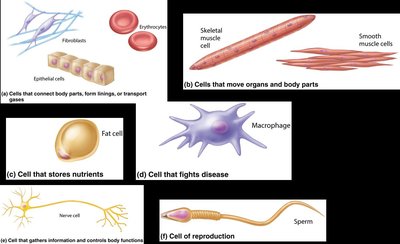
The cell is the fundamental structural and functional unit of life. All organisms are composed of one or more cells, and the activities of an organism depend on the combined activities of its cells. Cell structure and function are complementary, and cells arise only from preexisting cells. Human bodies contain over 250 different types of cells, each specialized in size, shape, and function.
Cell Theory: All living things are made of cells; cells are the basic unit of structure and function; all cells come from preexisting cells.
Cell Diversity: Cells vary in shape (e.g., spherical, elongated), size, and internal organization, reflecting their specialized roles.
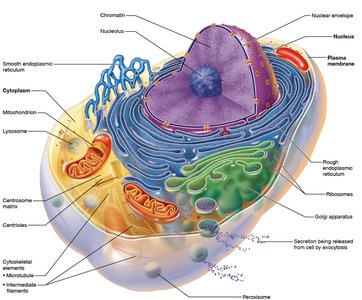
Generalized Cell Structure: All human cells share three basic components: the plasma membrane, cytoplasm, and nucleus.
Plasma Membrane: Structure and Function
Overview and Composition
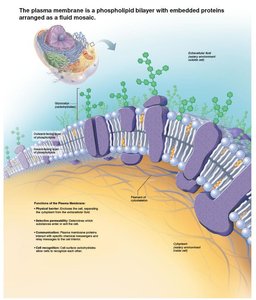
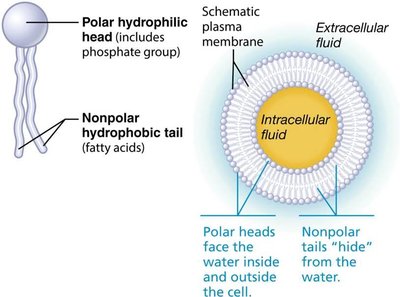
The plasma membrane is a dynamic, selectively permeable barrier that separates the intracellular fluid from the extracellular environment. It is primarily composed of a phospholipid bilayer with embedded proteins, cholesterol, and carbohydrates, forming a fluid mosaic model.
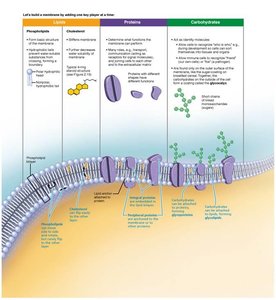
Phospholipid Bilayer: Provides the basic structure; hydrophilic heads face outward, hydrophobic tails face inward.
Cholesterol: Stabilizes membrane fluidity.
Proteins: Integral and peripheral proteins serve as channels, receptors, enzymes, and anchors.
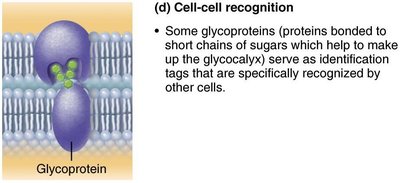
Carbohydrates: Form the glycocalyx, important for cell recognition and signaling.
Membrane Proteins and Their Functions
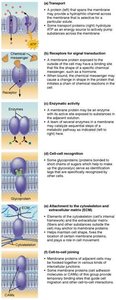
Membrane proteins are essential for communication, transport, and structural support. They are classified as integral (embedded in the membrane) or peripheral (attached to membrane surfaces).
Integral Proteins: Span the membrane; function as channels, carriers, receptors, or enzymes.
Peripheral Proteins: Loosely attached; function in support, cell shape, and signaling.
Function | Description |
|---|---|
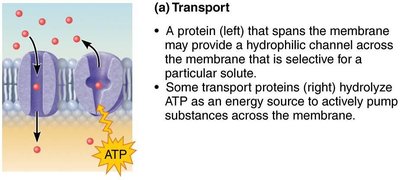
Transport | Move substances across the membrane (channels, pumps) |
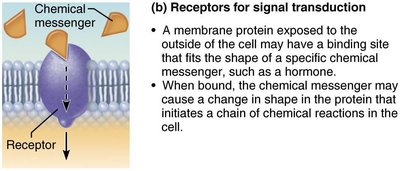
Receptors | Bind chemical messengers and initiate cellular responses |
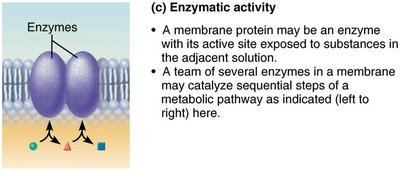
Enzymatic Activity | Catalyze metabolic reactions |
Cell Recognition | Identify cells to the immune system |
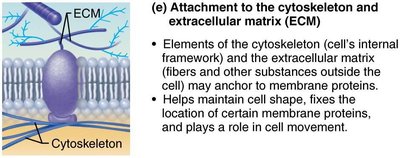
Attachment | Anchor cytoskeleton and extracellular matrix |
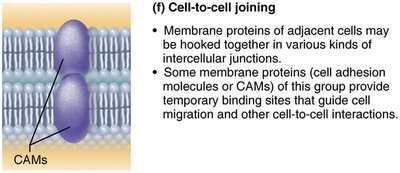
Cell Joining | Form intercellular junctions |
Cell Junctions
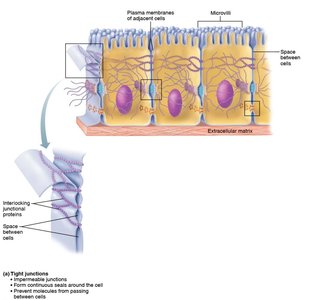
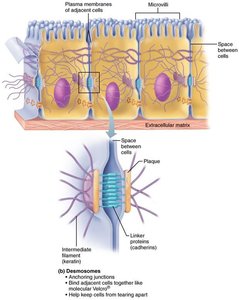
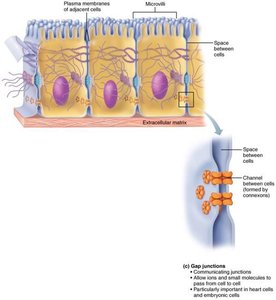
Most cells are bound together by specialized junctions that maintain tissue integrity and facilitate communication.
Tight Junctions: Impermeable seals that prevent passage of molecules between cells (e.g., in the intestines).
Desmosomes: Anchoring junctions that provide mechanical stability by linking cytoskeletons of adjacent cells (e.g., in skin and heart tissue).
Gap Junctions: Communicating junctions that allow ions and small molecules to pass directly between cells (e.g., in cardiac muscle).
Membrane Transport Mechanisms
Passive Transport
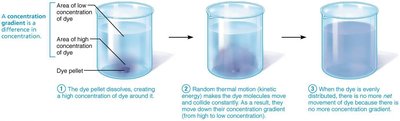
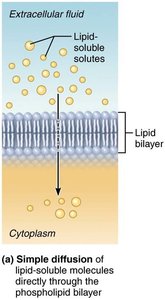
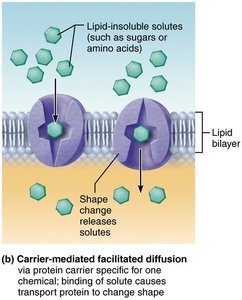
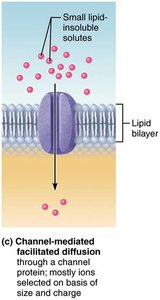
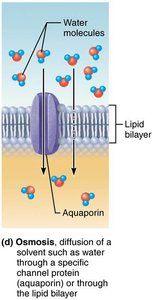
Passive transport does not require cellular energy (ATP) and relies on the movement of substances down their concentration gradients.
Simple Diffusion: Movement of lipid-soluble or small molecules directly through the lipid bilayer (e.g., O2, CO2).
Facilitated Diffusion: Movement of larger or polar molecules via protein carriers or channels (e.g., glucose, ions).
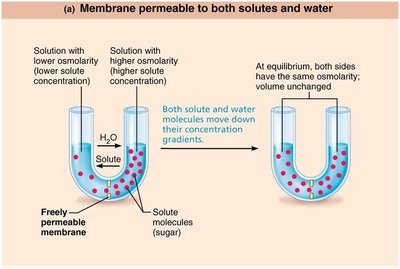
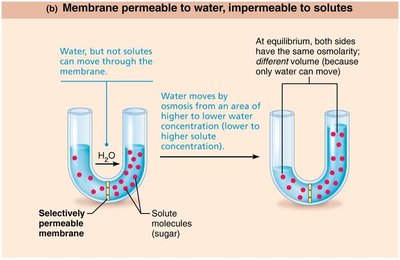
Osmosis: Diffusion of water across a selectively permeable membrane, often through aquaporins.
Osmosis and Tonicity
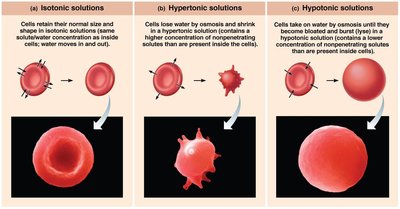
Osmosis is the movement of water from areas of low solute concentration to high solute concentration. Tonicity describes how a solution affects cell volume:
Isotonic: No net water movement; cell volume remains constant.
Hypertonic: Water leaves the cell; cell shrinks (crenation).
Hypotonic: Water enters the cell; cell swells and may burst (lysis).
Key Equations
Osmolarity:
Example: (since NaCl dissociates into two ions: Na+ and Cl-)
*Additional info: The above content is expanded with academic context to ensure clarity and completeness for college-level study. Only the most relevant images are included to reinforce key concepts.*
