 Back
BackCells: The Living Units – Structure, Function, and Membrane Transport
Study Guide - Smart Notes
 Tailored notes based on your materials, expanded with key definitions, examples, and context.
Cells: The Living Units
Cell Theory and Introduction to Cells
The cell is the fundamental structural and functional unit of all living organisms. Cell theory, developed from the work of Robert Hooke and others, establishes that all living things are composed of cells, all cells arise from preexisting cells, and cells are the smallest units capable of performing all vital physiological functions. Each cell maintains homeostasis at the cellular level, and the biochemical activities of cells are dictated by their shapes and subcellular structures.
Cell: The basic unit of structure and function in living organisms.
Cell Diversity: Over 200 different types of human cells exist, varying in size, shape, components, and function.
Types of Cells: Sex cells (germ cells) include sperm and oocytes; somatic cells are all other body cells.
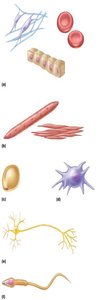
Generalized Cell Structure
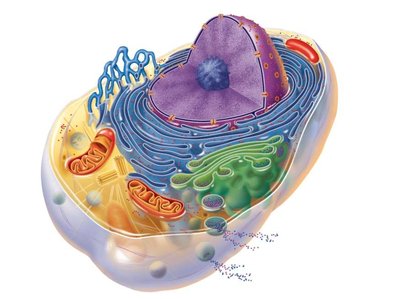
Despite their diversity, all human cells share three basic structural components:
Plasma membrane: Flexible outer boundary that separates the cell from its environment.
Cytoplasm: Intracellular fluid containing organelles.
Nucleus: Control center containing genetic material (DNA).
Plasma Membrane: Structure and Function
Overview of the Plasma Membrane
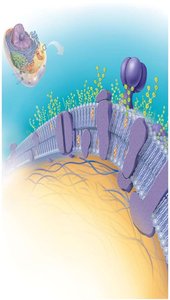
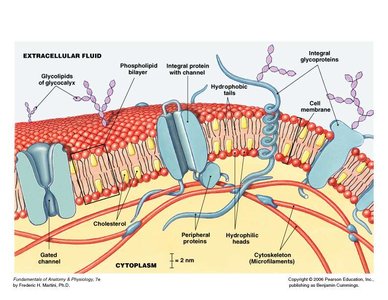
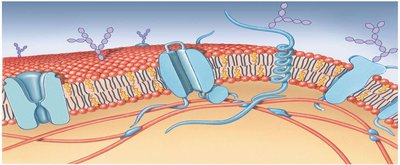
The plasma membrane is a dynamic, selectively permeable barrier composed of a lipid bilayer with embedded proteins. It separates the intracellular fluid (ICF) from the extracellular fluid (ECF), maintaining the internal environment of the cell.
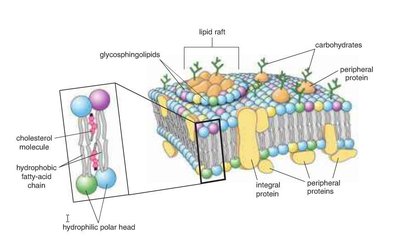
Lipid bilayer: Composed mainly of phospholipids, with cholesterol and glycolipids contributing to membrane stability and function.
Fluid mosaic model: Describes the constantly changing arrangement of lipids and proteins in the membrane.
Membrane Lipids
Phospholipids (75%): Have hydrophilic (water-loving) heads and hydrophobic (water-fearing) tails, forming a bilayer.
Glycolipids (5%): Lipids with attached sugar groups, found on the outer membrane surface.
Cholesterol (20%): Stabilizes membrane fluidity and structure.
Membrane Proteins
Membrane proteins account for about half the mass of the plasma membrane and are responsible for most of its specialized functions. They can be classified as:
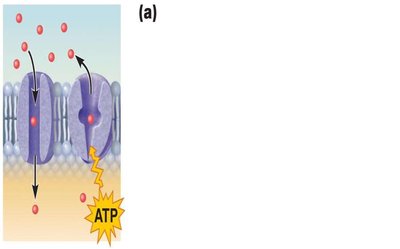
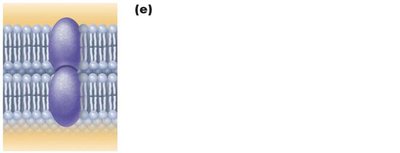
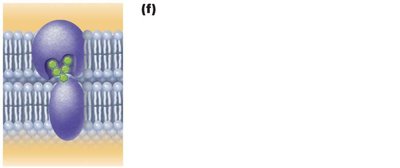
Integral proteins: Firmly embedded in the membrane; many span the entire bilayer (transmembrane proteins). Functions include transport, acting as receptors, and enzymes.
Peripheral proteins: Loosely attached to integral proteins or membrane lipids; function as enzymes, motor proteins, and in cell-to-cell connections.
Functions of Membrane Proteins
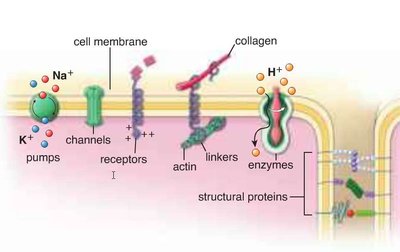
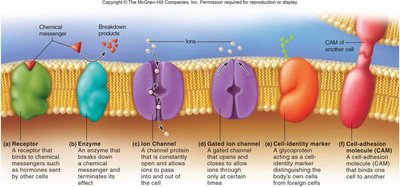
Membrane proteins perform a variety of essential cellular functions:
Transport: Move substances across the membrane via channels or carriers.
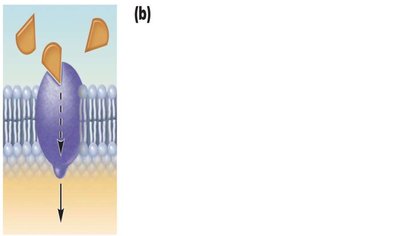
Receptors for signal transduction: Bind chemical messengers and initiate cellular responses.
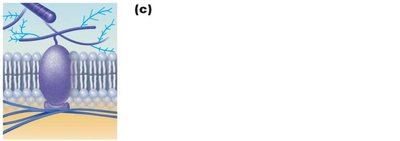
Attachment to cytoskeleton and extracellular matrix: Maintain cell shape and stabilize membrane proteins.
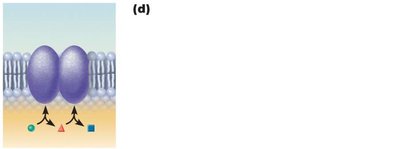
Enzymatic activity: Catalyze metabolic reactions.
Intercellular joining: Form cell junctions for communication and adhesion.
Cell-cell recognition: Glycoproteins serve as identification tags for cell recognition by the immune system.
The Glycocalyx
The glycocalyx is a carbohydrate-rich area on the cell surface formed by glycoproteins and glycolipids. It serves as a biological marker for cell recognition and is important for immune responses and tissue organization.
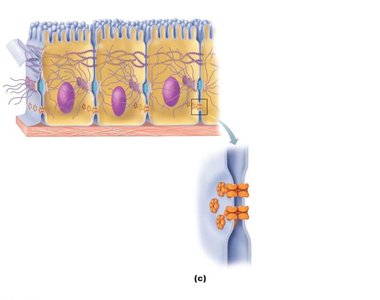
Cell Junctions
Types of Cell Junctions
Cells can be free or bound together to form tissues. The main types of cell junctions are:
Tight junctions: Integral proteins fuse to form impermeable barriers, preventing passage of substances between cells (e.g., in the intestinal lining).
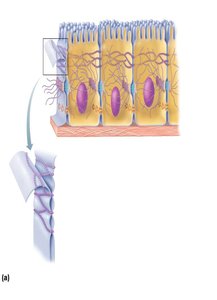
Desmosomes: Anchoring junctions that act like molecular "Velcro," providing mechanical stability (e.g., in skin and heart tissue).
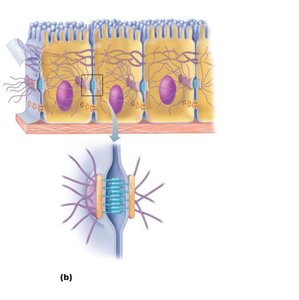
Gap junctions: Communicating junctions formed by connexons, allowing ions and small molecules to pass between cells (e.g., in cardiac and smooth muscle).
Membrane Transport
Overview of Membrane Transport
The plasma membrane is selectively permeable, allowing some substances to pass while excluding others. Transport occurs via passive or active processes:
Passive processes: Do not require cellular energy (ATP); substances move down their concentration gradients.
Active processes: Require energy (ATP); substances move against their concentration gradients.
Passive Processes
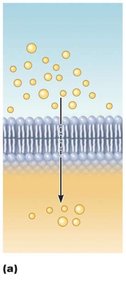
Diffusion: Movement of molecules from an area of higher to lower concentration.
Simple diffusion: Nonpolar, lipid-soluble substances (e.g., O2, CO2) diffuse directly through the lipid bilayer.
Facilitated diffusion: Polar or charged molecules (e.g., glucose, ions) move via protein carriers or channels.
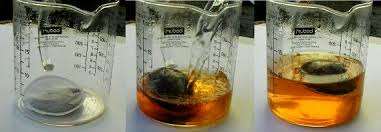
Osmosis: Diffusion of water across a selectively permeable membrane, either directly or via aquaporins.
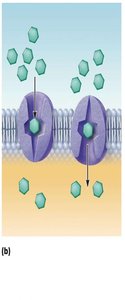
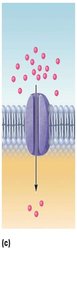
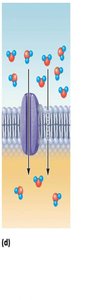
Osmosis and Tonicity
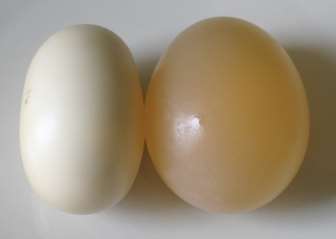
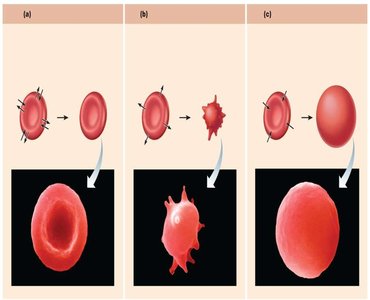
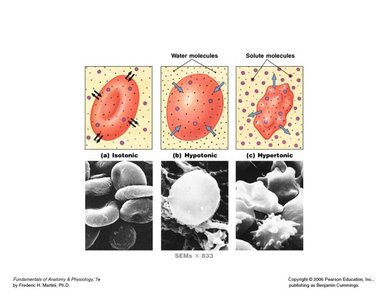
Osmosis is driven by differences in solute concentration (osmolarity) across the membrane. Tonicity describes a solution's ability to change cell volume by altering water movement:
Isotonic: Same solute concentration as cytosol; no net water movement.
Hypertonic: Higher solute concentration than cytosol; cells lose water and shrink (crenate).
Hypotonic: Lower solute concentration than cytosol; cells gain water and may burst (lyse).
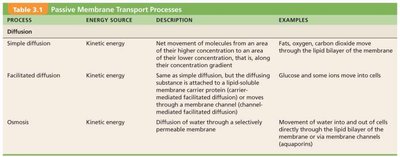
Summary Table: Passive Membrane Transport Processes
Process | Energy Source | Description | Examples |
|---|---|---|---|
Simple diffusion | Kinetic energy | Net movement of molecules from an area of higher concentration to an area of lower concentration, along their concentration gradient. | Fats, oxygen, carbon dioxide move through the lipid bilayer of the membrane. |
Facilitated diffusion | Kinetic energy | Same as simple diffusion, but the diffusing substance is attached to a lipid-soluble membrane carrier protein (carrier-mediated facilitated diffusion) or moves through a membrane channel (channel-mediated facilitated diffusion). | Glucose and some ions move into cells by facilitated diffusion. |
Osmosis | Kinetic energy | Diffusion of water through a selectively permeable membrane. | Movement of water into and out of cells directly through the lipid bilayer of the membrane or via membrane channels (aquaporins). |
Additional info:
Osmolarity equation:
Changes in cell volume due to osmosis can disrupt cell function, especially in excitable cells like neurons.
