 Back
Cells: The Living Units – Structure, Function, and Membrane Transport
Study Guide - Smart Notes
 Tailored notes based on your materials, expanded with key definitions, examples, and context.
Cells: The Living Units
Cell Theory and Cell Diversity
Cells are the fundamental structural and functional units of all living organisms. The human body contains trillions of cells, each specialized for distinct functions. The cell theory states:
The cell is the smallest unit of life
All organisms are composed of one or more cells
Cells arise only from pre-existing cells
Human cells exhibit remarkable diversity in size, shape, and internal components, leading to over 250 different cell types with specialized functions.
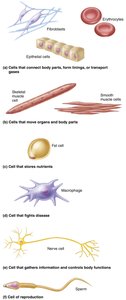
Generalized Cell Structure
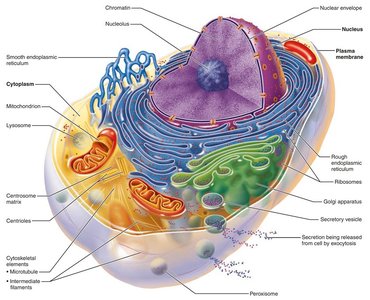
Despite their diversity, all human cells share three basic structural components:
Plasma membrane: Flexible outer boundary that separates the cell from its environment
Cytoplasm: Intracellular fluid containing organelles
Nucleus: Control center containing DNA
Plasma Membrane Structure and Function
Fluid Mosaic Model
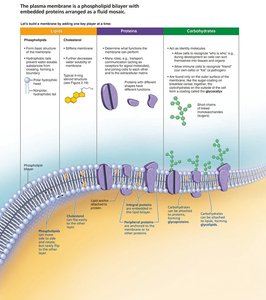
The plasma membrane is a dynamic, selectively permeable barrier composed of a phospholipid bilayer with embedded proteins and surface carbohydrates. This arrangement is described by the fluid mosaic model.
Phospholipids: Form the bilayer; hydrophilic heads face outward, hydrophobic tails face inward
Cholesterol: Interspersed within the bilayer, increasing membrane stability
Proteins: Integral and peripheral proteins perform various functions
Carbohydrates: Form the glycocalyx, important for cell recognition

Membrane Proteins and Their Functions
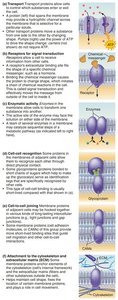
Membrane proteins are essential for communication, transport, and structural support. They are classified as:
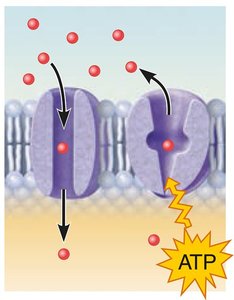
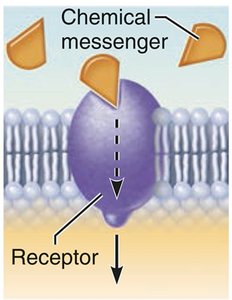
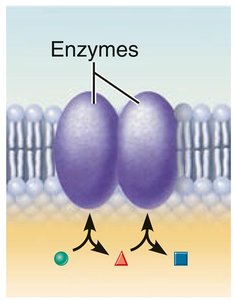
Integral proteins: Span the membrane; function as channels, carriers, receptors, and enzymes
Peripheral proteins: Loosely attached; function as enzymes, motor proteins, and in cell-to-cell connections
Key functions include:
Transport: Channels and carriers move substances across the membrane
Receptors: Receive and transmit signals
Enzymatic activity: Catalyze reactions
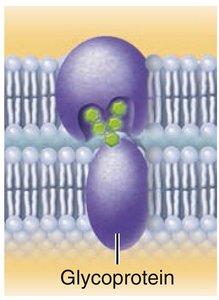
Cell-cell recognition: Glycoproteins serve as identification tags
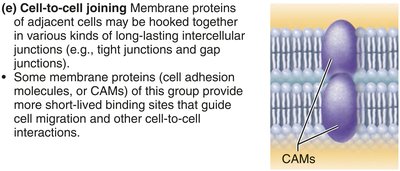
Cell-to-cell joining: Form junctions for tissue integrity
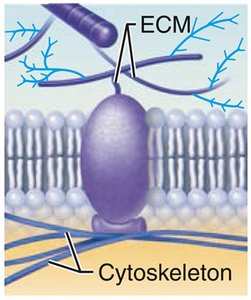
Attachment: Anchor cytoskeleton and extracellular matrix
Glycocalyx and Cell Recognition
The glycocalyx is a carbohydrate-rich area on the cell surface, composed of glycolipids and glycoproteins. It functions as a biological marker for cell recognition and immune response.
Intercellular Junctions
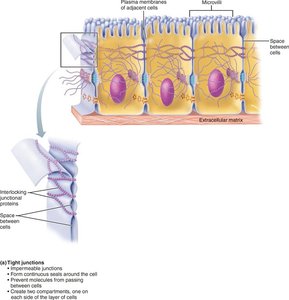
Cells are connected by specialized junctions:
Tight junctions: Create impermeable barriers
Desmosomes: Provide mechanical strength
Gap junctions: Allow communication via small molecules
Membrane Transport
Passive Transport
Passive transport moves substances across the membrane without energy input, relying on concentration gradients. Types include:
Simple diffusion: Direct movement of lipid-soluble substances
Facilitated diffusion: Movement via carrier or channel proteins
Osmosis: Diffusion of water through aquaporins or the bilayer
Key factors affecting diffusion:
Concentration gradient
Molecular size
Temperature
Selective permeability ensures only certain substances can cross the membrane.
Osmosis and Tonicity
Osmosis is the movement of water from areas of low solute concentration to high solute concentration. Tonicity describes the effect of solutions on cell volume:
Isotonic: No net change
Hypertonic: Cell shrinks (crenation)
Hypotonic: Cell swells (lysis)
Active Transport
Active transport requires ATP to move substances against their concentration gradient. Types include:
Primary active transport: Direct use of ATP (e.g., sodium-potassium pump)
Secondary active transport: Indirect use of ATP via ion gradients

Vesicular Transport
Vesicular transport moves large substances via vesicles:
Endocytosis: Intake of substances (phagocytosis, pinocytosis, receptor-mediated)
Exocytosis: Release of substances
Cytoplasm and Organelles
Cytoplasmic Components
The cytoplasm contains:
Cytosol: Gel-like fluid
Inclusions: Stored nutrients and pigments
Organelles: Specialized structures for cellular functions
Major Organelles
Mitochondria: ATP production via aerobic respiration
Ribosomes: Protein synthesis
Endoplasmic reticulum (ER): Rough ER synthesizes proteins; smooth ER synthesizes lipids and detoxifies
Golgi apparatus: Modifies, sorts, and packages proteins
Lysosomes: Digestive enzymes for breakdown
Peroxisomes: Detoxification and fatty acid metabolism
Cytoskeleton
The cytoskeleton provides structural support and facilitates movement:
Microfilaments: Actin filaments for cell shape and movement
Intermediate filaments: Mechanical strength
Microtubules: Tubulin-based tracks for organelle movement
Cellular Extensions
Cilia: Move substances across cell surfaces
Flagella: Propel cells (e.g., sperm)
Microvilli: Increase surface area for absorption
Nucleus and Genetic Control
Nuclear Structure
The nucleus contains:
Nuclear envelope: Double membrane with pores
Nucleoli: Ribosome assembly
Chromatin: DNA and associated proteins
Cell Cycle and Division
The cell cycle consists of interphase (growth and DNA replication) and mitotic phase (cell division). Mitosis includes:
Prophase
Metaphase
Anaphase
Telophase
Cytokinesis: Division of cytoplasm
Protein Synthesis
Transcription and Translation
Protein synthesis involves two main steps:
Transcription: DNA code is transcribed to mRNA in the nucleus
Translation: mRNA is decoded by ribosomes to assemble polypeptides
Key molecules:
mRNA: Carries genetic code
rRNA: Structural component of ribosomes
tRNA: Transfers amino acids to ribosome
Genetic Code
The genetic code is based on triplets of nucleotides (codons) that specify amino acids. There are 64 codons for 20 amino acids, including start and stop signals.
Cellular Homeostasis and Aging
Autophagy, Proteasomes, and Apoptosis
Cells maintain homeostasis by disposing of damaged organelles and proteins:
Autophagy: Degradation of obsolete organelles
Proteasomes: Breakdown of misfolded proteins
Apoptosis: Programmed cell death
Cell Differentiation and Aging
Cells differentiate during development, acquiring specialized functions. Aging theories include wear and tear, mitochondrial dysfunction, immune decline, and genetic programming (telomere shortening).
Summary Table: Membrane Transport Mechanisms
Transport Type | Energy Required | Direction | Examples |
|---|---|---|---|
Simple Diffusion | No | High to Low | O2, CO2, fatty acids |
Facilitated Diffusion | No | High to Low | Glucose, amino acids, ions |
Osmosis | No | High to Low (water) | Water |
Primary Active Transport | Yes (ATP) | Low to High | Na+/K+ pump |
Secondary Active Transport | Indirect (ATP) | Low to High | Glucose, amino acids |
Vesicular Transport | Yes (ATP) | Varies | Endocytosis, exocytosis |
Additional info: This study guide expands on brief points from lecture slides, providing definitions, examples, and academic context for each topic. Images included are directly relevant to the explanation of cell structure, membrane composition, and transport mechanisms.
