 Back
Cellular Immune Response and Immune System Disorders
Study Guide - Smart Notes
 Tailored notes based on your materials, expanded with key definitions, examples, and context.
Cellular Immune Response
Overview of T Cells and Cellular Immunity
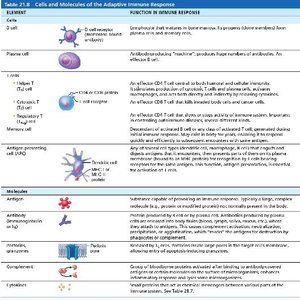
The cellular immune response is mediated by T cells, which defend the body against intracellular pathogens, cancerous cells, and foreign tissues. T cells are more complex than B cells in both classification and function, and are essential for adaptive immunity.
CD4 T cells usually become helper T cells (TH), which activate B cells, other T cells, and macrophages, and direct the adaptive immune response. Some CD4 cells become regulatory T cells or memory T cells.
CD8 T cells become cytotoxic T cells (TC), which destroy cells harboring foreign antigens, and can also become memory T cells.
Naive T cells are termed CD4 or CD8 cells until activation.
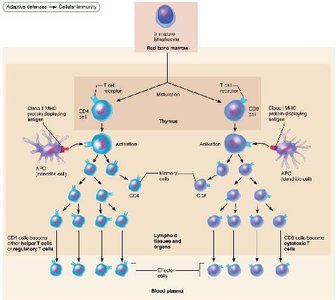
Major Histocompatibility Complex (MHC) Proteins and Antigen Presentation
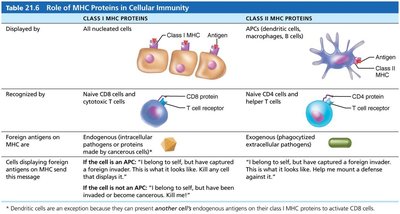
T cells recognize antigens only when presented on cell surfaces by MHC proteins. Antigen presentation is crucial for T cell activation and function.
Class I MHC proteins: Displayed by all nucleated cells except RBCs; present endogenous antigens (from within the cell) and are recognized by CD8 T cells.
Class II MHC proteins: Displayed by antigen-presenting cells (APCs) such as dendritic cells, macrophages, and B cells; present exogenous antigens (from outside the cell) and are recognized by CD4 T cells.
MHC restriction ensures that CD4 cells interact with class II MHC and CD8 cells with class I MHC.
Activation and Differentiation of T Cells
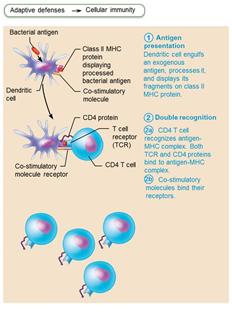
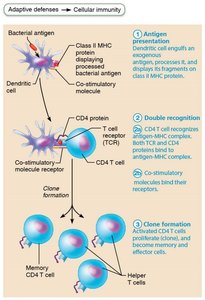
T cell activation is a two-step process that ensures specificity and prevents inappropriate immune responses.
Antigen binding: T cell receptors (TCRs) bind to antigen-MHC complexes on APCs, requiring recognition of both the MHC and the foreign antigen.
Co-stimulation: Additional signals from APCs are required for full activation. Without co-stimulation, T cells become anergic (unresponsive).
Activated T cells proliferate and differentiate into effector and memory cells. The primary response peaks within a week, and most activated T cells die by apoptosis within 7–30 days, while memory cells persist for secondary responses.
Cytokines in Immune Response
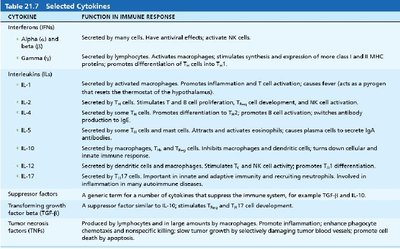
Cytokines are chemical messengers that mediate and regulate immunity, inflammation, and hematopoiesis. They include interleukins and interferons, which stimulate T cell proliferation, differentiation, and activation of other immune cells.
Roles of Specific Effector T Cells
Helper T (TH) Cells
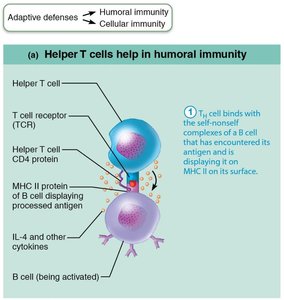
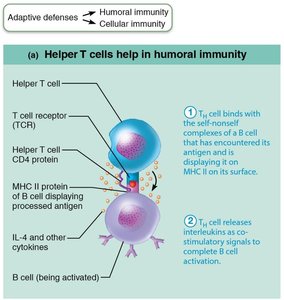
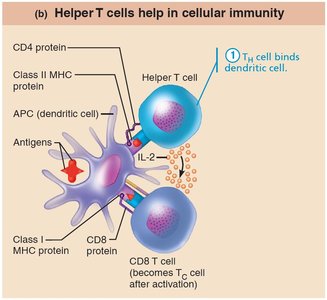
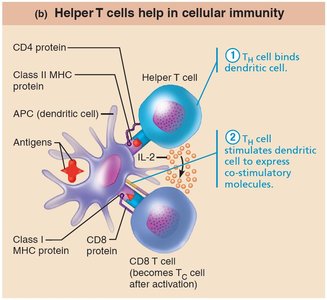
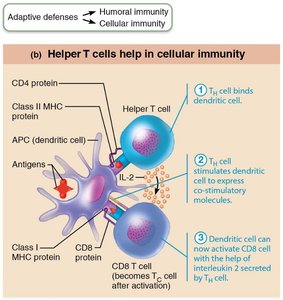
Helper T cells play a central role in adaptive immunity by activating both humoral and cellular immune responses. They help activate B cells, induce proliferation, and secrete cytokines that recruit other immune cells.
Without TH cells, there is no effective immune response.
TH cells interact with B cells and APCs to facilitate immune activation.
Cytotoxic T (TC) Cells
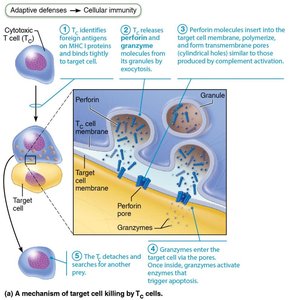
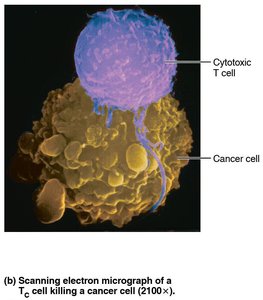
Cytotoxic T cells directly attack and kill infected, cancerous, or foreign cells. They use two main mechanisms:
Release of perforins and granzymes to induce apoptosis in target cells.
Binding to specific membrane receptors to trigger apoptosis.
Regulatory T (TReg) Cells
Regulatory T cells suppress immune responses to prevent autoimmunity and maintain tolerance to self-antigens. They act by direct contact or by secreting inhibitory cytokines such as IL-10 and TGF-β.
Summary Table: Cells and Molecules of the Adaptive Immune Response
Organ Transplants and Immune Problems
Organ Transplants and Prevention of Rejection
Organ transplants (allografts) require close matching of MHC antigens. Recipients are treated with immunosuppressive therapy, which increases susceptibility to infections and can lead to rejection or death.
Immunodeficiencies
Immunodeficiencies are conditions where immune function is impaired. They can be congenital (e.g., SCID) or acquired (e.g., AIDS, Hodgkin’s disease). HIV targets helper T cells, leading to severe immune suppression and opportunistic infections.
Autoimmune Diseases
Autoimmune diseases occur when the immune system attacks self-tissues due to loss of self-tolerance. Examples include rheumatoid arthritis, type 1 diabetes, and multiple sclerosis. Treatments aim to suppress the immune response or restore tolerance.
Hypersensitivities
Hypersensitivities are exaggerated immune responses to harmless antigens. They are classified by time course and mechanism:
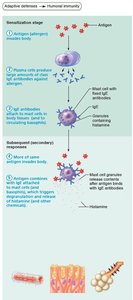
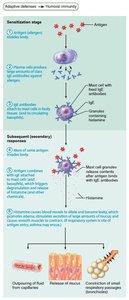
Immediate (Type I): IgE-mediated, rapid onset (e.g., allergies, anaphylaxis).
Subacute (Type II and III): IgG/IgM-mediated, slower onset (e.g., transfusion reactions, SLE).
Delayed (Type IV): T cell-mediated, slowest onset (e.g., contact dermatitis, TB test).
Developmental Aspects of the Immune System
The immune system develops from stem cells in the liver and spleen during fetal life, then in bone marrow. With age, immune function declines, increasing susceptibility to infections, autoimmune diseases, and cancer.
