 Back
Cellular Level of Organization: Structure and Function of Cells and Organelles
Study Guide - Smart Notes
 Tailored notes based on your materials, expanded with key definitions, examples, and context.
Cellular Level of Organization
Introduction to Cells Back
The cell is the fundamental unit of life, forming the basis for all structure and function in living organisms. Understanding the structure and function of cells is essential for comprehending how the human body operates at the microscopic level.
Cell Theory and Cellular Differentiation
Cell Theory: All living things are composed of cells; cells are the basic units of structure and function in living organisms; all cells arise from pre-existing cells.
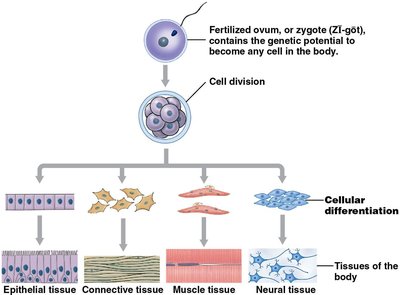
Cellular Differentiation: The process by which a less specialized cell becomes a more specialized cell type. This is crucial for the development of various tissues in the body.
Example: A fertilized ovum divides and differentiates into epithelial, connective, muscle, and neural tissues, forming the tissues of the body.
Cell Structure and Organelles
Body Fluid Distribution and Cell Components
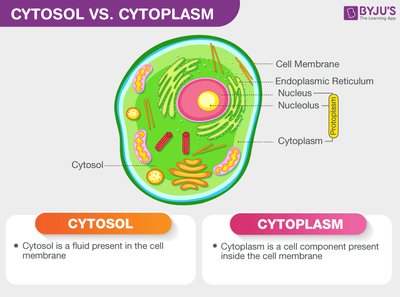
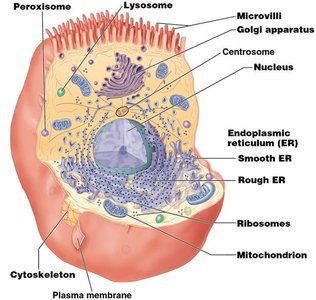
Cells are surrounded by extracellular fluid and contain intracellular fluid (cytosol). The plasma membrane separates these compartments, while the cytoplasm includes both cytosol and organelles.
Extracellular Fluid: Fluid outside the cell, including interstitial fluid.
Intracellular Fluid (Cytosol): Fluid within the cell, containing dissolved ions, nutrients, and proteins.
Cytoplasm: The region between the plasma membrane and the nucleus, containing cytosol and organelles.
Major Organelles and Their Functions
Organelles are specialized structures within cells that perform distinct processes necessary for cellular function.
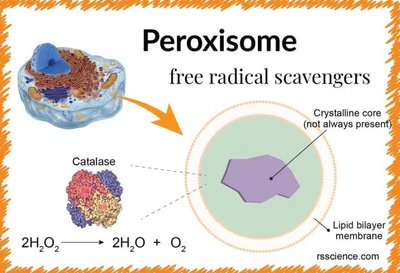
Peroxisome: Vesicles containing enzymes that break down hydrogen peroxide, a toxic byproduct of metabolism, into water and oxygen.
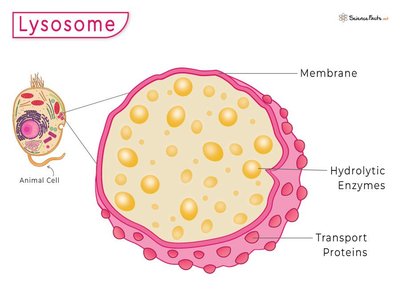
Lysosome: Membrane-bound organelles containing hydrolytic enzymes for intracellular digestion of macromolecules, old organelles, and pathogens.
Microvilli: Membrane extensions containing microfilaments that increase surface area for absorption.
Golgi Apparatus: Stacks of flattened membranes that modify, package, and distribute proteins and lipids for secretion or delivery to other organelles.
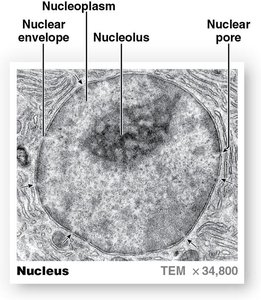
Nucleus: The control center of the cell, containing nucleoplasm, DNA, enzymes, and nucleotides. Surrounded by a nuclear envelope with pores for molecular exchange.
Endoplasmic Reticulum (ER): A network of membranous sheets and channels. Two types:
Smooth ER: Synthesizes lipids and carbohydrates.
Rough ER: Studded with ribosomes; synthesizes proteins for export or membrane insertion.
Ribosomes: Complexes of RNA and proteins that synthesize proteins by translating messenger RNA.
Mitochondrion: Double-membraned organelle; the inner membrane contains enzymes for aerobic respiration, producing ATP, the cell's main energy currency.
Cytoskeleton
The cytoskeleton is a network of protein filaments and tubules that provides structural support, maintains cell shape, and facilitates intracellular transport and cell division. The centrosome is a key component involved in organizing microtubules.
The Plasma Membrane
Structure and Function
The plasma membrane is a selectively permeable barrier that separates the cell's interior from the extracellular environment. It regulates the entry and exit of ions, nutrients, wastes, and secretions.
Phospholipid Bilayer: Composed of two layers of amphipathic phospholipids interspersed with cholesterol molecules, providing fluidity and stability.
Proteins: Integral (including transmembrane), peripheral, and glycoproteins serve as receptors, carriers, and channels.
Glycocalyx: A carbohydrate-rich layer formed by proteoglycans, glycoproteins, and glycolipids, involved in cell recognition and protection.
Membrane Proteins and Their Functions
Receptor Proteins: Bind specific molecules (ligands) and trigger cellular responses.
Carrier Proteins: Transport substances across the membrane.
Channels: Allow water and small ions to pass through the membrane.
Review Questions (with Academic Context)
Which structural component of the plasma membrane is mostly responsible for isolating a cell from its external environment? The phospholipid bilayer forms the main barrier, isolating the cell from its surroundings.
General functions of the plasma membrane: Physical isolation, regulation of exchange, sensitivity to the environment, and structural support.
Which type of integral protein allows water and small ions to pass through the plasma membrane? Channel proteins.
What characteristics of phospholipids account for their packing into a double layer? Their amphipathic nature (hydrophilic heads and hydrophobic tails) causes them to arrange in a bilayer, with tails facing inward and heads facing outward.
Mitochondria: The Powerhouse of the Cell
Structure and Function
Mitochondria are double-membraned organelles with an inner membrane containing metabolic enzymes. They are the primary site of ATP production through aerobic respiration.
Oxygen is required for ATP production, and carbon dioxide is produced as a waste product.
Cells with many mitochondria have high energy requirements, such as muscle cells.
Equation for aerobic respiration:
Summary Table: Major Cell Organelles and Their Functions
Organelle | Structure | Function |
|---|---|---|
Peroxisome | Vesicle with enzymes | Breaks down hydrogen peroxide |
Lysosome | Membrane-bound vesicle | Digests macromolecules and old organelles |
Golgi Apparatus | Stack of flattened membranes | Modifies, sorts, and packages proteins/lipids |
Endoplasmic Reticulum (ER) | Network of membranes | Smooth ER: lipid synthesis; Rough ER: protein synthesis |
Ribosome | RNA and protein complex | Protein synthesis |
Mitochondrion | Double membrane | ATP production |
Nucleus | Double membrane, nucleoplasm | Genetic control center |
Cytoskeleton | Protein filaments/tubules | Structural support, movement |
