 Back
BackCellular Level of Organization: Structure, Function, and Membrane Transport
Study Guide - Smart Notes
 Tailored notes based on your materials, expanded with key definitions, examples, and context.
Cell Theory
Principles of Cell Theory
The cell theory is a foundational concept in biology, stating that all living organisms are composed of cells, and that cells are the basic structural and functional units of life. Modern cell theory expands on these principles, emphasizing the continuity of life and the chemical and energetic processes within cells.
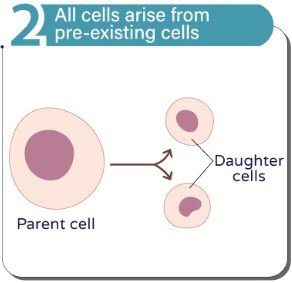
All cells arise from pre-existing cells: During cell division, genetic material (DNA) is passed from the parent cell to daughter cells, ensuring continuity of life.
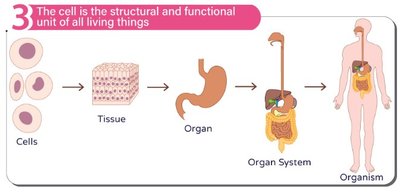
The cell is the structural and functional unit of all living things: Cells form tissues, which combine to create organs, organ systems, and ultimately the organism.
All cells have the same basic chemical composition: This includes water, ions, proteins, lipids, carbohydrates, and nucleic acids.
Energy flow occurs within cells: Cells carry out metabolic reactions to produce and utilize energy.
Cell Structure
Major Components of a Cell
Cells are organized into three main structural components, each with distinct functions:
Plasma membrane: The outer boundary of the cell, separating the internal environment from the external environment. It is selectively permeable and participates in cell identification and signaling.
Cytoplasm: The region between the plasma membrane and nucleus, containing cytosol and organelles.
Nucleus: Contains chromosomes (DNA) and genes, serving as the control center for cellular activities.
Plasma Membrane Structure
Phospholipid Bilayer
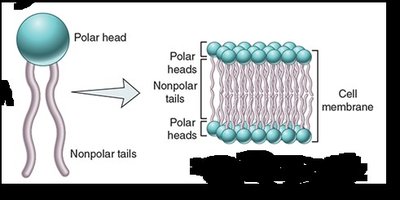
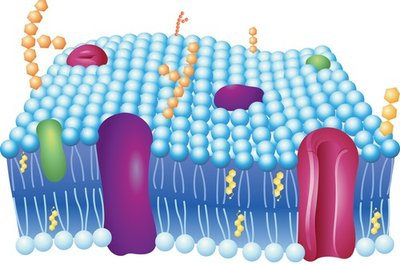
The plasma membrane is primarily composed of a phospholipid bilayer, with embedded proteins and carbohydrates. The bilayer consists of hydrophilic (polar) heads facing outward and hydrophobic (nonpolar) tails facing inward, creating a barrier to most substances.
Phospholipid structure: Each molecule has a polar head and two nonpolar tails.
Fluid Mosaic Model: The membrane is dynamic, with proteins and lipids moving laterally within the bilayer.
Membrane Proteins
Types and Functions of Membrane Proteins
Membrane proteins are essential for various cellular functions, including transport, signaling, and structural support. They are classified based on their location and function:
Integral proteins: Span the lipid bilayer and are involved in transport and signaling.
Transmembrane proteins: Extend through the entire bilayer.
Peripheral proteins: Attached to the membrane surface or to integral proteins.
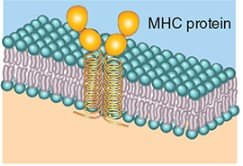
Glycoproteins: Have carbohydrate chains attached, forming the glycocalyx for cell recognition.
Functional Categories
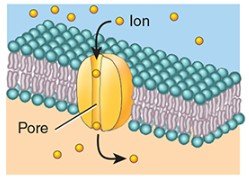
Ion Channels: Allow specific ions to flow through the membrane.
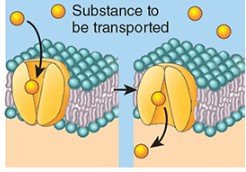
Carrier Proteins: Transport specific substances by changing shape.
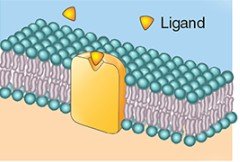
Receptors: Recognize ligands and alter cell function, often initiating signaling pathways.
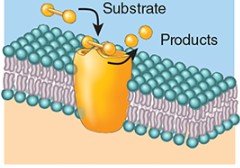
Enzymes: Catalyze reactions inside or outside the cell.
Linkers: Anchor filaments for structural stability.
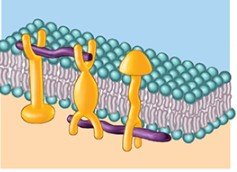
Cell Identity Markers: Identify self vs. foreign cells, important for immune function.
Membrane Permeability
Selective Permeability
The plasma membrane is selectively permeable, allowing certain substances to pass while restricting others. Permeability depends on molecular size, polarity, and charge.
Highly permeable: Small, nonpolar molecules (O2, CO2, steroids).
Moderately permeable: Small, uncharged polar molecules (urea).
Impermeable: Large, charged molecules and ions (glucose, Na+, K+, Cl-).
Membrane Transport
Passive Transport
Passive transport involves the movement of substances down their concentration gradient, without energy input. Types include:
Simple Diffusion: Movement of molecules directly through the membrane.
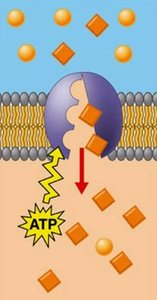
Facilitated Diffusion: Movement assisted by channel or carrier proteins.
Osmosis: Movement of water through aquaporins.
Active Transport
Active transport moves substances against their concentration gradient, requiring energy (usually ATP). Types include:
Primary Active Transport: Direct use of ATP (e.g., sodium-potassium pump).
Secondary Active Transport: Uses energy from ion gradients.
Vesicle Transport: Includes endocytosis and exocytosis.
Factors Affecting Diffusion Rate
Key Factors
The rate of diffusion across a membrane is influenced by several factors:
Steepness of concentration gradient: Greater difference increases rate.
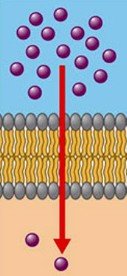
Temperature: Higher temperature increases rate.
Surface area: Larger area increases rate.
Particle size: Smaller particles diffuse faster.
Diffusion distance: Shorter distance increases rate.
Summary Table: Membrane Transport Types
Transport Type | Direction | Energy Required | Examples |
|---|---|---|---|
Simple Diffusion | High to Low | No | O2, CO2 |
Facilitated Diffusion | High to Low | No | Glucose, ions |
Osmosis | High to Low (water) | No | Water |
Active Transport | Low to High | Yes | Na+/K+ pump |
Vesicle Transport | Varies | Yes | Endocytosis, exocytosis |
Additional info:
Expanded explanations of cell structure and membrane transport mechanisms were added for completeness.
Images were included only when directly relevant to the adjacent paragraph, reinforcing key concepts.
