 Back
Cellular Level of Organization: Structure, Function, and Transport
Study Guide - Smart Notes
 Tailored notes based on your materials, expanded with key definitions, examples, and context.
Cellular Level of Organization
Overview of Cells in the Human Body
Cells are the fundamental living units capable of performing essential life functions. All tissues and organs are composed of cells, and their proper function depends on coordinated cellular activity. Life processes such as metabolism and growth originate at the cellular level.
Cells: Smallest living structures; perform all life functions.
Tissues: Groups of similar cells working together.
Organs: Structures composed of multiple tissue types, each with a specific function.
City Analogy: Cells = Residents, Tissues = Neighborhoods, Organs = Government departments.
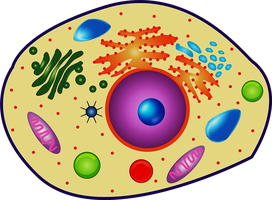
Categories of Human Body Cells
Human cells are classified into two main categories: somatic cells and gametes. Each category has distinct roles and genetic characteristics.
Somatic Cells: All body cells except sex cells; diploid (2n) with 46 chromosomes in 23 pairs.
Gametes: Sex cells (sperm and ova); haploid (n) with 23 chromosomes.
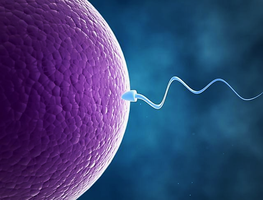
Cell Differentiation
All body cells contain the same DNA, but different cell types arise from selective gene expression. Stem cells are the origin of specialized cells through the process of cellular differentiation.
Embryonic Stem Cells: Can develop into any cell type.
Adult Stem Cells: Tissue-specific; repair and replace damaged cells.
Cellular Differentiation: Stem cells produce specialized cells; once committed, cells cannot revert to their unspecialized state.
Examples of Specialized Cells: Neurons (communication), muscle cells (movement), epithelial cells (protection), red blood cells (oxygen transport), white blood cells (immune defense), bone cells (structural support).
Cell Structure
Plasma Membrane: Selectively Permeable Boundary
The plasma membrane (PM) is a dynamic, flexible boundary that separates the internal and external environments of the cell. It is primarily composed of a phospholipid bilayer, embedded proteins, and cholesterol, and is selectively permeable to maintain cellular homeostasis.
Phospholipid Bilayer: Hydrophilic heads face water; hydrophobic tails face inward.
Embedded Proteins: Channels, transporters, receptors, enzymes, and recognition proteins.
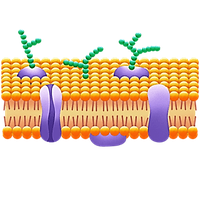
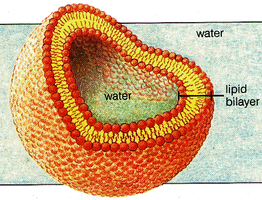
Plasma Membrane Proteins
Proteins embedded in the plasma membrane serve various functions essential for cell activity and communication.
Integral Proteins: Firmly embedded; may span the membrane.
Transmembrane Proteins: Subtype of integral proteins; function as channels, transporters, or receptors.
Peripheral Proteins: Loosely attached; involved in signaling or enzymatic activity.
Types of Plasma Membrane Proteins
Channel Proteins: Form passageways for water and small solutes; may be open or gated.
Carrier Proteins: Bind and transport specific solutes; may require energy (active transport) or not (passive transport).
Recognition Proteins: Glycoproteins that serve as cell identification markers; crucial for immune function.
Receptor Proteins: Bind ligands (ions, hormones) and trigger cellular responses.
Enzyme Proteins: Catalyze chemical reactions on the cell surface or within the cytosol.
Glycocalyx: Glycoproteins & Glycolipids
The glycocalyx is a carbohydrate-rich coating on the cell surface, composed of glycoproteins and glycolipids. It protects the cell, aids in recognition, communication, and adhesion, and is vital for immune responses.
Cell Anatomy: Parts and Organelles
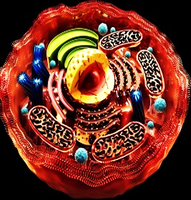
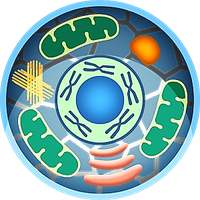
General Cell Parts
Cytoskeleton: Internal support framework (microtubules, intermediate filaments, microfilaments).
Cytosol: Fluid portion of cytoplasm.
DNA (chromatin/chromosomes): Genetic material.
Plasma Membrane: Cell boundary.
Microvilli: Surface projections for absorption.
Cilia: Surface projections for movement of fluid.
Flagella: Whip-like structure for movement (found only on sperm cells).
Cell Organelles
Nucleus: Control center; stores DNA; includes nuclear envelope, nucleoplasm, chromatin, nucleolus.
Rough Endoplasmic Reticulum (RER): Embedded with ribosomes; protein synthesis.
Smooth Endoplasmic Reticulum (SER): Lipid synthesis and detoxification; no ribosomes.
Ribosomes: Sites of protein synthesis; free or fixed.
Mitochondria: Powerhouse; ATP production via cellular respiration.
Golgi Apparatus: Processes, packages, and ships proteins and lipids.
Lysosomes: Digestive and recycling center.
Peroxisomes: Convert hydrogen peroxide to water and oxygen.
Proteasomes: Break down damaged or unneeded proteins.
Vesicles: Transport, store, or move substances.
Centrioles: Organize cell division; found in pairs.
Protein Synthesis
Overview
Protein synthesis is the process by which cells build proteins based on instructions from DNA. It involves three main events: gene activation, transcription, and translation.
Gene Activation: DNA uncoils; histones removed; gene exposed.
Transcription: RNA polymerase creates mRNA from DNA template.
Translation: Ribosome reads mRNA; tRNA brings amino acids; polypeptide chain forms.
Genetic Code
The genetic code is the sequence of nitrogenous bases in DNA that determines the amino acid sequence of proteins. Each three-base unit (triplet) specifies one amino acid.
Triplet: Three DNA bases; copied to mRNA codon during transcription.
Codon: Three mRNA bases; specifies an amino acid.
Transport Across the Plasma Membrane
Types of Transport
Passive Transport: Substances move down concentration gradients without energy (diffusion, osmosis).
Active Transport: Requires ATP to move substances against concentration gradients.
Vesicular Transport: Uses vesicles to move substances in/out of cell (endocytosis, exocytosis).
Diffusion
Simple Diffusion: Small, nonpolar molecules move directly through lipid bilayer.
Facilitated Diffusion: Uses protein channels or carriers for substances that cannot cross on their own.
Osmosis
Osmosis is the passive movement of water across a selectively permeable membrane from an area of lower solute concentration to higher solute concentration.
Active Transport
Active transport moves substances against their concentration gradient using ATP and specialized membrane proteins (pumps).
Vesicular Transport
Endocytosis: Cell imports materials by forming vesicles.
Exocytosis: Cell exports materials by fusing vesicles with the plasma membrane.
Osmolarity & Tonicity
Osmolarity: Measure of solute concentration.
Tonicity: Effect of a solution on cell volume (isotonic, hypotonic, hypertonic).
Key Equations
Osmolarity:
Summary Table: Types of Plasma Membrane Proteins
Type | Function | Example |
|---|---|---|
Channel Protein | Forms passageways for ions/water | Na+ channel |
Carrier Protein | Transports solutes by changing shape | Glucose transporter |
Recognition Protein | Cell identification marker | Glycoprotein |
Receptor Protein | Binds ligands, triggers response | Insulin receptor |
Enzyme Protein | Catalyzes reactions | Brush border enzyme |
Summary Table: Tonicity Effects on Cells
Solution Type | Solute Concentration | Effect on Cell |
|---|---|---|
Isotonic | Equal to cell | No change |
Hypotonic | Less than cell | Cell swells |
Hypertonic | More than cell | Cell shrinks |
Additional info:
Images included are directly relevant to cell structure, plasma membrane, and cell categories.
Academic context expanded for clarity and completeness.
