 Back
Cellular Metabolism and Nutrition: ANP Study Guide
Study Guide - Smart Notes
 Tailored notes based on your materials, expanded with key definitions, examples, and context.
Cellular Metabolism and Nutrition
Overview of Nutrition
Nutrition is fundamental to cellular metabolism, providing the fuel and building blocks required for growth, maintenance, and repair. The energy value of nutrients is measured in kilocalories (kcal), which is the heat needed to raise the temperature of 1 kg of water by 1°C.
Nutrient: Substance in food necessary for growth, maintenance, and repair.
Major nutrients: Carbohydrates, lipids, and proteins (bulk of ingested food).
Other nutrients: Vitamins and minerals (required in small amounts).
Water: Essential for life and considered a nutrient.
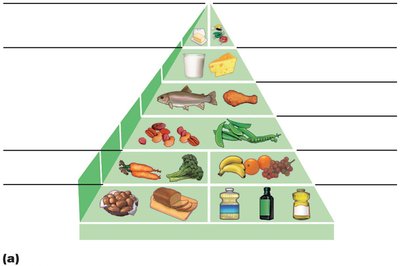
Food groups include fruits, vegetables, grains, protein, and dairy. A balanced diet emphasizes whole grains, fruits, vegetables, and moderate intake of protein and dairy, while limiting processed foods and saturated fats.
Essential and Non-Essential Nutrients
The liver can convert many molecules into those needed by the body, but some nutrients must be obtained from the diet (essential nutrients). Non-essential nutrients are also vital for life.
Essential nutrients: Cannot be synthesized by the liver; must be provided by the diet.
Non-essential nutrients: Can be synthesized by the body but are still important.
Carbohydrates
Dietary Sources and Types
Carbohydrates are primarily derived from plants and are classified as starches (complex carbohydrates), sugars (mono- and disaccharides), and fibers (soluble and insoluble).
Starch: Found in grains and vegetables.
Sugars: Present in fruits, sugarcane, honey, and milk.
Insoluble fiber: Cellulose in vegetables; provides roughage.
Soluble fiber: Pectin in apples and citrus fruits; reduces blood cholesterol.
Uses in the Body
Glucose is the primary fuel used by cells to produce ATP. Neurons and red blood cells rely almost exclusively on glucose. Excess glucose is stored as glycogen or fat.
Minimum dietary requirement: 100 g/day to maintain blood glucose; recommended minimum is 130 g/day.
Recommended intake: 45–65% of total calorie intake, mostly from complex carbohydrates.
Lipids
Dietary Sources and Types
Lipids include triglycerides (neutral fats), saturated and unsaturated fats, and cholesterol. Essential fatty acids (linoleic and linolenic acid) must be ingested.
Saturated fats: Meat, dairy, tropical oils, hydrogenated oils (trans fats).
Unsaturated fats: Seeds, nuts, olive oil, vegetable oils.
Cholesterol: Egg yolk, meats, organ meats, shellfish, milk products.
Uses in the Body
Absorption of fat-soluble vitamins
Fuel for hepatocytes and skeletal muscle
Phospholipids: Essential for myelin sheaths and cell membranes
Adipose tissue: Protection, insulation, fuel storage
Cholesterol: Stabilizes membranes; precursor for bile salts and steroid hormones
Fat Substitutes
Fat substitutes such as air, modified starches, gums, milk whey protein, and Olestra are used to reduce caloric intake but may have disadvantages, including altered taste and digestive issues.
Proteins
Dietary Sources and Types
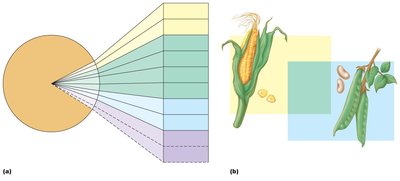
Proteins are obtained from animal and plant sources. Complete proteins contain all essential amino acids, while incomplete proteins lack some.
Complete proteins: Eggs, milk, fish, meats, soybeans.
Incomplete proteins: Legumes, nuts, cereals.
Vegetarian diets: Combining legumes and grains provides all essential amino acids.
Uses in the Body
Structural materials: Keratin, collagen, elastin, muscle proteins.
Functional molecules: Enzymes, hormones.
Amino acids: Can be used for energy if needed.
Protein Synthesis and Nitrogen Balance
All-or-none rule: All amino acids must be present for protein synthesis.
Nitrogen balance: Rate of protein synthesis equals rate of breakdown and loss.
Positive nitrogen balance: Synthesis exceeds breakdown (children, pregnancy, tissue repair).
Negative nitrogen balance: Breakdown exceeds synthesis (stress, injury, poor diet).
Vitamins and Minerals
Vitamins
Vitamins are organic compounds crucial for helping the body use nutrients, mostly functioning as coenzymes. They are classified based on solubility:
Water-soluble: B complex and C; absorbed with water, not stored.
Fat-soluble: A, D, E, K; absorbed with lipids, stored in the body except K.
Minerals
Minerals are inorganic elements required in moderate or trace amounts. They work with nutrients to ensure proper body functioning.
Major minerals: Calcium, phosphorus, potassium, sulfur, sodium, chlorine, magnesium.
Trace minerals: Iron, iodine, etc.
Functions: Harden bone, oxygen binding, hormone synthesis, electrolyte balance.
Metabolism
Metabolic Reactions
Metabolism encompasses all biochemical reactions inside cells involving nutrients. It includes:
Anabolism: Synthesis of large molecules from small ones (e.g., amino acids to proteins).
Catabolism: Breakdown of complex structures to simpler ones (e.g., proteins to amino acids).
Cellular Respiration
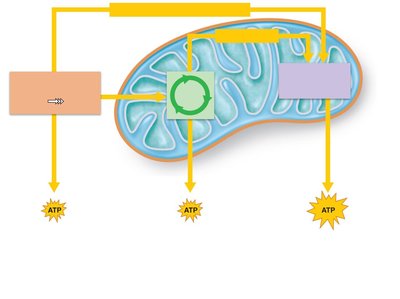
Cellular respiration is the catabolism of food fuels to capture energy in the form of ATP. It involves three stages:
Stage 1: Digestion, absorption, and transport to tissues.
Stage 2: Cellular processing (anabolism and catabolism) in cytoplasm.
Stage 3: Oxidative breakdown in mitochondria, producing CO2, water, and ATP.
Oxidation-Reduction (Redox) Reactions
Redox reactions are central to metabolism, involving the transfer of electrons and energy. Oxidized substances lose electrons, while reduced substances gain electrons. Enzymes such as dehydrogenases and oxidases catalyze these reactions, often requiring coenzymes like NAD+ and FAD.
ATP Synthesis
Substrate-Level Phosphorylation
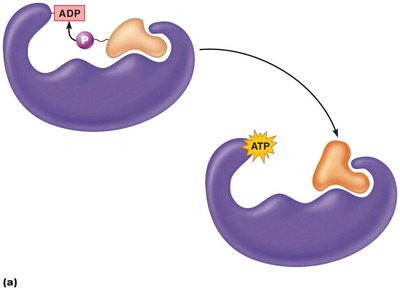
ATP is formed by direct transfer of phosphate groups from substrates to ADP. This occurs during glycolysis and the Krebs cycle.
Oxidative Phosphorylation
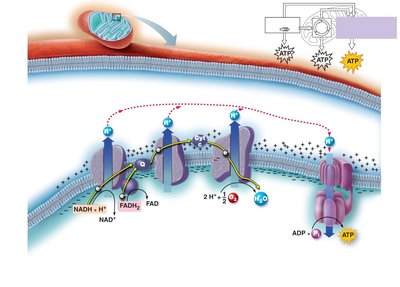
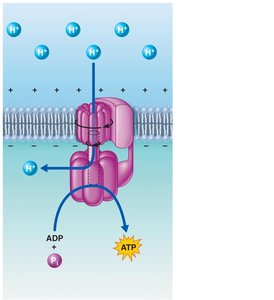
Oxidative phosphorylation is a chemiosmotic process that produces most ATP. It couples the movement of substances across membranes to chemical reactions, using energy to pump H+ across the inner mitochondrial membrane. As H+ flows back through ATP synthase, energy is used to phosphorylate ADP.
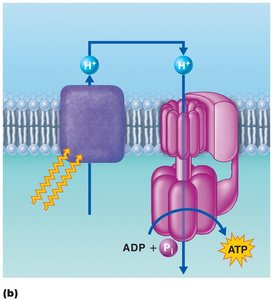
Carbohydrate Metabolism
Glucose Catabolism
Complete glucose catabolism requires glycolysis, the Krebs cycle, and the electron transport chain. The overall reaction is:
Glycolysis
Glycolysis is a 10-step anaerobic pathway occurring in the cytosol, converting glucose to two pyruvic acid molecules. It consists of three phases:
Sugar activation: Glucose is phosphorylated by 2 ATP to fructose-1,6-bisphosphate.
Sugar cleavage: Fructose-1,6-bisphosphate is split into two 3-carbon fragments.
Sugar oxidation and ATP formation: The fragments are oxidized, and 4 ATP are formed by substrate-level phosphorylation.
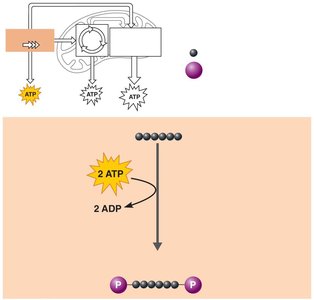
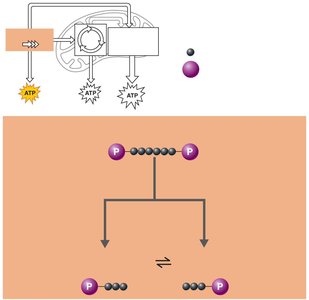
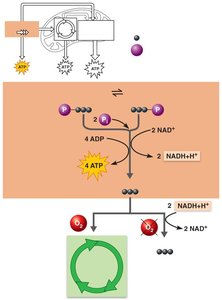
Final products: 2 pyruvic acid, 2 NADH + H+, net gain of 2 ATP.
Krebs Cycle (Citric Acid Cycle)
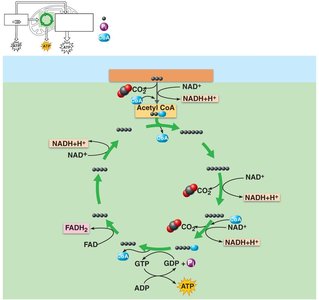
The Krebs cycle occurs in the mitochondrial matrix, fueled by pyruvic acid and fatty acids. Each turn produces 3 NADH + H+, 1 FADH2, 2 CO2, and 1 ATP. The cycle is essential for energy production and provides intermediates for anabolic reactions.
Electron Transport Chain and Oxidative Phosphorylation
This process directly uses oxygen and involves a chain of proteins on the inner mitochondrial membrane. NADH + H+ and FADH2 deliver hydrogen atoms, which are split into H+ and electrons. Electrons are passed along the chain to oxygen, creating a proton gradient that drives ATP synthesis via ATP synthase.
ATP Synthase Structure and Function
ATP synthase consists of a rotor and knob, connected by a rod. As H+ flows through, the rotor spins, causing the rod to spin and catalyze ATP formation.
Summary of ATP Production
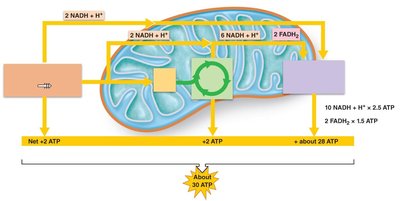
Complete oxidation of one glucose molecule yields about 30 ATP, with energy captured by both substrate-level and oxidative phosphorylation.
Glycogenesis, Glycogenolysis, and Gluconeogenesis
Glycogenesis
Formation of glycogen from glucose when ATP synthesis needs are met, mainly in liver and skeletal muscle.
Glycogenolysis
Breakdown of glycogen to glucose in response to low blood glucose, performed by hepatocytes, kidney, and intestinal cells.
Gluconeogenesis
Formation of glucose from non-carbohydrate sources (glycerol and amino acids) in the liver, protecting against hypoglycemia.
Lipid Metabolism
Fat Catabolism and Energy Yield
Fat catabolism yields more energy than carbohydrate or protein catabolism (9 kcal/g vs. 4 kcal/g). Triglycerides are hydrolyzed into fatty acids and glycerol, which are oxidized separately.
Glycerol Pathway
Glycerol is converted to glyceraldehyde-3-phosphate, entering glycolysis and the Krebs cycle.
Fatty Acid Pathway
Fatty acids undergo beta oxidation, producing acetyl CoA and reduced coenzymes for the Krebs cycle and electron transport chain.
Lipogenesis and Lipolysis
Lipogenesis: Synthesis of triglycerides when ATP and glucose levels are high.
Lipolysis: Breakdown of stored fat for fuel.
Ketogenesis and Homeostatic Imbalance
When carbohydrates are deficient, acetyl CoA is converted to ketone bodies (ketones) in the liver. Accumulation of ketones leads to ketosis and metabolic acidosis, common in starvation, diabetes, and unwise dieting.
Synthesis of Structural Materials
Phospholipids and cholesterol are synthesized for cell membranes, myelin, steroid hormones, and bile salts. The liver plays a central role in these processes.
