 Back
BackChapter 1: An Introduction to Anatomy and Physiology – Study Notes
Study Guide - Smart Notes
 Tailored notes based on your materials, expanded with key definitions, examples, and context.
Introduction to Anatomy and Physiology
What is Biology?
Biology is the scientific study of life and living organisms. The term is derived from the Greek words bio (life) and logos (study). One of the main aims of biology is to discover patterns in the diversity of living things.
Common Functions of All Living Things
All living organisms share several fundamental characteristics that define life:
Responsiveness (Irritability): The ability to sense and respond to changes in the environment. Long-term changes are called adaptations.
Growth: Increase in cell size or number; includes cellular differentiation, where cells become specialized for specific functions.
Reproduction: The process of producing new generations of the same kind of organism.
Movement: Includes internal movement (e.g., transporting blood or food) and external movement (e.g., locomotion).
Metabolism: The sum of all chemical reactions in the body, including anabolism (building up) and catabolism (breaking down).
Introduction to Anatomy and Physiology
What is Anatomy?
Anatomy is the study of the structure of living things, focusing on the internal and external organization and the relationships between body parts. It is divided into:
Gross (Macroscopic) Anatomy: Study of structures visible to the naked eye.
Microscopic Anatomy: Study of structures that require magnification, such as cells and tissues.
Forms of Gross and Microscopic Anatomy
Surface Anatomy: Study of superficial markings.
Regional Anatomy: Study of specific regions of the body.
Systemic Anatomy: Study of organ systems.
Cytology: Study of cells.
Histology: Study of tissues.
What is Physiology?
Physiology is the study of how living organisms perform their vital functions. Human physiology focuses on the functions of the human body and includes:
Cell Physiology: Functions of living cells.
Special Physiology: Functions of specific organs.
Systemic Physiology: Functions of organ systems.
Pathological Physiology (Pathology): Effects of diseases on organ or system functions.
Levels of Organization in the Human Body
The human body is organized into a hierarchy of structural levels, each building on the previous one:
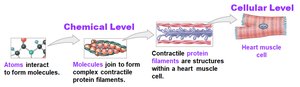
Chemical Level: Atoms combine to form molecules.
Cellular Level: Molecules form organelles, which make up cells.
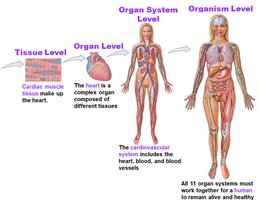
Tissue Level: Groups of similar cells form tissues.
Organ Level: Tissues combine to form organs.
Organ System Level: Organs work together as organ systems.
Organism Level: All organ systems function together to maintain life in the organism.
The 11 Organ Systems of the Human Body
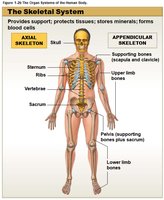
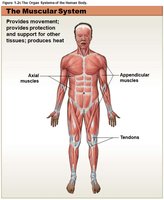
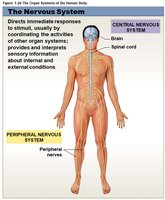
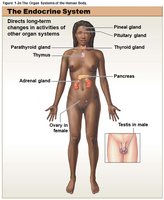
The human body consists of 11 major organ systems, each with specific functions essential for survival:
Organ System | Main Functions |
|---|---|
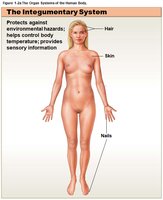
Integumentary | Protection, temperature regulation, sensory information |
Skeletal | Support, protection, mineral storage, blood cell formation |
Muscular | Movement, support, heat production |
Nervous | Immediate response to stimuli, coordination of activities |
Endocrine | Long-term changes, metabolic activity regulation |
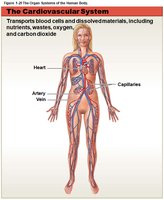
Cardiovascular | Transport of cells and dissolved materials |
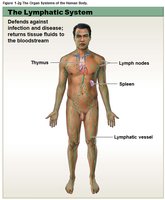
Lymphatic | Defense against infection, returns tissue fluids to blood |
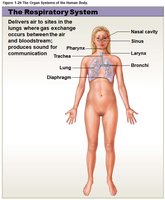
Respiratory | Gas exchange, sound production |
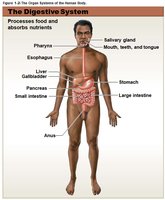
Digestive | Processes food, absorbs nutrients |
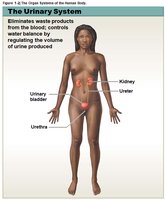
Urinary | Eliminates waste, water balance |
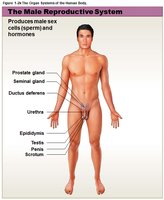
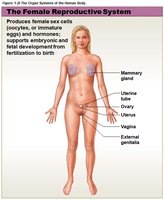
Reproductive | Produces sex cells and hormones |
Homeostasis
Definition and Importance
Homeostasis is the maintenance of a stable internal environment. It is essential for survival, and its failure leads to disease. Homeostasis is achieved through the coordinated function of interdependent organ systems.
Homeostatic Regulation
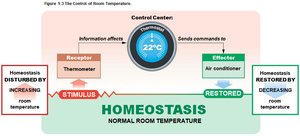
Homeostatic regulation involves adjustments in physiological systems to preserve internal balance. The process typically includes:
Receptor: Senses a change or stimulus.
Control Center: Processes information and sends commands.
Effector: Responds to commands, opposing or enhancing the stimulus.
Negative Feedback
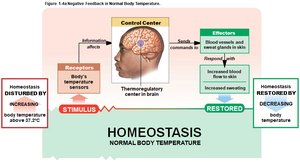
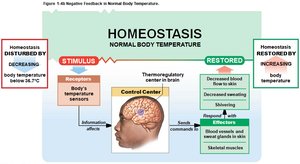
Negative feedback is the most common form of homeostatic regulation. It involves a corrective mechanism that opposes deviations from normal limits. For example, thermoregulation maintains body temperature within a narrow range.
If body temperature rises, mechanisms activate to lower it.
If body temperature falls, mechanisms activate to raise it.
Positive Feedback
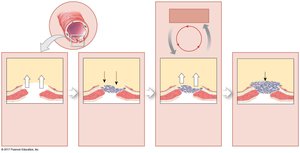
Positive feedback amplifies or reinforces the original stimulus, resulting in an escalating cycle. It is less common but important in processes such as blood clotting and labor.
Example: In blood clotting, chemicals released by damaged cells accelerate the process until the clot is formed.
Anatomical Terminology
Purpose and Structure
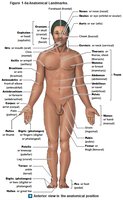
Medical terminology provides a common language for describing body regions, landmarks, directions, and sections. Many terms are derived from Latin or Greek.
Anatomical Position and Regions
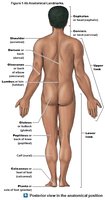
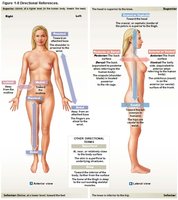
Anatomical Position: Standing, hands at sides, palms forward, feet together.
Supine: Lying face up.
Prone: Lying face down.
Abdominopelvic Quadrants and Regions
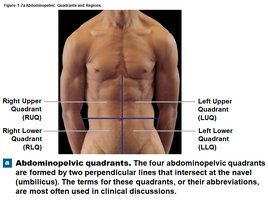
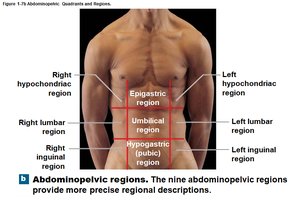
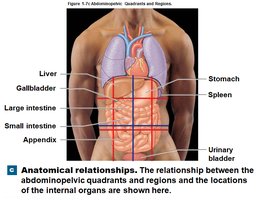
The surface of the abdominopelvic area can be mapped using quadrants (for clinical use) or regions (for anatomical precision):
Quadrants: Right Upper (RUQ), Left Upper (LUQ), Right Lower (RLQ), Left Lower (LLQ).
Regions: Nine regions including epigastric, umbilical, hypogastric, and others.
Directional Terms and Body Planes
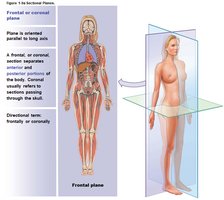
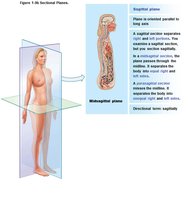
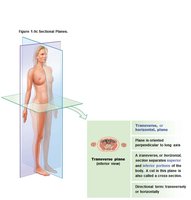
Directional terms describe the positions of structures relative to each other. Body planes are used to describe sections through the body:
Frontal (Coronal) Plane: Divides body into anterior and posterior parts.
Sagittal Plane: Divides body into right and left parts.
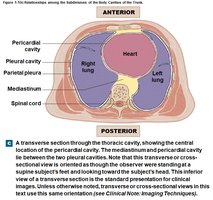
Transverse (Horizontal) Plane: Divides body into superior and inferior parts.
Body Cavities
Definition and Function
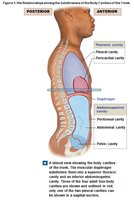
Body cavities are closed, fluid-filled spaces lined by serous membranes. They contain and protect internal organs (viscera) and allow organs to change shape.
Serous Membranes
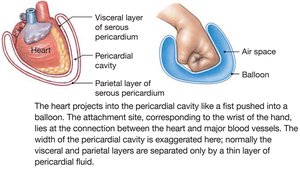
Serous membranes produce a watery fluid that reduces friction between organs and cavity walls. They have two layers:
Visceral Layer: Covers the organs.
Parietal Layer: Lines the cavity walls.
Major Body Cavities
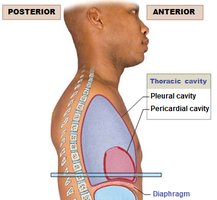
Thoracic Cavity: Contains the pericardial cavity (heart) and two pleural cavities (lungs), each lined by serous membranes.
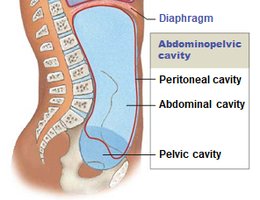
Abdominopelvic Cavity: Extends from the diaphragm to the pelvis; subdivided into abdominal and pelvic cavities, and contains the peritoneal cavity.
Peritoneal Cavity
The peritoneal cavity is lined by the peritoneum. The visceral peritoneum covers internal organs, while the parietal peritoneum lines the inner surface of the body wall. Some organs are retroperitoneal, meaning they lie between the peritoneal lining and the body wall.
Additional info: Understanding the organization of body cavities and membranes is essential for clinical practice, as it helps in locating organs, understanding disease processes, and performing medical procedures.
