 Back
BackChapter 1: An Introduction to Anatomy and Physiology – Study Notes
Study Guide - Smart Notes
 Tailored notes based on your materials, expanded with key definitions, examples, and context.
Chapter 1: An Introduction to Anatomy and Physiology
1-1 Using the Text and Art
This section introduces strategies for mastering anatomy and physiology using integrated text and visuals. Understanding how to use these resources is essential for effective learning and exam preparation.
Strategy 1: Read the text and then study the corresponding image to reinforce understanding.
Strategy 2: Focus on learning outcomes, as they highlight the key knowledge and skills to be acquired.
Strategy 3: Stay engaged with your instructor, keep up with the syllabus, and utilize available study tools.
Example: When learning about the levels of organization, refer to both the written explanation and the associated diagram for clarity.
1-2 Anatomy and Physiology
Anatomy and physiology are closely related sciences that study the structure and function of the human body. Their integration is essential for understanding how the body works.
Anatomy: The study of internal and external body structures and their physical relationships among other body parts.
Physiology: The study of how living organisms perform their vital functions.
Principle of Complementarity: Structure and function are interrelated; specific functions are performed by specific structures.
Specialties of Anatomy:
Gross (Macroscopic) Anatomy: Study of large, visible structures (e.g., surface, regional, systemic, clinical, pathological, radiologic, surgical, developmental anatomy, and embryology).
Microscopic Anatomy: Study of structures requiring magnification (e.g., cytology – cells; histology – tissues).
Specialties of Physiology:
Cell Physiology: Functions of cells and their chemical processes.
Organ Physiology: Functions of specific organs.
Systemic Physiology: Functions of organ systems.
Pathological Physiology: Effects of diseases on organs or systems.
Clinical Application: Physicians use anatomical and physiological knowledge, along with chemical and psychological information, to diagnose and treat patients. Objective signs (e.g., fever) and subjective symptoms (e.g., tiredness) are assessed using the scientific method.
1-3 Levels of Organization
The human body is organized into hierarchical levels, from the simplest chemical components to the complex organism.
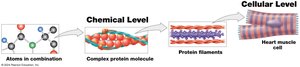
Chemical Level: Atoms and molecules are the smallest stable units of matter.
Cellular Level: Cells are the smallest living units in the body.
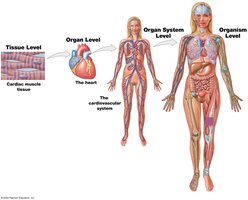
Tissue Level: Groups of cells working together to perform specific functions.
Organ Level: Two or more tissues working together to perform specific functions.
Organ System Level: Groups of organs interacting for a particular function; humans have 11 organ systems.
Organism Level: An individual life form.
1-3 Major Organ Systems
The body is composed of 11 major organ systems, each with specific organs and functions.
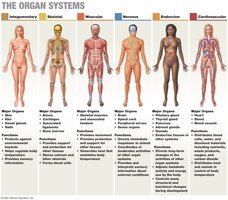
Integumentary: Skin, hair, sweat glands, nails – protection, temperature regulation, sensory information.
Skeletal: Bones, cartilage, ligaments, bone marrow – support, protection, mineral storage, blood formation.
Muscular: Skeletal muscles and tendons – movement, protection, heat generation.
Nervous: Brain, spinal cord, nerves, sense organs – immediate response, coordination, sensory information.
Endocrine: Pituitary, thyroid, pancreas, adrenal glands, gonads – long-term changes, metabolism, development.
Cardiovascular: Heart, blood, blood vessels – transport of cells, nutrients, wastes, temperature regulation.
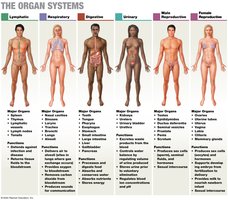
Lymphatic: Spleen, thymus, lymphatic vessels, lymph nodes, tonsils – defense, fluid return.
Respiratory: Nasal cavities, sinuses, larynx, trachea, bronchi, lungs, alveoli – gas exchange, sound production.
Digestive: Teeth, tongue, pharynx, esophagus, stomach, intestines, liver, gallbladder, pancreas – food processing, absorption, energy storage.
Urinary: Kidneys, ureters, bladder, urethra – waste excretion, water balance, ion regulation.
Reproductive: Male (testes, ducts, penis, scrotum), Female (ovaries, uterine tubes, uterus, vagina, mammary glands) – production of sex cells, hormones, support of offspring.
1-4 Medical Terminology
Medical terminology uses word roots, prefixes, suffixes, and combining forms to create terms related to health and disease. Standardized terms improve communication and understanding in healthcare.
Commemorative names (eponyms) are being replaced by precise, descriptive terms, though both may still be used.
Learning word parts helps in understanding complex medical terms.
1-5 Anatomical Terminology
Anatomical terms describe body regions, sections, and relative positions, providing a universal language for healthcare professionals.
Surface Anatomy: Locating structures on or near the body surface.
Anatomical Position: Standard reference position with hands at sides, palms forward, feet together.
Supine: Lying face up; Prone: Lying face down.
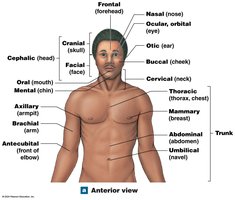
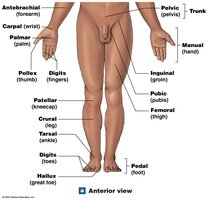
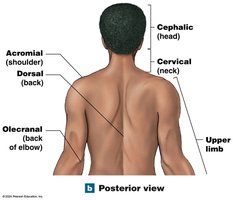
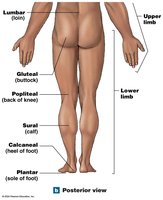
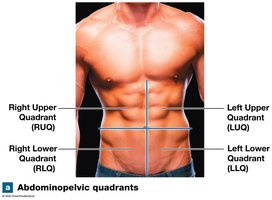
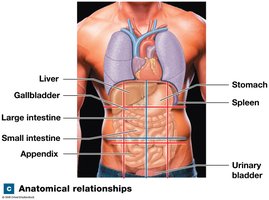
Abdominopelvic Quadrants: Four quadrants (RUQ, LUQ, RLQ, LLQ) used in clinical settings.
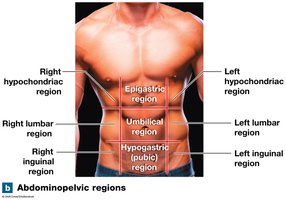
Abdominopelvic Regions: Nine regions for more precise localization (e.g., right hypochondriac, epigastric, left lumbar).
Directional References: Terms such as superior/inferior, anterior/posterior, medial/lateral, proximal/distal, superficial/deep.
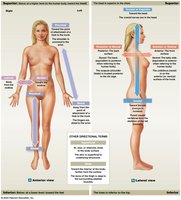
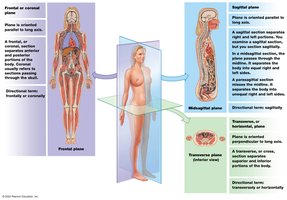
Sectional Anatomy: Visualizing internal organization using planes:
Frontal (Coronal) Plane: Divides body into anterior and posterior portions.
Sagittal Plane: Divides body into left and right portions (midsagittal = equal halves; parasagittal = unequal).
Transverse (Horizontal) Plane: Divides body into superior and inferior portions (cross section).
1-6 Body Cavities
Body cavities are closed, fluid-filled spaces that protect internal organs and allow for changes in organ size and shape.
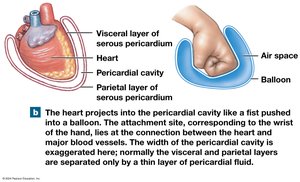
Serous Membrane (Serosa): Lines body cavities and covers organs; consists of parietal (lines cavity) and visceral (covers organ) layers, with serous fluid reducing friction.
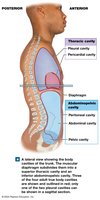
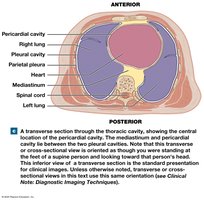
Thoracic Cavity: Contains pleural cavities (lungs), pericardial cavity (heart), and mediastinum (connective tissue stabilizing organs).
Abdominopelvic Cavity: Contains abdominal (digestive organs) and pelvic (reproductive, rectum, bladder) cavities, separated from thoracic cavity by the diaphragm.
Peritoneal Cavity: Space within abdominopelvic cavity lined by peritoneum; retroperitoneal (behind) and infraperitoneal (below) spaces contain specific organs.
1-7 Homeostasis
Homeostasis is the maintenance of a stable internal environment through continuous physiological processes. It is essential for survival and health.
Variables: Body temperature, blood pressure, etc., are kept within normal ranges.
Homeostatic Regulation: Adjustment of physiological systems to preserve homeostasis.
Intrinsic Regulation (Autoregulation): Local, automatic response to environmental change.
Extrinsic Regulation: Responses controlled by nervous (fast, short-term) or endocrine (slow, long-term) systems.
Homeostatic Mechanism Components: Receptor (detects change), Control Center (processes info), Effector (carries out response).
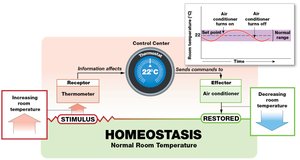
1-8 Negative and Positive Feedback
Feedback mechanisms regulate homeostasis by responding to changes in the internal environment.
Negative Feedback: Opposes variation from normal; the effector negates the original stimulus, maintaining variables within a normal range.
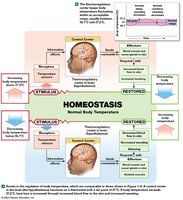
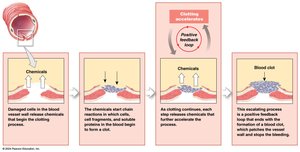
Positive Feedback: Enhances variation from normal; the response amplifies the original change, used for processes that must be completed quickly (e.g., blood clotting).
Systems Integration: Organ systems work together to maintain homeostasis; failure leads to disease or death.
Dynamic Equilibrium: Homeostasis is a state of balance with continual adaptation to changing conditions.
Table: Roles of Organ Systems in Homeostatic Regulation
Organ System | Role in Homeostasis |
|---|---|
Integumentary | Protects against environmental hazards; helps regulate body temperature; provides sensory information. |
Skeletal | Provides support and protection; stores minerals; forms blood cells. |
Muscular | Movement; protection; heat generation. |
Nervous | Immediate response to stimuli; coordinates activities; processes sensory information. |
Endocrine | Directs long-term changes; adjusts metabolism; controls development. |
Cardiovascular | Distributes cells, nutrients, wastes; regulates temperature. |
Lymphatic | Defends against infection; returns tissue fluids to bloodstream. |
Respiratory | Delivers air; gas exchange; sound production. |
Digestive | Processes and absorbs food; stores energy. |
Urinary | Excretes waste; controls water balance; regulates ions and pH. |
Reproductive | Produces sex cells and hormones; supports offspring. |
