 Back
BackChapter 1: An Introduction to Anatomy & Physiology – Structured Study Notes
Study Guide - Smart Notes
 Tailored notes based on your materials, expanded with key definitions, examples, and context.
Introduction to Anatomy & Physiology
Definition and Scope
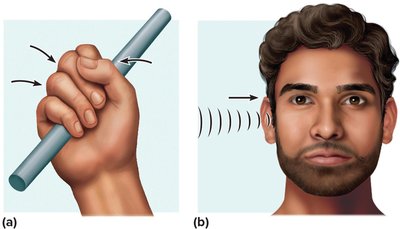
Anatomy and physiology are foundational sciences for understanding the human body. Anatomy is the study of the structure of body parts, including their location and relationships. Physiology is the study of the function of body parts and how they work to sustain life. The two disciplines are inseparable, as structure determines function—a concept known as the principle of complementarity.
Anatomy: Structure, location, and relationships among body parts.
Physiology: Function and mechanisms of body parts.
Complementarity: Structure and function are studied as a unit; function always reflects structure.

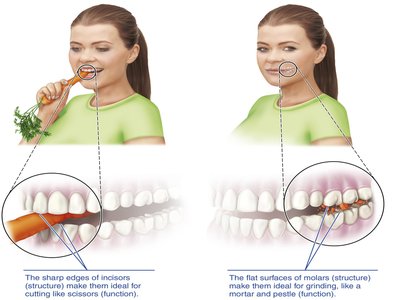


Examples of Complementarity
Teeth: Incisors have sharp edges for cutting (structure), while molars have flat surfaces for grinding (structure), reflecting their respective functions.
Divisions of Anatomy and Physiology
Divisions of Anatomy
Gross (Macroscopic) Anatomy: Study of large structures visible to the naked eye.
Microscopic Anatomy: Study of structures only visible with magnification (e.g., cells and molecules).
Surface Anatomy: Anatomy of the body surface.
Regional Anatomy: Anatomy of specific body areas.
Systemic Anatomy: Anatomy of organ systems.
Clinical Anatomy: Anatomy as used in medical specialties (pathology, radiology, surgery).
Developmental Anatomy: Anatomical changes from fertilization to adulthood.
Embryology: Study of early developmental processes.
Cytology: Study of cell structure.
Histology: Study of tissue structure.
Divisions of Physiology
Cell Physiology: Function of cells and their chemical processes.
Organ Physiology: Function of specific organs.
Systemic Physiology: Function of organ systems.
Pathological Physiology: Effects of diseases.
Levels of Organization in the Human Body
Six Levels of Organization
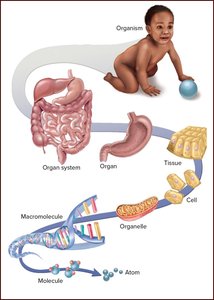
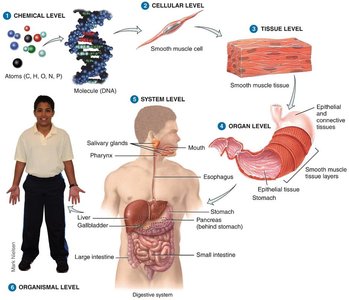
The human body is organized hierarchically from the simplest to the most complex:
Chemical Level: Atoms and molecules.
Cellular Level: Cells and their organelles.
Tissue Level: Groups of similar cells functioning together.
Organ Level: Two or more tissues working together.
System Level: Related organs with a common function.
Organismal Level: The individual living human.


Organ Systems Overview
Major Organ Systems
The human body contains eleven major organ systems, each with specific functions and principal organs.
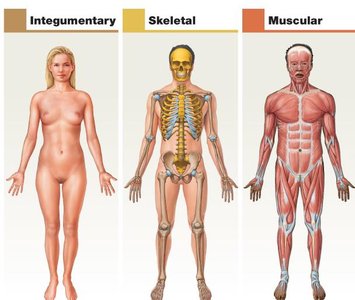
Integumentary System: Protects against environmental hazards, regulates body temperature, provides sensory information.
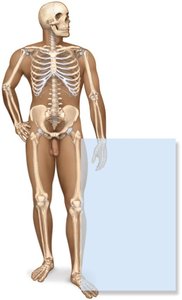
Skeletal System: Provides support and protection, stores minerals, forms blood cells.
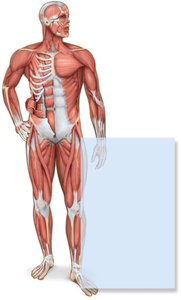
Muscular System: Provides movement, protection, support, and generates heat.
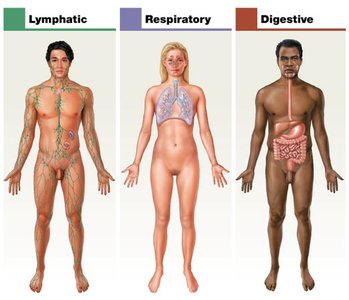
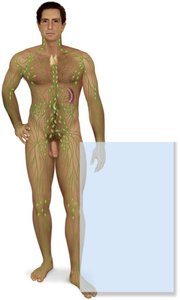
Lymphatic System: Defends against infection, returns tissue fluid to the bloodstream.
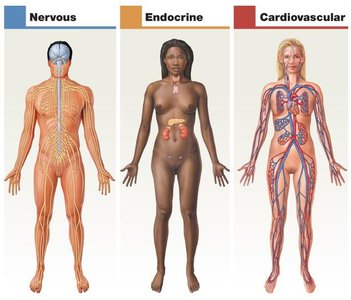
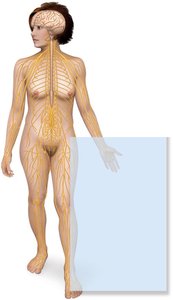
Nervous System: Directs immediate responses, coordinates activities, interprets sensory information.
Endocrine System: Directs long-term changes, adjusts metabolic activity, controls development.
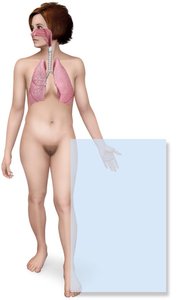
Respiratory System: Delivers air, provides oxygen, removes CO2, aids in sound production.
Urinary System: Excretes waste, controls water balance, regulates blood pH and ion concentration.
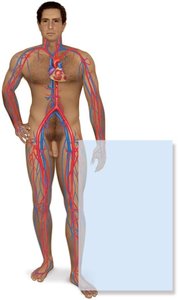
Cardiovascular System: Distributes nutrients, oxygen, CO2, heat, and assists in temperature control.
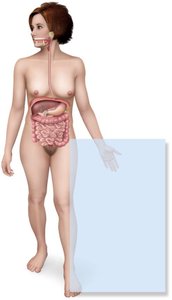
Digestive System: Processes and digests food, absorbs nutrients and water, stores energy.
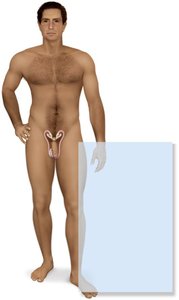
Reproductive System: Produces sex cells and hormones, supports embryo development, nourishes newborn.


Homeostasis and Homeostatic Regulation
Definition and Importance
Homeostasis is the physiological process by which the body maintains a stable internal environment. It is the central theme of physiology and is essential for health and survival.
Homeostatic Regulation: Adjustment of physiological systems to keep internal conditions balanced.
Mechanisms: Autoregulation (local response), extrinsic regulation (nervous or endocrine system).

Homeostatic Regulatory Mechanism
Receptor: Sensor that detects changes (stimulus).
Control Center: Receives and processes information, sends instructions.
Effector: Cell or organ that carries out instructions.
Feedback Loops
Negative Feedback: Response opposes the original stimulus, maintaining variables within a normal range (e.g., body temperature, blood glucose).
Positive Feedback: Response enhances the original stimulus, usually controlling infrequent events (e.g., labor contractions, blood clotting).
Examples of Feedback Mechanisms
Negative Feedback: Regulation of body temperature and blood glucose.
Positive Feedback: Enhancement of labor contractions by oxytocin, platelet plug formation, breast feeding.
System Integration
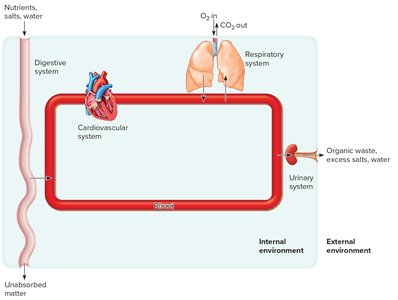
All physiological systems work together to maintain homeostasis, resulting in a dynamic equilibrium. Failure to maintain homeostasis leads to disease and possibly death.
Anatomical Terminology
Body Positions
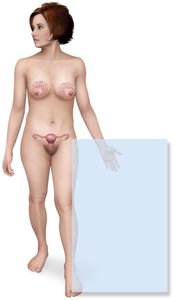
Anatomical Position: Standard reference for anatomical descriptions. Person stands erect, faces forward, hands at sides, palms forward, feet flat and facing forward.
Supinate: Lying face up.
Pronate: Lying face down.
Regional Names / Anatomical Landmarks
Axial Region: Head, neck, trunk (main vertical axis).
Appendicular Region: Upper and lower limbs.
Directional Terms
Directional terms are used to precisely locate one part of the body relative to another. They are often presented in opposing pairs.
Term | Definition | Example |
|---|---|---|
Superior (cranial) | Toward the head end or upper part; above | The head is superior to the abdomen. |
Inferior (caudal) | Away from the head end; below | The navel is inferior to the chin. |
Anterior (ventral) | At the front; in front of | The breastbone is anterior to the spine. |
Posterior (dorsal) | At the back; behind | The heart is posterior to the breastbone. |
Medial | Toward the midline; on the inner side | The heart is medial to the arm. |
Lateral | Away from the midline; on the outer side | The arms are lateral to the chest. |
Intermediate | Between medial and lateral | The collarbone is intermediate between the breastbone and shoulder. |
Proximal | Closer to the origin or point of attachment | The elbow is proximal to the wrist. |
Distal | Farther from the origin or point of attachment | The knee is distal to the thigh. |
Superficial (external) | Toward or at the body surface | The skin is superficial to the skeletal muscles. |
Deep (internal) | Away from the body surface; more internal | The lungs are deep to the skin. |
Planes and Sections
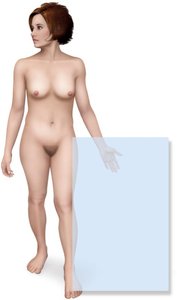
Sagittal Plane: Divides body into left and right portions. Midsagittal divides evenly; parasagittal divides unevenly.
Coronal (Frontal) Plane: Divides body into anterior and posterior portions.
Transverse Plane: Divides body into superior and inferior portions (cross section).
Sections of Cylindrical Organs: Cross section (across), oblique section (angular), longitudinal section (lengthwise).
Body Cavities
Dorsal Body Cavity: Cranial cavity (brain), vertebral cavity (spinal cord).
Ventral Body Cavity: Divided by diaphragm into thoracic cavity (lungs, heart, mediastinum) and abdominopelvic cavity (abdominal and pelvic organs).
Serous Membrane (Serosa): Lines cavities and covers organs. Parietal layer lines cavity wall; visceral layer covers organ. Serous fluid reduces friction.
Named Serous Membranes: Pericardium (heart), pleura (lungs), peritoneum (abdomen).
Retroperitoneal Organs: Organs behind the peritoneum (e.g., pancreas, kidneys, aorta).
Quadrants & Regions
Abdominopelvic Cavity: Divided into four quadrants and nine regions for descriptive location of organs.
Summary Table: Roles of Organ Systems in Homeostatic Regulation
Organ System | Role in Homeostasis |
|---|---|
Cardiovascular | Distributes nutrients, gases, wastes, and heat |
Respiratory | Provides oxygen, removes carbon dioxide |
Digestive | Absorbs nutrients, water; eliminates unabsorbed matter |
Urinary | Removes organic waste, excess salts, water |
Additional info: These notes cover all major learning outcomes for Chapter 1, including definitions, levels of organization, anatomical terminology, organ systems, and homeostatic regulation. Images included are directly relevant to the explanations and reinforce key concepts.
