 Back
BackChapter 1: An Introduction to Anatomy & Physiology - Structured Study Notes
Study Guide - Smart Notes
 Tailored notes based on your materials, expanded with key definitions, examples, and context.
Section 1: Introduction to Anatomy & Physiology
Overview of Anatomy and Physiology
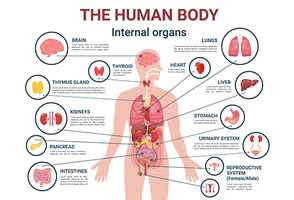
Anatomy and physiology are foundational sciences for understanding the structure and function of the human body. Anatomy focuses on the physical structures, while physiology examines how these structures operate to sustain life.
Anatomy: Study of body structures and their relationships.
Physiology: Study of functions and vital processes of organisms.
Macroscopic (Gross) Anatomy: Structures visible to the naked eye.
Microscopic Anatomy: Structures requiring magnification, such as cells and tissues.
Example: The heart's anatomy includes chambers and valves; its physiology involves pumping blood throughout the body.
Section 2: Characteristics of Life
Common Characteristics and Processes in Living Organisms
All living organisms share several essential characteristics and processes that distinguish them from non-living matter.
Cellular Composition: All living things are composed of cells.
Complex Structural Arrangement: Organisms exhibit organized structures at multiple levels.
Responsiveness: Ability to detect and respond to stimuli.
Homeostasis: Maintenance of a stable internal environment.
Growth and Development: Increase in size and progression through stages of maturation.
Reproduction: Production of offspring.
Metabolism: All chemical reactions in the body, including anabolic (building up) and catabolic (breaking down) processes.
Example: Humans respond to changes in temperature by sweating or shivering to maintain homeostasis.
Section 3: Levels of Organization
Hierarchical Structure of the Human Body
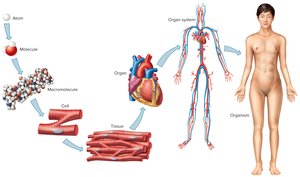
The human body is organized into a hierarchy of structural levels, each building upon the previous.
Subatomic Particles → Atoms → Molecules → Macromolecules → Organelles → Cells → Tissues → Organs → Organ Systems → Organism
Example: Muscle tissue is composed of muscle cells, which contain organelles such as mitochondria.
Cells: The Smallest Units of Life
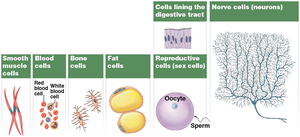
Cells are the basic units of life, and their structure is closely related to their function.
Smooth muscle cells: Contract to produce movement.
Red blood cells: Transport oxygen.
Bone cells: Maintain bone structure.
Fat cells: Store energy.
Cells lining digestive tract: Absorb nutrients.
Reproductive cells: Oocytes and sperm for reproduction.
Nerve cells: Transmit electrical signals.
Organ Systems of the Human Body
The human body contains eleven major organ systems, each with specific functions and interactions.
Integumentary System: Protects against environmental hazards.
Skeletal System: Provides support and protection.
Muscular System: Enables movement.
Nervous System: Directs immediate responses to stimuli.
Endocrine System: Regulates long-term changes via hormones.
Cardiovascular System: Distributes blood, nutrients, and waste.
Lymphatic System: Defends against infection.
Respiratory System: Delivers air to sites of gas exchange.
Digestive System: Processes food and absorbs nutrients.
Urinary System: Eliminates waste and regulates water balance.
Reproductive System: Produces offspring.
Example: The cardiovascular and respiratory systems work together to deliver oxygen to tissues.
Section 4: Homeostasis
Mechanisms of Homeostatic Regulation
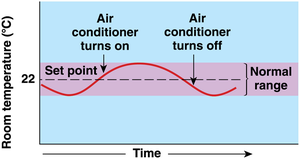
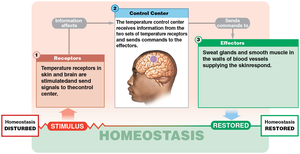
Homeostasis is the process by which the body maintains a stable internal environment despite external changes. Homeostatic regulation involves three main components:
Receptor (Sensor): Detects changes in the environment.
Control Center (Integration Center): Processes information and determines response.
Effector: Carries out the response to restore balance.
Negative Feedback
Negative feedback is the most common mechanism for maintaining homeostasis. It works by reversing deviations from a set point, returning conditions to normal.
Example: Regulation of body temperature.
Process: If temperature rises, effectors (sweat glands) lower it; if it falls, effectors (muscles) raise it.
Positive Feedback
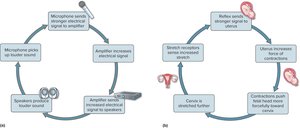
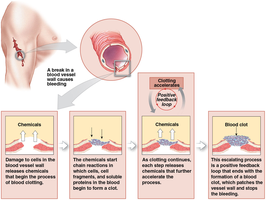
Positive feedback mechanisms intensify a change rather than reversing it. These are less common and typically occur in specific situations, such as blood clotting or childbirth.
Example: Blood clotting cascade.
Process: Each step amplifies the response until the process is complete.
Section 5: Anatomical Terms and Body Cavities
History and Use of Anatomical Terminology
Anatomical terminology is derived from Latin and Greek, providing a standardized language for describing locations and relationships in the body.
Orientation: Anatomical position is the reference point for all directional terms.
Landmarks: Used to map and describe regions of the body.
Superficial and Regional Anatomy
Superficial anatomy refers to external features, while regional anatomy divides the body into specific areas for study.
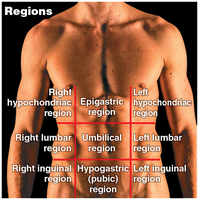
Abdominopelvic Quadrants: Four regions used for clinical assessment.
Abdominopelvic Regions: Nine regions for detailed anatomical study.
Directional Terms and Sectional Planes
Directional terms describe the location of body parts relative to each other, while sectional planes are used to view internal structures.
Anterior (ventral): Front of the body.
Posterior (dorsal): Back of the body.
Superior: Above.
Inferior: Below.
Medial: Toward the midline.
Lateral: Away from the midline.
Proximal: Closer to the point of attachment.
Distal: Farther from the point of attachment.
Sectional Planes: Frontal (coronal), sagittal, and transverse (horizontal).
Major Body Cavities and Membranes
The trunk of the body contains major cavities, each lined by serous membranes that reduce friction and protect organs.
Thoracic Cavity: Contains heart and lungs.
Abdominopelvic Cavity: Contains digestive, urinary, and reproductive organs.
Serous Membranes: Double-layered membranes (visceral and parietal) that secrete fluid.
Examples: Pleura (lungs), pericardium (heart), peritoneum (abdominal organs).
Table: Organ Systems and Their Functions
Organ System | Main Organs | Primary Functions |
|---|---|---|
Integumentary | Skin, hair, nails | Protection, temperature regulation |
Skeletal | Bones, cartilage | Support, movement, protection |
Muscular | Muscles | Movement, heat production |
Nervous | Brain, spinal cord, nerves | Coordination, response to stimuli |
Endocrine | Glands (pituitary, thyroid, etc.) | Hormone regulation |
Cardiovascular | Heart, blood vessels | Transport of nutrients and waste |
Lymphatic | Lymph nodes, vessels | Immunity, fluid balance |
Respiratory | Lungs, trachea | Gas exchange |
Digestive | Stomach, intestines | Food breakdown, nutrient absorption |
Urinary | Kidneys, bladder | Waste elimination, water balance |
Reproductive | Ovaries, testes | Production of offspring |
Additional info: Academic context was added to expand brief points and ensure completeness. All images included are directly relevant to the adjacent content and reinforce key concepts.
