 Back
BackChapter 1: An Introduction to Anatomy and Physiology – Structured Study Notes
Study Guide - Smart Notes
 Tailored notes based on your materials, expanded with key definitions, examples, and context.
Introduction to Anatomy and Physiology
Overview
Anatomy and physiology are foundational sciences for understanding the structure and function of the human body. Mastery of these subjects is essential for students pursuing health and biological sciences.
Anatomy: The study of body structures, their composition, location, and associated features.
Physiology: The study of the functions of anatomical structures, both individually and cooperatively.
Relationship: Anatomy provides the map; physiology explains how the map works.
Specialties of Anatomy and Physiology
Gross (Macroscopic) Anatomy: Study of large, visible structures (e.g., organs, tissues).
Microscopic Anatomy: Study of cells (cytology) and tissues (histology).
Clinical Anatomy: Medical specialties (e.g., pathology, radiology).
Developmental Anatomy: Study from conception to adulthood, including embryology.
Human Physiology: Includes cell, organ, systemic, and pathological physiology.
Levels of Organization in the Human Body
Hierarchical Structure
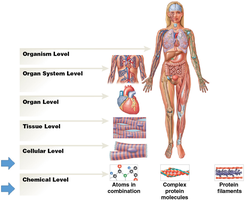
The human body is organized into several levels, from the simplest chemical components to the complex organism.
Chemical Level: Atoms and molecules form the basis of life.
Cellular Level: Cells are the smallest living units.
Tissue Level: Groups of cells working together (four primary types: epithelial, connective, muscle, nervous).
Organ Level: Organs are made of multiple tissues working together.
Organ System Level: Groups of interacting organs (11 major systems).
Organism Level: The complete living individual.
Examples of Cell Types
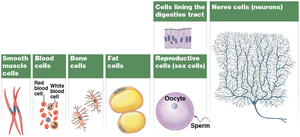
Muscle cells (smooth, skeletal, cardiac)
Blood cells (red, white)
Bone cells
Fat cells
Reproductive cells (oocyte, sperm)
Nerve cells (neurons)
Cells lining digestive tract
Cell Theory and Tissues
Cell Theory
Cell theory is a fundamental concept in biology:
Cells are the structural building blocks of all plants and animals.
Cells are produced by the division of pre-existing cells.
Cells are the smallest units that perform all vital functions.
Primary Tissue Types
Epithelial Tissue: Covers exposed surfaces, lines internal passageways, produces glandular secretions.
Connective Tissue: Fills internal spaces, provides structural support, stores energy.
Muscle Tissue: Contracts to produce movement.
Nervous Tissue: Conducts electrical impulses, carries information.
Epithelial Tissue
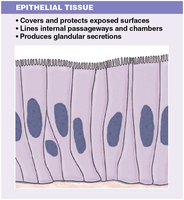
Epithelial tissue forms barriers and lines surfaces throughout the body.
Covers and protects exposed surfaces
Lines internal passageways and chambers
Produces glandular secretions
Connective Tissue
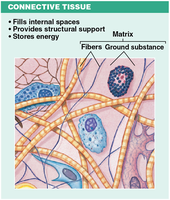
Connective tissue is diverse, with cells surrounded by an extracellular matrix.
Fills internal spaces
Provides structural support
Stores energy
Matrix consists of fibers and ground substance
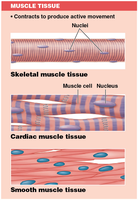
Muscle Tissue
Muscle tissue contracts to produce movement and maintain body functions.
Skeletal movement
Soft tissue support
Maintenance of blood flow
Movement of materials internally
Stabilization of body temperature
Three types: skeletal, cardiac, smooth
Nervous Tissue
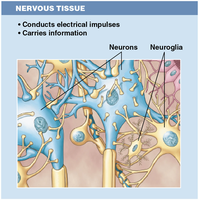
Nervous tissue is specialized for communication and information processing.
Neurons: conduct impulses
Neuroglia: support neurons
Central Nervous System (CNS): brain and spinal cord
Peripheral Nervous System (PNS): nerves outside CNS
Organ Systems of the Human Body
Overview
There are 11 organ systems in the human body, each with specialized functions but all interdependent.
Integumentary System
Skeletal System
Muscular System
Nervous System
Endocrine System
Cardiovascular System
Lymphatic System
Respiratory System
Digestive System
Urinary System
Reproductive System (male and female)
Anatomical Terminology
Surface Anatomy and Anatomical Position
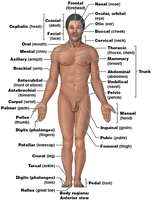
Understanding anatomical terminology is essential for describing locations and positions in the body.
Anatomical position: Hands at sides, palms forward
Supine: Lying face up
Prone: Lying face down
Anatomical Regions and Quadrants
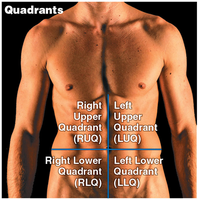
The abdominopelvic area is divided into quadrants and regions for precise localization.
Quadrants: Right Upper (RUQ), Left Upper (LUQ), Right Lower (RLQ), Left Lower (LLQ)
Regions: More precise than quadrants, used for clinical and anatomical reference
Body Cavities
Functions and Structure
Body cavities protect internal organs and allow for changes in organ size and shape.
Ventral body cavity (coelom): Divided by the diaphragm into thoracic and abdominopelvic cavities
Thoracic cavity: Contains lungs and heart
Abdominopelvic cavity: Contains digestive, reproductive, and urinary organs
Serous membranes: Parietal (lines cavity) and visceral (covers organ) layers
Homeostasis
Concept and Regulation
Homeostasis is the maintenance of a stable internal environment. It is essential for health and survival.
Autoregulation: Automatic response in a cell, tissue, or organ
Extrinsic regulation: Controlled by nervous and endocrine systems
Components of Homeostatic Regulation
Receptor: Sensitive to environmental change
Control center: Processes information and sends commands
Effector: Responds to commands, opposes stimulus
Feedback Mechanisms
Negative feedback: Reduces change, returns system to set point (primary mechanism)
Positive feedback: Amplifies change, moves system away from set point (used for rapid processes)
Example: Negative feedback regulates body temperature; positive feedback occurs during blood clotting.
Systems Integration
All physiological systems work together to maintain homeostasis. Failure to maintain balance results in disease.
Additional info: Dynamic equilibrium is the continual adaptation of physiological systems to changing environments.
