 Back
Chapter 1: An Introduction to Anatomy and Physiology – Study Notes
Study Guide - Smart Notes
 Tailored notes based on your materials, expanded with key definitions, examples, and context.
Introduction to Anatomy and Physiology
Overview
This chapter introduces the foundational concepts of anatomy and physiology, the study of the structure and function of the human body. Understanding these concepts is essential for further study in health and biological sciences.
Using the Text and Art Effectively
Learning Strategies
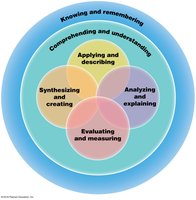
Text-Art Integration: Study the text alongside corresponding figures to reinforce understanding.
Learning Outcomes: Use the objectives at the beginning of each chapter to guide your study and self-assessment.
Classification Scheme: Learning outcomes are based on a hierarchy of cognitive skills, from remembering to creating.
Defining Anatomy and Physiology
Key Definitions and Relationships
Anatomy: The study of body structures, their composition, location, and associated structures.
Physiology: The study of the functions of anatomical structures, both individually and collectively.
Relationship: Structure determines function; understanding anatomy is essential for understanding physiology.
Specialties of Anatomy
Gross (Macroscopic) Anatomy: Study of large, visible structures (e.g., surface, regional, systemic, clinical, developmental anatomy).
Microscopic Anatomy: Study of cells (cytology) and tissues (histology).
Specialties of Physiology
Cell Physiology: Functions of cells.
Organ Physiology: Functions of specific organs.
Systemic Physiology: Functions of organ systems.
Pathological Physiology: Effects of diseases on organs or systems.
Levels of Organization in the Human Body
Hierarchy from Simple to Complex
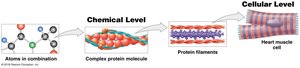
Chemical Level: Atoms and molecules form the chemical building blocks of the body.
Cellular Level: Cells are the smallest living units.
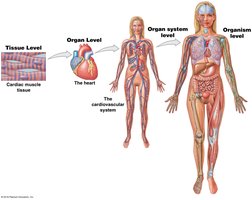
Tissue Level: Groups of similar cells working together.
Organ Level: Two or more tissues working together to perform specific functions.
Organ System Level: Groups of organs working together (11 major systems in humans).
Organism Level: The complete living individual.
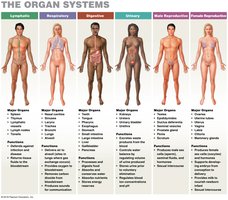
The Organ Systems of the Human Body
Overview of Major Organ Systems
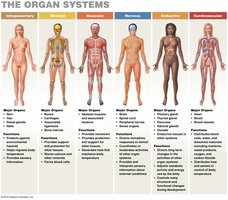
The human body consists of 11 organ systems, each with specific organs and functions. These systems work together to maintain homeostasis and overall health.
System | Major Organs | Functions |
|---|---|---|
Integumentary | Skin, hair, sweat glands, nails | Protection, temperature regulation, sensory information |
Skeletal | Bones, cartilages, ligaments, bone marrow | Support, protection, mineral storage, blood cell formation |
Muscular | Skeletal muscles, tendons | Movement, support, heat production |
Nervous | Brain, spinal cord, nerves, sense organs | Immediate response, coordination, sensory interpretation |
Endocrine | Pituitary, thyroid, adrenal glands, pancreas, gonads | Long-term changes, metabolism, development |
Cardiovascular | Heart, blood, blood vessels | Transport of cells, nutrients, wastes, gases, heat distribution |
Lymphatic | Spleen, thymus, lymph nodes, tonsils, lymphatic vessels | Defense, fluid return |
Respiratory | Nasal cavities, sinuses, larynx, trachea, bronchi, lungs, alveoli | Gas exchange, sound production |
Digestive | Teeth, tongue, pharynx, esophagus, stomach, intestines, liver, gallbladder, pancreas | Food processing, nutrient absorption, water conservation |
Urinary | Kidneys, ureters, bladder, urethra | Waste excretion, water and ion balance, pH regulation |
Male Reproductive | Testes, epididymides, ductus deferentia, seminal vesicles, prostate, penis, scrotum | Sperm production, sexual intercourse |
Female Reproductive | Ovaries, uterine tubes, uterus, vagina, labia, clitoris, mammary glands | Oocyte production, support of embryo, milk production, sexual intercourse |
Medical Terminology
Origins and Standardization
Medical Terminology: Uses precise terms for body structures and functions, replacing eponyms with standardized names.
Terminologia Anatomica: International standard for anatomical terminology.
Anatomical Terminology
Body Regions, Sections, and Directions
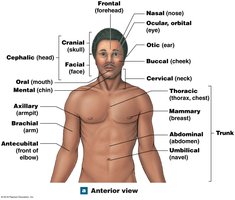
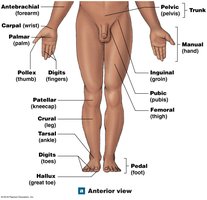
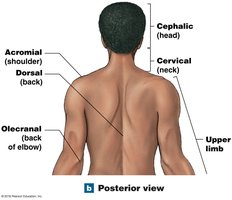
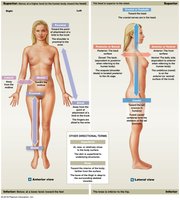
Surface Anatomy: Identifies structures on or near the body surface using anatomical landmarks.
Anatomical Position: Standard reference position (standing, hands at sides, palms forward).
Supine: Lying face up; Prone: Lying face down.
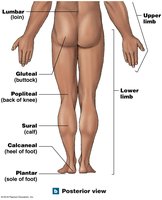
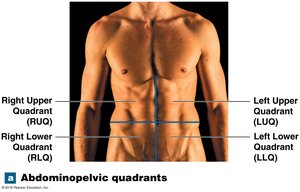
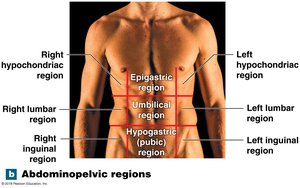
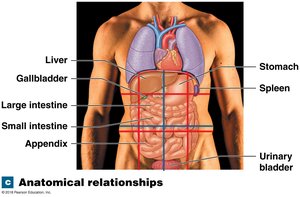
Abdominopelvic Quadrants and Regions
Quadrants: Four regions (RUQ, LUQ, RLQ, LLQ) used in clinical settings.
Regions: Nine regions for more precise localization (e.g., epigastric, umbilical, hypogastric).
Directional Terms
Used to describe locations and relationships (e.g., superior/inferior, anterior/posterior, medial/lateral).
Sectional Anatomy and Planes
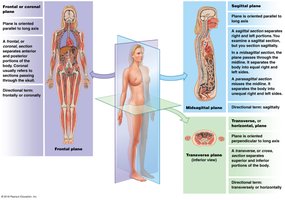
Section: A slice through a three-dimensional object, used in imaging techniques (MRI, CT, PET).
Planes:
Frontal (Coronal) Plane: Divides body into anterior and posterior portions.
Sagittal Plane: Divides body into left and right portions (midsagittal = equal halves; parasagittal = unequal).
Transverse Plane: Divides body into superior and inferior portions (cross section).
Body Cavities
Major Cavities and Their Functions
Functions: Protect organs from shock, allow organ movement and size changes.
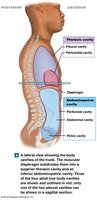
Ventral Body Cavity (Coelom): Divided by the diaphragm into thoracic and abdominopelvic cavities.
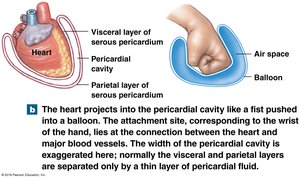
Serous Membranes: Line cavities and cover organs (parietal = lines cavity, visceral = covers organ).
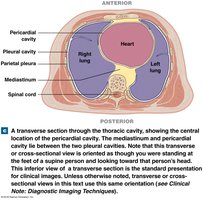
Thoracic Cavity
Pleural Cavities: Contain the lungs.
Mediastinum: Central compartment containing heart, trachea, esophagus, thymus.
Pericardial Cavity: Contains the heart.
Abdominopelvic Cavity
Peritoneal Cavity: Chamber within the abdominopelvic cavity.
Abdominal Cavity: Superior portion, contains digestive organs.
Retroperitoneal Space: Posterior to peritoneum, contains kidneys, pancreas, parts of digestive tract.
Pelvic Cavity: Inferior portion, contains reproductive organs, rectum, bladder.
Homeostasis
Concept and Regulation
Homeostasis: Maintenance of a stable internal environment by all body systems.
Variables: Body temperature, fluid balance, etc., are kept within normal ranges.
Regulation:
Autoregulation: Automatic local response to environmental change.
Extrinsic Regulation: Controlled by nervous and endocrine systems.
Homeostatic Mechanism: Involves a receptor (detects change), control center (processes information), and effector (carries out response).
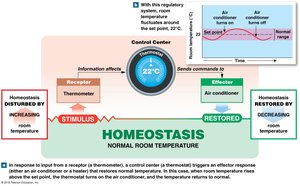
Negative and Positive Feedback
Mechanisms of Homeostatic Regulation
Negative Feedback: Effector response negates the stimulus, restoring homeostasis (e.g., body temperature regulation).
Positive Feedback: Effector response amplifies the stimulus, moving the body away from homeostasis to complete a process quickly (e.g., blood clotting).
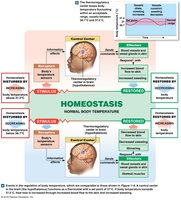
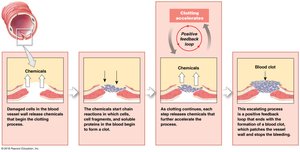
Systems Integration and Dynamic Equilibrium
Organ systems work together to maintain balance (dynamic equilibrium).
Failure of homeostasis leads to disease.
