 Back
BackChapter 1: An Introduction to Anatomy and Physiology – Structured Study Notes
Study Guide - Smart Notes
 Tailored notes based on your materials, expanded with key definitions, examples, and context.
Introduction to Anatomy and Physiology
Overview
Anatomy and physiology are foundational sciences for understanding the structure and function of the human body. Anatomy describes the physical structures, while physiology explains how these structures operate individually and together.
Anatomy: Study of body structures, their composition, location, and associated structures.
Physiology: Study of the functions of anatomical structures, including both individual and cooperative functions.
Branches of Anatomy
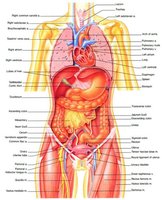
Types of Anatomy
Anatomy can be studied at various levels and from different perspectives.
Surface Anatomy: Study of external features.
Regional Anatomy: Study of specific body areas.
Sectional Anatomy: Study of cross sections of the body.
Systemic Anatomy: Study of organ systems.
Branches of Physiology
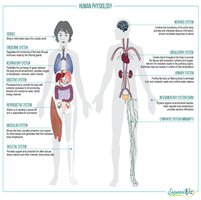
Types of Physiology
Physiology is divided based on the level of organization and system studied.
Systemic Physiology: Functions of organ systems.
Cell Physiology: Functions of cells.
Levels of Structural Organization
Hierarchy of Complexity
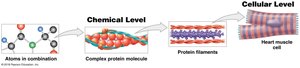
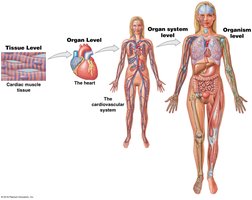
The human body is organized into several hierarchical levels, each with increasing complexity.
Chemical Level: Atoms and molecules form the basis of all matter.
Cellular Level: Cells are the smallest living units.
Tissue Level: Groups of cells working together.
Organ Level: Organs are made of two or more tissues.
Organ System Level: Groups of organs working together.
Organism Level: The complete living individual.
Major Organ Systems
Overview of Human Organ Systems
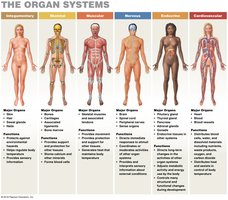
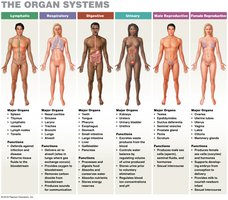
The human body contains 11 major organ systems, each with specific organs and functions.
Integumentary System: Skin, hair, sweat glands, nails. Protects against environmental hazards, regulates temperature, provides sensory information.
Skeletal System: Bones, cartilages, ligaments, bone marrow. Provides support, protection, stores minerals, forms blood cells.
Muscular System: Skeletal muscles, tendons. Provides movement, support, generates heat.
Nervous System: Brain, spinal cord, nerves, sense organs. Directs responses, coordinates systems, interprets sensory information.
Endocrine System: Glands, pancreas, gonads. Directs long-term changes, adjusts metabolism, controls development.
Cardiovascular System: Heart, blood, vessels. Distributes blood, nutrients, waste, heat.
Lymphatic System: Spleen, thymus, lymph nodes, vessels, tonsils. Defends against infection, returns fluids to blood.
Respiratory System: Nasal cavities, lungs, trachea, bronchi, alveoli. Delivers air, provides oxygen, removes CO2, produces sound.
Digestive System: Teeth, tongue, stomach, intestines, liver, pancreas. Processes food, absorbs nutrients, stores energy.
Urinary System: Kidneys, ureters, bladder, urethra. Excretes waste, regulates water and ions, stores urine.
Reproductive Systems: Male: testes, prostate, penis. Female: ovaries, uterus, vagina, mammary glands. Produces sex cells and hormones, supports reproduction.
Anatomical Landmarks and Terminology
Body Positions and Directions
Understanding anatomical terminology is essential for describing locations and positions in the body.
Anatomical Position: Standing, hands at sides, palms forward.
Supine: Lying face up.
Prone: Lying face down.
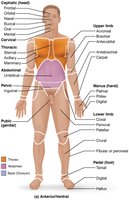
Anatomical Regions and Quadrants
The body is divided into regions and quadrants for clinical and descriptive purposes.
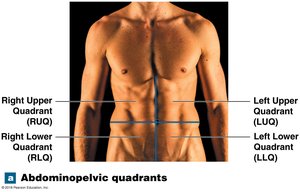
Abdominopelvic Quadrants: Right Upper (RUQ), Left Upper (LUQ), Right Lower (RLQ), Left Lower (LLQ).
Abdominopelvic Regions: More detailed divisions for precise localization.
Common Anatomical Terms
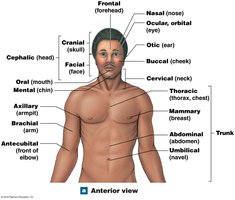
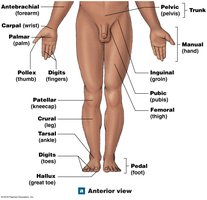
Anatomical terms are used to describe locations and regions of the body.
Anterior/Posterior: Front/back
Superior/Inferior: Above/below
Medial/Lateral: Toward midline/away from midline
Proximal/Distal: Near/far from point of attachment
Anatomical Planes
Body Planes and Sections
The body can be divided into planes for anatomical study and medical imaging.
Transverse Plane: Divides body into superior and inferior portions (cross section).
Sagittal Plane: Divides body into left and right portions. Midsagittal is exactly in the middle; parasagittal is offset.
Frontal (Coronal) Plane: Divides body into anterior and posterior portions.
Body Cavities and Membranes
Major Body Cavities
Body cavities house internal organs and allow for protection and movement.
Ventral Body Cavity: Divided by diaphragm into thoracic and abdominopelvic cavities.
Thoracic Cavity: Contains lungs and heart.
Abdominopelvic Cavity: Contains digestive, reproductive, and urinary organs.
Serous Membranes
Serous Membrane (Serosa): Lines cavities and covers organs.
Parietal Layer: Lines cavity wall.
Visceral Layer: Covers organ.
Homeostasis
Definition and Importance
Homeostasis is the process by which the body maintains a stable internal environment.
All systems work together to keep variables within normal ranges (e.g., temperature, fluid balance).
Failure to maintain homeostasis results in disease.
Regulation Mechanisms
Autoregulation: Automatic response by a cell, tissue, or organ.
Extrinsic Regulation: Controlled by nervous and endocrine systems.
Feedback Mechanisms
Negative Feedback: Response negates the stimulus, returning the body to homeostasis. Example: Regulation of body temperature.
Positive Feedback: Response amplifies the stimulus, moving the body away from homeostasis. Example: Blood clotting.
Components of Homeostatic Regulation
Receptor: Detects changes.
Control Center: Processes information and directs response.
Effector: Carries out the response.
Summary Table: Major Organ Systems
System | Major Organs | Functions |
|---|---|---|
Integumentary | Skin, hair, sweat glands, nails | Protection, temperature regulation, sensory info |
Skeletal | Bones, cartilages, ligaments, marrow | Support, protection, mineral storage, blood cell formation |
Muscular | Skeletal muscles, tendons | Movement, support, heat production |
Nervous | Brain, spinal cord, nerves, sense organs | Immediate responses, coordination, sensory interpretation |
Endocrine | Glands, pancreas, gonads | Long-term changes, metabolism, development |
Cardiovascular | Heart, blood, vessels | Distribution of blood, nutrients, waste, heat |
Lymphatic | Spleen, thymus, lymph nodes, vessels, tonsils | Defense, fluid return |
Respiratory | Nasal cavities, lungs, trachea, bronchi, alveoli | Air delivery, gas exchange, sound production |
Digestive | Teeth, tongue, stomach, intestines, liver, pancreas | Food processing, nutrient absorption, energy storage |
Urinary | Kidneys, ureters, bladder, urethra | Waste excretion, water/ion regulation, urine storage |
Reproductive | Male: testes, prostate, penis; Female: ovaries, uterus, vagina, mammary glands | Sex cell/hormone production, reproduction, nourishment |
Conclusion
Key Takeaways
Anatomy and physiology are interrelated sciences essential for understanding the human body.
The body is organized into hierarchical levels and systems, each with specific functions.
Homeostasis is vital for health, maintained by feedback mechanisms.
