 Back
BackChapter 1: Introduction to Anatomy and Physiology – Study Notes
Study Guide - Smart Notes
 Tailored notes based on your materials, expanded with key definitions, examples, and context.
Introduction to Anatomy and Physiology
What is Anatomy and Physiology?
Anatomy and physiology are closely related fields that study the structure and function of the human body. Anatomy focuses on the body's structures, while physiology examines how those structures function. Understanding both is essential for comprehending how the human body operates as an integrated whole.
Form and function are inextricably linked: The structure of a body part is directly related to its function.
Science is a method of observing and measuring natural phenomena to explain them, using observation, experimentation, and reasoning.
How to Succeed in Your Anatomy and Physiology Course
Developing Study Skills
Success in anatomy and physiology requires effective study strategies tailored to your learning style. There are several learning modalities:
Visual: Using diagrams, illustrations, and written materials.
Auditory: Listening to lectures, discussions, or mnemonics.
Tactile: Manipulating models or conducting experiments.
Kinesthetic: Engaging in movement-based activities, such as drawing or acting out processes.
Combining multiple modalities enhances retention and understanding. Continually adapt your strategies to find what works best for each course.
Core Study Strategies
Bring It Back: Use self-quizzing, flashcards, and teaching others to consolidate information into long-term memory.
Space It Out: Distribute study sessions over time to improve retention.
Mix It Up: Vary study techniques and topics to reinforce learning.

Textbook Reading and Time Management
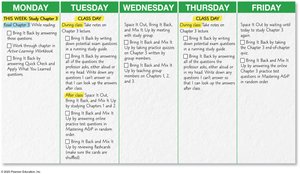
Use the SQ3R method for reading textbooks: Survey, Question, Read, Recite, and Review. Actively engage with the material by taking notes, drawing diagrams, and summarizing key points. Develop a weekly study schedule to balance independent study, group work, and use of available resources.
Effective Use of Class and Lab Time
Come prepared by reviewing material before class or lab.
Take your own notes using systems like the Cornell Note-Taking System.
Participate actively and ask questions when needed.
Using the Textbook and Associated Materials
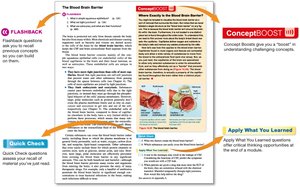
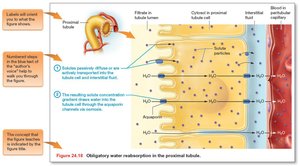
The textbook is organized into modules with clear learning outcomes, concept boosts, and self-assessment questions. Figures and diagrams are essential for understanding complex concepts—study them carefully and relate them to the text.
Characteristics of Living Organisms
Properties Shared by Living Organisms
Cellular composition: All living things are made of cells, the basic units of life.
Metabolism: The sum of all chemical reactions in the body, including anabolism (building up) and catabolism (breaking down).
Growth: Increase in cell size (hypertrophy) or number (hyperplasia).
Excretion: Removal of metabolic waste products.
Responsiveness: Ability to sense and react to environmental changes.
Movement: Includes movement of the organism, cells, or substances within the body.
Reproduction: Production of new cells (mitosis) or offspring (meiosis).
Survival Needs
Nutrients
Oxygen
Water
Normal body temperature
Atmospheric pressure
Levels of Structural Organization and Body Systems
Structural Levels of Organization
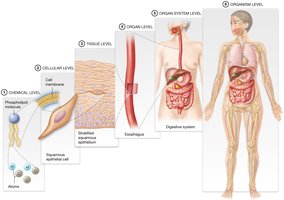
The human body is organized into a hierarchy of structural levels:
Chemical level: Atoms and molecules (e.g., water, proteins).
Cellular level: Cells and their organelles.
Tissue level: Groups of similar cells performing a common function.
Organ level: Two or more tissue types forming organs.
Organ system level: Groups of organs working together for a common purpose.
Organism level: All organ systems functioning together as a living being.
Types of Anatomy and Physiology
Systemic anatomy: Study by organ systems.
Regional anatomy: Study by body regions.
Surface anatomy: Study of surface markings.
Gross anatomy: Structures visible to the naked eye.
Microscopic anatomy: Structures visible only with a microscope (histology and cytology).
Physiology is often divided by organ system (e.g., neurophysiology, cardiovascular physiology) or by level of organization.
The 11 Organ Systems of the Human Body
The human body consists of 11 organ systems, each with specific functions essential for survival and homeostasis.
Organ System | Main Components | Primary Functions |
|---|---|---|
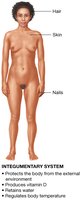
Integumentary | Skin, hair, nails | Protection, vitamin D synthesis, temperature regulation |
Skeletal | Bones, joints | Support, movement, blood cell production |
Muscular | Skeletal muscles | Movement, heat production |
Nervous | Brain, spinal cord, nerves | Control, communication |
Endocrine | Glands (e.g., pituitary, thyroid) | Hormone production, regulation |
Cardiovascular | Heart, blood vessels | Transport of nutrients, gases, wastes |
Lymphatic | Lymph nodes, vessels, spleen | Immunity, fluid balance |
Respiratory | Lungs, trachea | Gas exchange |
Digestive | Stomach, intestines, liver | Digestion, absorption |
Urinary | Kidneys, bladder | Waste removal, fluid balance |
Reproductive | Ovaries/testes, uterus/penis | Production of offspring |
The Language of Anatomy and Physiology
Word Roots, Prefixes, and Suffixes
Medical terminology is built from word roots, prefixes, and suffixes. Understanding these components helps in learning anatomical terms.
Anatomical Position
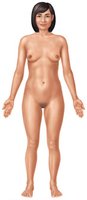
The anatomical position is the standard reference for describing body parts and regions: standing upright, feet shoulder-width apart, arms at sides, palms facing forward. Terms like "right" and "left" always refer to the subject's right and left.
Directional Terms
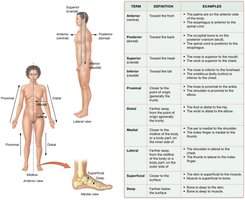
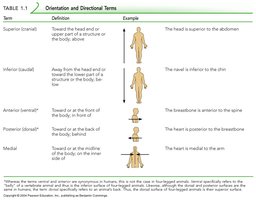
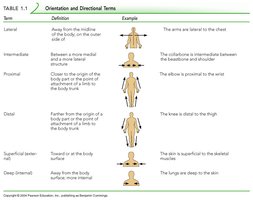
Directional terms describe the locations of structures relative to other structures or locations in the body.
Term | Definition | Example |
|---|---|---|
Superior (cranial) | Toward the head | The head is superior to the abdomen |
Inferior (caudal) | Away from the head | The navel is inferior to the chin |
Anterior (ventral) | Toward the front | The breastbone is anterior to the spine |
Posterior (dorsal) | Toward the back | The heart is posterior to the breastbone |
Medial | Toward the midline | The heart is medial to the arm |
Lateral | Away from the midline | The arms are lateral to the chest |
Proximal | Closer to the origin | The elbow is proximal to the wrist |
Distal | Farther from the origin | The knee is distal to the thigh |
Superficial | Toward the surface | The skin is superficial to the muscles |
Deep | Away from the surface | The lungs are deep to the rib cage |
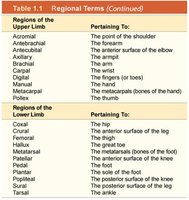
Regional Terms
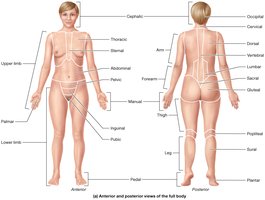
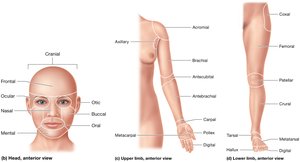
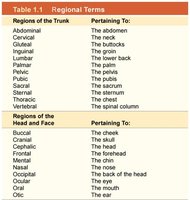
The body is divided into the axial region (head, neck, trunk) and appendicular region (limbs). Each region is further subdivided into specific areas with unique names.
Planes of Section
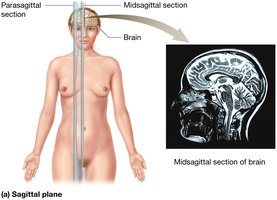
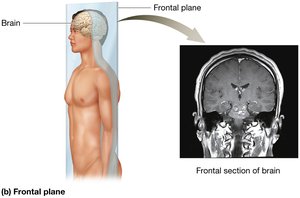
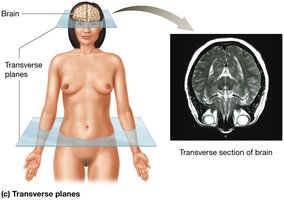
Body planes are imaginary lines used to divide the body for anatomical study:
Sagittal plane: Divides body into right and left parts (midsagittal = equal parts, parasagittal = unequal parts).
Frontal (coronal) plane: Divides body into anterior and posterior parts.
Transverse (horizontal) plane: Divides body into superior and inferior parts.
Oblique plane: Divides body at an angle.
The Organization of the Human Body
Body Cavities
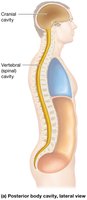
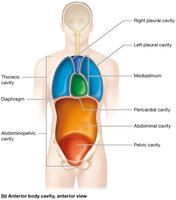
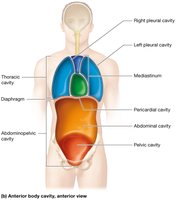
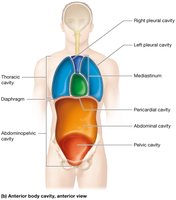
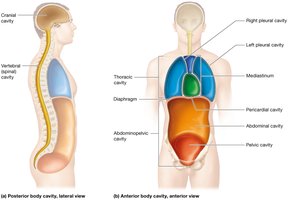
Body cavities are fluid-filled spaces that protect organs and allow for changes in size and shape. The two main cavities are:
Posterior (dorsal) cavity: Cranial cavity (brain) and vertebral cavity (spinal cord).
Anterior (ventral) cavity: Thoracic cavity (pleural, mediastinum, pericardial) and abdominopelvic cavity (abdominal, pelvic, peritoneal).
Abdominopelvic Quadrants and Regions
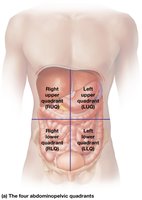
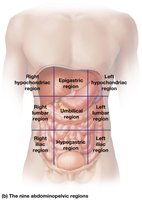
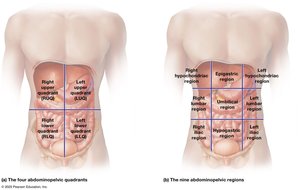
The abdominopelvic cavity can be divided into four quadrants or nine regions for clinical reference.
Serous Membranes
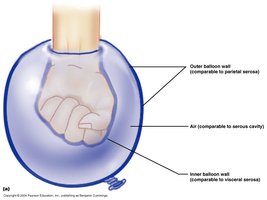
Serous membranes line body cavities and cover organs, reducing friction. Each consists of a parietal layer (lines cavity) and visceral layer (covers organ), with serous fluid in between.
Core Principles in Anatomy and Physiology
Homeostasis
Homeostasis is the maintenance of a stable internal environment. Physiological processes operate to keep variables (e.g., temperature, pH) within a narrow range. Imbalances can lead to disease or death.
Feedback Loops
Negative feedback: Opposes changes, returning variables to normal (e.g., body temperature regulation).
Positive feedback: Amplifies changes, usually to complete a process (e.g., blood clotting, childbirth).
Feedback loops involve a stimulus, receptor, control center, effector, and response.
Other Core Principles
Structure and function: The form of a structure is suited to its function ("form follows function").
Gradients: Differences in concentration, pressure, or temperature drive physiological processes.
Cell-to-cell communication: Cells communicate via chemical messengers (hormones, neurotransmitters) or electrical signals to coordinate function and maintain homeostasis.
Summary Table: Key Terms and Concepts
Term | Definition |
|---|---|
Anatomy | Study of body structure |
Physiology | Study of body function |
Homeostasis | Maintenance of stable internal environment |
Negative feedback | Mechanism that reverses a deviation from the set point |
Positive feedback | Mechanism that amplifies a deviation from the set point |
Serous membrane | Double-layered membrane that reduces friction between organs |
Gradient | Difference in a variable between two regions |
