 Back
BackChapter 1: The Human Body – An Orientation (ANP College Study Notes)
Study Guide - Smart Notes
 Tailored notes based on your materials, expanded with key definitions, examples, and context.
Introduction to Anatomy and Physiology
Definition and Importance
Anatomy and physiology are foundational sciences that provide a framework for understanding the structure and function of the human body.
Anatomy: The study of the structure of body parts and their relationships to one another.
Physiology: The study of the function of body parts and how they carry out life-sustaining activities.
Principle of Complementarity: Structure determines function; what a structure can do depends on its specific form.
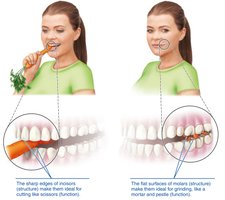
Anatomical Variability
Humans vary slightly in both external and internal anatomy.
Over 90% of anatomical structures match textbook descriptions, but minor variations exist (e.g., nerves or blood vessels may be out of place).
Extreme anatomical variations are rare and usually incompatible with life.
Sex and Gender
Sex: Biological attributes based on chromosomes, gene expression, and hormone action; reflected in reproductive anatomy and physiology (male or female).
Gender: Psychosocial construct including behaviors, expressions, and identities (man, woman, transgender, non-binary, etc.).
Subdivisions of Anatomy and Physiology
Topics of Anatomy
Anatomy is divided into several subfields:
Gross (macroscopic) anatomy: Study of large structures visible to the naked eye.
Regional anatomy: Examines all structures in a particular area.
System anatomy: Focuses on one system (e.g., cardiovascular, nervous).
Surface anatomy: Looks at internal structures as they relate to the skin.
Microscopic anatomy: Studies structures too small to be seen unaided (cytology: cells; histology: tissues).
Developmental anatomy: Traces structural changes throughout life (embryology: before birth).
Studying Anatomy
Requires understanding anatomical terminology.
Essential skills: observation, manipulation, palpation (feeling organs), auscultation (listening with stethoscope).
Medical imaging technologies: X-ray, MRI, CT, ultrasound.
Topics of Physiology
Subdivided by organ systems (renal, neurophysiology, cardiovascular).
Often focuses on cellular and molecular events.
Requires understanding chemical and physical principles (e.g., electrical currents, pressure).
Levels of Structural Organization
Hierarchy of Organization
The human body is organized from the simplest to the most complex levels:
Chemical level: Atoms combine to form molecules.
Cellular level: Cells are made up of molecules.
Tissue level: Groups of similar cells form tissues.
Organ level: Organs contain two or more types of tissues.
Organ system level: Organs work closely together in systems.
Organismal level: All organ systems combine to make the whole organism.
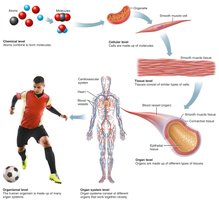
The Body’s Organ Systems and Their Major Functions
Overview of Organ Systems
The human body has 11 organ systems, each with specific functions.
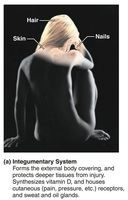
Integumentary System: Protects the body, synthesizes vitamin D, houses receptors and glands.
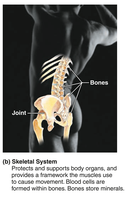
Skeletal System: Supports and protects organs, stores minerals, forms blood cells.
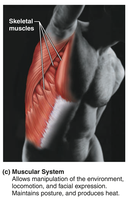
Muscular System: Allows movement, maintains posture, produces heat.
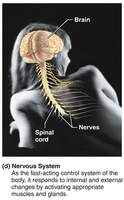
Nervous System: Fast-acting control system, responds to changes, activates muscles and glands.
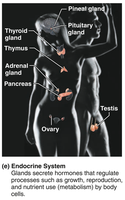
Endocrine System: Glands secrete hormones regulating growth, reproduction, metabolism.
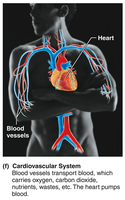
Cardiovascular System: Transports blood, nutrients, wastes; heart pumps blood.
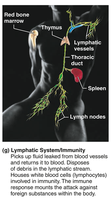
Lymphatic System/Immunity: Returns fluid to blood, disposes debris, houses immune cells.
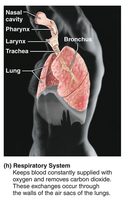
Respiratory System: Supplies blood with oxygen, removes carbon dioxide.
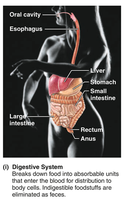
Digestive System: Breaks down food, absorbs nutrients, eliminates wastes.
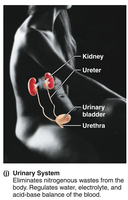
Urinary System: Eliminates wastes, regulates water, electrolytes, acid-base balance.
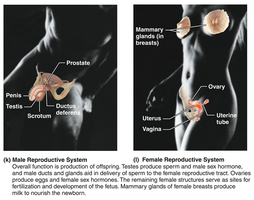
Reproductive System: Produces offspring, sex hormones, and gametes.
Requirements for Life
Necessary Life Functions
All living organisms carry out vital functions for survival:
Maintaining boundaries: Separation between internal and external environments (e.g., plasma membranes, skin).
Movement: Of body parts, cells, and substances (e.g., skeletal muscles, cardiac muscle).
Responsiveness: Ability to sense and respond to stimuli (e.g., withdrawal reflex, breathing rate).
Digestion: Breakdown and absorption of food.
Metabolism: All chemical reactions in cells; includes catabolism (breakdown) and anabolism (synthesis).
Excretion: Removal of wastes (e.g., urea, carbon dioxide, feces).
Reproduction: Cellular division for growth/repair; production of offspring.
Growth: Increase in size of body part or organism.
Interrelationships Among Organ Systems
Organ systems work cooperatively to maintain life, servicing individual cells and meeting survival needs. 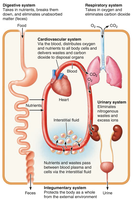
Survival Needs
Nutrients: Carbohydrates (energy), proteins (cell building), fats (energy storage), minerals/vitamins (chemical reactions, structure).
Oxygen: Essential for metabolic reactions; body survives only minutes without it.
Water: Most abundant chemical; provides environment for reactions.
Normal body temperature: Chemical reactions depend on stable temperature (37ºC/98.6ºF).
Atmospheric pressure: Needed for breathing and gas exchange.
Homeostasis
Definition and Importance
Homeostasis is the maintenance of stable internal conditions despite environmental changes.
Dynamic equilibrium; internal conditions adjust within narrow limits.
Law of mass balance: Total intake equals total loss; ensures constant levels of substances.
Maintained by all organ systems.
Homeostatic Control Mechanisms
Regulated by nervous and endocrine systems.
Three components: receptor (detects change), control center (determines response), effector (carries out response).
Negative Feedback
Most common mechanism; reduces or shuts off original stimulus.
Variable changes in opposite direction, returning to set point.
Examples: regulation of body temperature, blood glucose by insulin.
Positive Feedback
Enhances or exaggerates original stimulus; variable changes in same direction.
Usually controls infrequent events (e.g., labor contractions, blood clotting).
Feedforward Response
Anticipatory response; occurs before change happens (e.g., saliva release before eating).
Homeostatic Imbalance
Disturbance increases risk of disease, aging, and inefficiency of control systems.
Overwhelmed negative feedback can lead to destructive positive feedback (e.g., heart failure).
Anatomical Terminology
Anatomical Position and Directional Terms
Anatomical position: Body erect, feet slightly apart, palms forward, thumbs away from body.
Directional terms describe relationships between body structures (e.g., lateral, medial).
Regional Terms
Axial part: Head, neck, trunk.
Appendicular part: Limbs (arms, legs).
Regional terms designate specific areas within these divisions.
Body Planes and Sections
Sagittal plane: Divides body into right and left parts.
Midsagittal (median) plane: Lies exactly in the midline.
Parasagittal plane: Offset from the midline.
Frontal (coronal) plane: Divides body into anterior and posterior parts.
Transverse (horizontal) plane: Divides body into superior and inferior parts.
Medical Imaging Techniques
Overview
Medical imaging allows visualization of internal structures without surgery.
X-ray: Dense structures appear light; used for bones.
CT scan: Series of X-ray images; used for bones, soft tissues, blood vessels.
Digital subtraction angiography: X-rays with contrast agent; visualizes blood vessels.
PET scan: Uses radioactive tracers; detects cancer, monitors treatment.
MRI: Uses magnets and radio waves; best for soft tissues.
Ultrasound: High-frequency sound waves; safe for fetus, used for soft tissues.
Body Cavities
Dorsal and Ventral Body Cavities
Dorsal cavity: Protects nervous system; includes cranial (brain) and vertebral (spinal cord) cavities.
Ventral cavity: Houses internal organs (viscera); includes thoracic (lungs, heart) and abdominopelvic (digestive, urinary, reproductive organs) cavities.
Membranes in Ventral Body Cavity
Serosa (serous membrane): Double-layered; parietal lines cavity walls, visceral covers organs.
Serous fluid lubricates and reduces friction.
Specific names: pleura (lungs), peritoneum (abdominopelvic), pericardium (heart).
Abdominopelvic Regions and Quadrants
Medical personnel use four quadrants: RUQ, LUQ, RLQ, LLQ.
Anatomists use nine regions: umbilical, epigastric, pubic, right/left inguinal, right/left lateral, right/left hypochondriac.
Other Body Cavities
Open cavities: Oral, nasal, orbital, middle ear.
Closed cavities: Synovial cavities (joints).
Summary Table: Major Organ Systems and Functions
Organ System | Main Function |
|---|---|
Integumentary | Protection, vitamin D synthesis, sensory reception |
Skeletal | Support, protection, mineral storage, blood cell formation |
Muscular | Movement, posture, heat production |
Nervous | Control, response to stimuli |
Endocrine | Hormone secretion, regulation of growth/metabolism |
Cardiovascular | Transport of blood, nutrients, wastes |
Lymphatic/Immunity | Fluid return, immune response |
Respiratory | Gas exchange (O2/CO2) |
Digestive | Breakdown and absorption of food |
Urinary | Waste elimination, water/electrolyte balance |
Reproductive | Production of offspring |
Conclusion
Understanding the orientation, structure, and function of the human body is essential for further study in anatomy and physiology. Mastery of terminology, organization, and homeostatic principles provides a foundation for clinical practice and advanced biological sciences.
