 Back
BackChapter 1: The Human Body – An Orientation (ANP College Study Notes)
Study Guide - Smart Notes
 Tailored notes based on your materials, expanded with key definitions, examples, and context.
The Human Body: An Orientation
Anatomy and Physiology
Anatomy and physiology are foundational sciences in understanding the human body. Anatomy is the study of the structure and shape of the body and its parts, often relying on observation to determine relationships and sizes. Physiology is the study of how the body and its parts function. The relationship between structure and function is crucial: the structure of a body part determines its function, and changes in structure can affect function. Pathophysiology examines the structural and functional changes that lead to disease, focusing on the functional changes associated with diseased states or injury.
Levels of Structural Organization
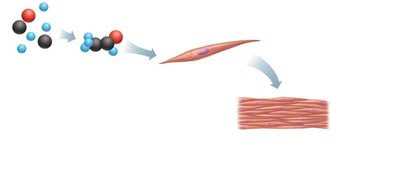
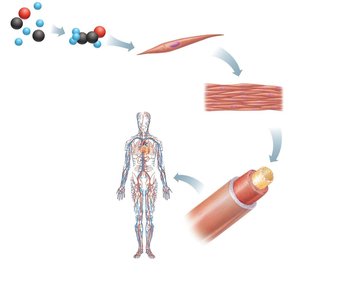
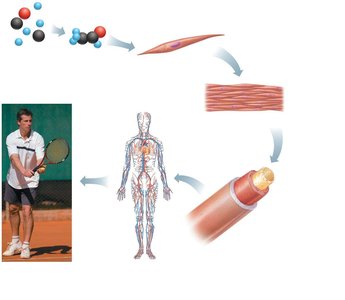
The human body is organized into six hierarchical levels, each building upon the previous:
Chemical Level: Atoms combine to form molecules, which in turn form macromolecules essential for life.
Cellular Level: Cells, composed of organelles, are the basic structural and functional units of life. They vary widely in shape and size.
Tissue Level: Tissues are groups of similar cells that perform specific functions. There are four primary tissue types: epithelial, connective, muscle, and nervous tissue.
Organ Level: Organs are structures composed of two or more tissue types that perform specialized functions.
Organ System Level: Organ systems consist of different organs that work together closely to accomplish a common purpose.
Organismal Level: The human organism is made up of many organ systems working together to maintain life.
Organ Systems of the Human Body
The body is composed of 11 major organ systems, each with specific structures and functions:
Integumentary System: External body covering (skin, hair, nails, glands); protects, synthesizes vitamin D, sensory reception, temperature regulation.
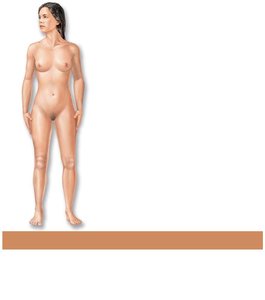
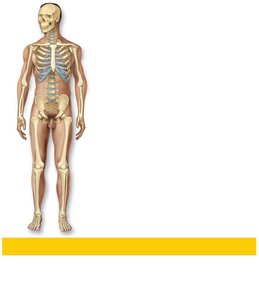
Skeletal System: Bones, joints, cartilages, ligaments; provides framework, protects organs, muscle attachment, hematopoiesis.
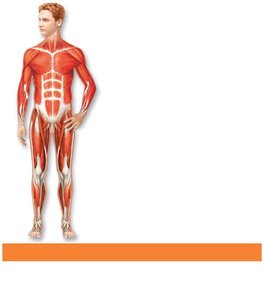
Muscular System: Muscles; enables movement, maintains posture, produces heat.
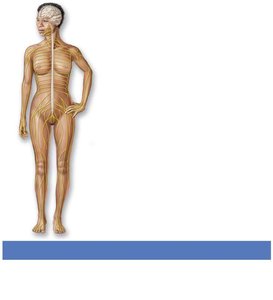
Nervous System: Brain, spinal cord, nerves, sensory receptors; fast-acting control, responds to changes, stimulates muscles/glands.
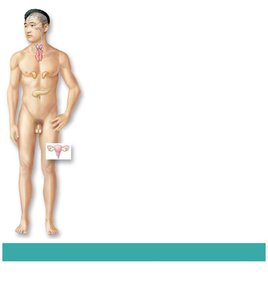
Endocrine System: Hormone-secreting glands; slower, longer-lasting control, regulates growth, reproduction, metabolism.
Cardiovascular System: Heart, blood, blood vessels; pumps and transports blood, carries gases, nutrients, wastes, hormones.
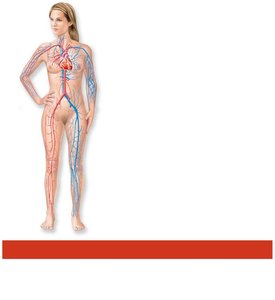
Lymphatic System: Lymphatic vessels, nodes, organs; returns tissue fluid to blood, immunity.
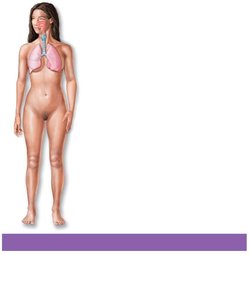
Respiratory System: Nasal cavity, pharynx, larynx, trachea, bronchi, lungs; moves air, gas exchange.
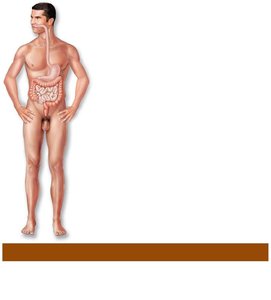
Digestive System: Oral cavity, pharynx, esophagus, stomach, intestines, accessory organs; breaks down food, absorbs nutrients, eliminates waste.
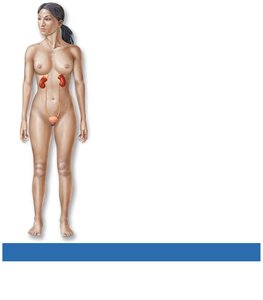
Urinary System: Kidneys, ureters, bladder, urethra; eliminates nitrogenous wastes, maintains pH, regulates water/electrolytes.
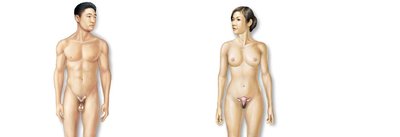
Male Reproductive System: Testes, scrotum, penis, glands, ducts; sperm production and transport.
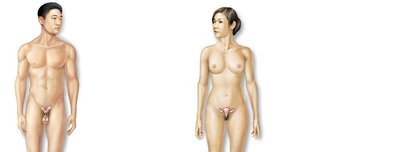
Female Reproductive System: Ovaries, uterine tubes, uterus, vagina, vulva; egg production, supports fetal development, childbirth.
Homeostasis
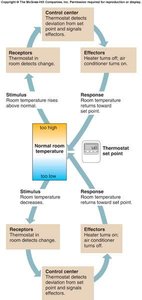
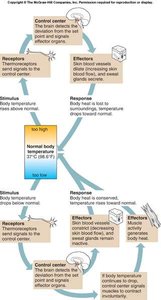
Homeostasis is the maintenance of a stable internal environment, essential for normal body function and life. It is a dynamic equilibrium, maintained by neural and hormonal control systems. A disturbance in homeostasis (homeostatic imbalance) can result in disease.
Components of a Control System:
Receptor: Detects changes (stimuli) and sends information to the control center via the afferent pathway.
Control Center: Determines the set point, analyzes information, and sends signals to effectors via the efferent pathway.
Effector: Responds to the control center's signal to restore the variable to the set point.
There are two main mechanisms for maintaining homeostasis:
Negative Feedback Mechanisms: Most common; the effector response reduces or eliminates the original stimulus, returning the variable to the set point (e.g., body temperature regulation, household thermostat).
Positive Feedback Mechanisms: Less common; the effector response enhances the original stimulus, promoting further change (e.g., blood clotting, childbirth).
Language of Anatomy
To avoid confusion, anatomical terminology is based on the standard anatomical position: standing erect, face forward, arms at sides, palms forward, fingers down, feet forward, parallel, and flat.


Directional Terms
Directional terms describe the location of one body part relative to another. Common terms include superior/inferior, anterior/posterior, medial/lateral, proximal/distal, superficial/deep.
Term | Definition |
|---|---|
Superior (cranial) | Toward the head or upper part of a structure |
Inferior (caudal) | Away from the head or toward the lower part |
Anterior (ventral) | Toward the front of the body |
Posterior (dorsal) | Toward the back of the body |
Medial | Toward the midline of the body |
Lateral | Away from the midline |
Proximal | Closer to the origin of a body part |
Distal | Farther from the origin |
Superficial | Toward or at the body surface |
Deep | Away from the body surface |
Regional Terms
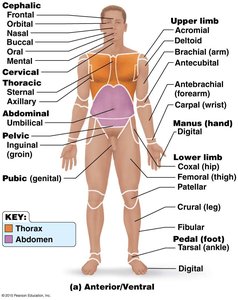
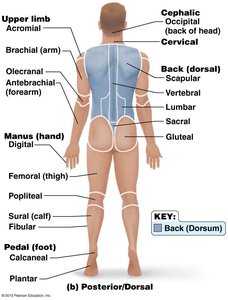
Regional terms specify areas within major body divisions (anterior/ventral and posterior/dorsal landmarks).
Body Planes and Sections
Sections are cuts along imaginary lines (planes) used to divide the body:
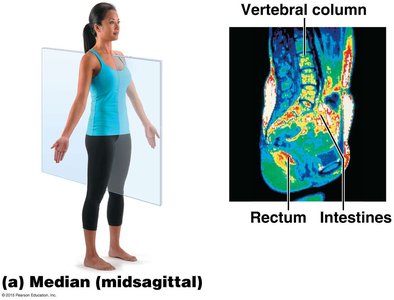
Sagittal Plane: Divides the body into left and right parts. The median (midsagittal) plane divides it into equal halves; parasagittal is unequal.
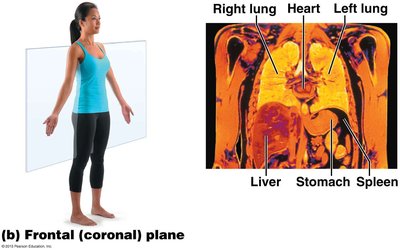
Frontal (Coronal) Plane: Divides the body into anterior and posterior parts.
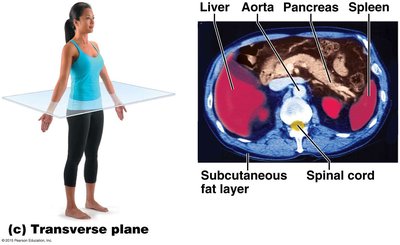
Transverse (Cross) Plane: Divides the body into superior and inferior parts.
Body Cavities
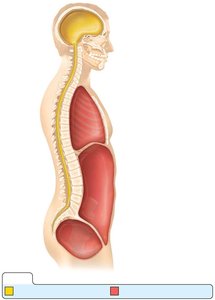
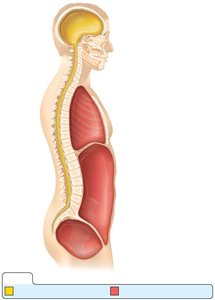
The body contains two major cavities that protect organs:
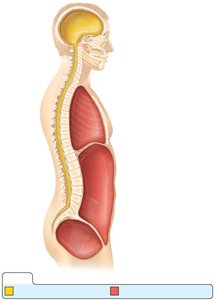
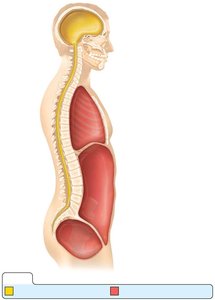
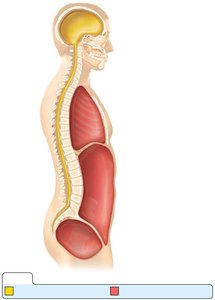
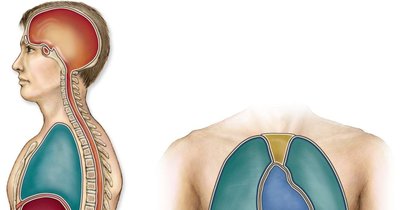
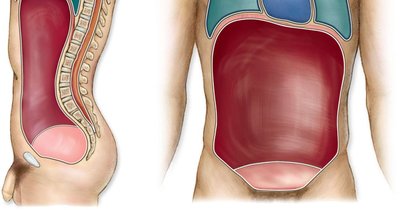
Dorsal Body Cavity: Includes the cranial cavity (protects the brain) and spinal cavity (protects the spinal cord).
Ventral Body Cavity: Divided by the diaphragm into the thoracic cavity (heart, lungs) and abdominopelvic cavity (digestive, urinary, reproductive organs).
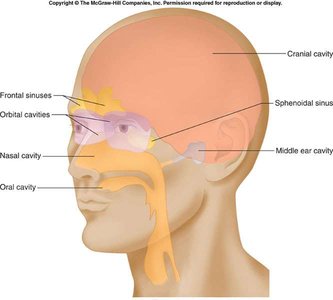
Other Body Cavities
Oral cavity
Digestive cavities
Nasal cavity
Paranasal sinuses
Orbital cavities
Middle ear cavities
Abdominopelvic Cavity Subdivisions
The abdominopelvic cavity can be divided into four quadrants or nine regions for clinical and anatomical reference.
Quadrant | Location |
|---|---|
Right Upper (RUQ) | Upper right side |
Left Upper (LUQ) | Upper left side |
Right Lower (RLQ) | Lower right side |
Left Lower (LLQ) | Lower left side |
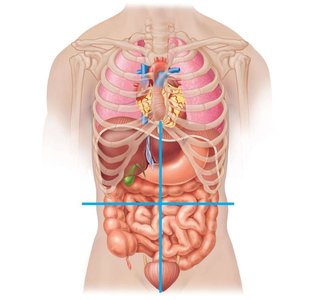
Region | Location |
|---|---|
Right hypochondriac | Upper right |
Epigastric | Upper middle |
Left hypochondriac | Upper left |
Right lumbar | Middle right |
Umbilical | Center |
Left lumbar | Middle left |
Right iliac (inguinal) | Lower right |
Hypogastric (pubic) | Lower middle |
Left iliac (inguinal) | Lower left |
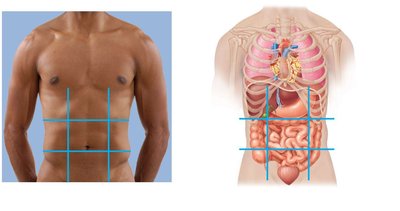
Example: The liver is primarily in the right upper quadrant and right hypochondriac region, while the appendix is in the right lower quadrant and right iliac region.
Additional info: Understanding these divisions is essential for clinical diagnosis and communication in healthcare.
