 Back
Chapter 1: The Human Body – An Orientation (Mini-Textbook Study Notes)
Study Guide - Smart Notes
 Tailored notes based on your materials, expanded with key definitions, examples, and context.
The Human Body: An Orientation
Introduction to Anatomical Terminology
Understanding anatomical terminology is essential for clear communication in health sciences. It allows professionals to accurately describe locations, functions, and relationships of body parts.
Anatomical terminology provides a standardized language for describing the human body.
Accurate communication is critical for diagnosis, treatment, and collaboration.
Example: Using terms like "anterior," "posterior," "superior," and "inferior" to describe locations.
Subdivisions of Anatomy
Anatomy is divided into several branches based on the scale and focus of study.
Gross (macroscopic) anatomy: Study of large, visible structures.
Regional anatomy: Examines all structures in a specific area.
System anatomy: Focuses on individual organ systems (e.g., cardiovascular, nervous).
Surface anatomy: Studies internal structures as they relate to the skin surface.
Microscopic anatomy: Includes cytology (study of cells) and histology (study of tissues).
Developmental anatomy: Studies anatomical changes throughout life, including embryology (development before birth).
Anatomy vs. Physiology
Anatomy and physiology are closely related disciplines that together explain the structure and function of the human body.
Anatomy: Study of the structure of body parts and their relationships.
Physiology: Study of the function of body parts and how they carry out life-sustaining activities.
Example: The structure of the heart (anatomy) enables it to pump blood (physiology).
Principle of Complementarity of Structure and Function
The function of a body part is always dependent on its structure. This principle is fundamental in understanding how anatomy and physiology are inseparable.
Structure determines function: What a structure can do depends on its form.
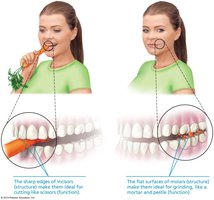
Example: The sharp edges of incisors are ideal for cutting food, while the flat surfaces of molars are suited for grinding.
Levels of Structural Organization
Hierarchy of Structural Organization
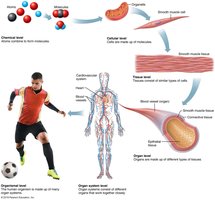
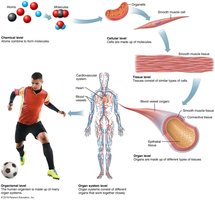
The human body is organized in a hierarchical manner, from the smallest chemical level to the entire organism.
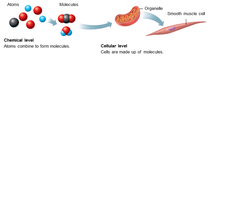
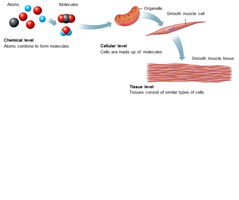
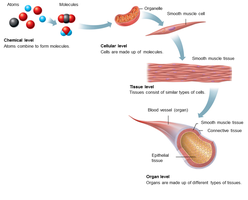
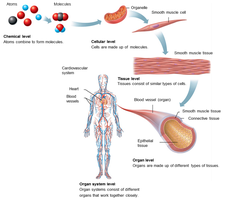
Chemical level: Atoms combine to form molecules.
Cellular level: Cells are made up of molecules.
Tissue level: Tissues consist of similar types of cells.
Organ level: Organs are made up of different types of tissues.
Organ system level: Organ systems consist of different organs that work together.
Organismal level: The human organism is made up of all organ systems.
Requirements for Life
Necessary Life Functions
To sustain life, the human body must perform several essential functions.
Maintaining boundaries: Separation between internal and external environments (e.g., skin, plasma membranes).
Movement: Includes movement of the body and substances within the body (muscular, cardiac, and smooth muscle).
Responsiveness: Ability to sense and respond to stimuli (e.g., withdrawal reflex, breathing rate).
Digestion: Breakdown and absorption of food.
Metabolism: All chemical reactions in the body, including catabolism and anabolism.
Excretion: Removal of wastes (e.g., urea, carbon dioxide, feces).
Reproduction: Cellular division for growth/repair and production of offspring.
Growth: Increase in size of a body part or organism.
Interrelationships Among Body Organ Systems
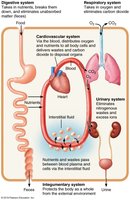
Organ systems work together to maintain life and support cellular function.
Each cell depends on organ systems for survival needs.
There are 11 major organ systems in the human body.
The Body’s Organ Systems and Their Major Functions
Overview of Organ Systems
The human body consists of multiple organ systems, each with specific functions essential for survival.
Organ System | Main Function |
|---|---|
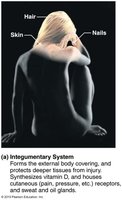
Integumentary | Protects body, synthesizes vitamin D, houses receptors and glands |
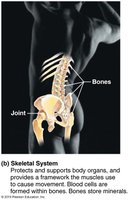
Skeletal | Supports and protects organs, forms blood cells, stores minerals |
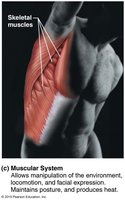
Muscular | Movement, posture, heat production |
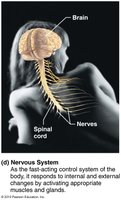
Nervous | Fast-acting control, responds to changes |
Endocrine | Hormone secretion, regulates growth, metabolism, reproduction |
Cardiovascular | Transports blood, nutrients, gases, wastes |
Lymphatic/Immunity | Returns fluid to blood, immune response |
Respiratory | Gas exchange (oxygen, carbon dioxide) |
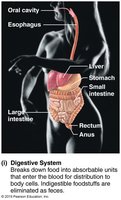
Digestive | Breaks down food, absorbs nutrients, eliminates waste |
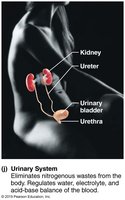
Urinary | Eliminates waste, regulates water/electrolytes |
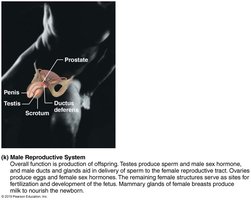
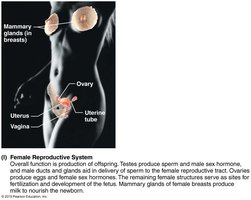
Reproductive | Produces offspring |
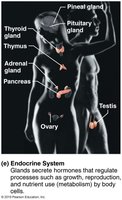
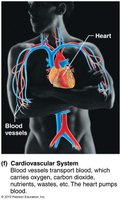
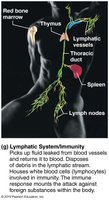
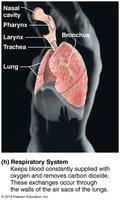
Survival Needs
Essential Factors for Survival
Humans require several factors in appropriate amounts to survive.
Nutrients: Carbohydrates (energy), proteins (cell building), fats (energy storage), minerals and vitamins (chemical reactions, structure).
Oxygen: Required for energy release from food; survival without oxygen is limited to minutes.
Water: Most abundant chemical; necessary for chemical reactions and as a fluid base.
Normal body temperature: Essential for proper rates of chemical reactions (optimal at 37°C).
Atmospheric pressure: Required for adequate breathing and gas exchange.
Homeostasis
Definition and Importance
Homeostasis is the maintenance of stable internal conditions despite external changes. It is a dynamic equilibrium, constantly adjusted by organ systems.
All organ systems contribute to homeostasis.
Examples include regulation of body temperature and blood glucose.
Homeostatic Control Mechanisms
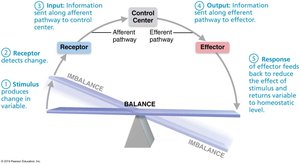
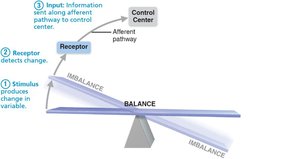
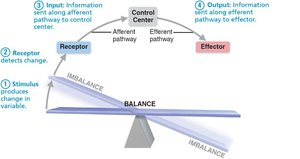
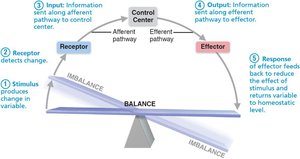
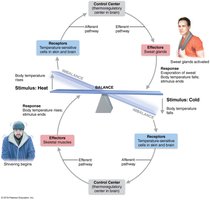
Homeostatic control involves three main components: receptor, control center, and effector.
Receptor: Monitors environment and detects changes (stimuli).
Control center: Determines set point, receives input, and directs response.
Effector: Executes response to restore balance.
Negative Feedback Mechanisms
Negative feedback is the most common mechanism for maintaining homeostasis. It reduces or shuts off the original stimulus, returning the variable to its set point.
Example: Regulation of body temperature and blood glucose.
Variable changes in the opposite direction of the initial change.
Positive Feedback Mechanisms
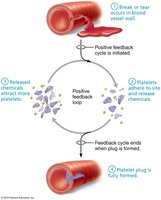
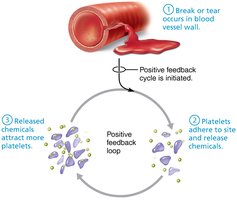
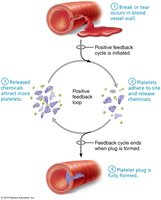
Positive feedback enhances or amplifies the original stimulus, causing the variable to move further from its set point. It is less common and usually controls infrequent events.
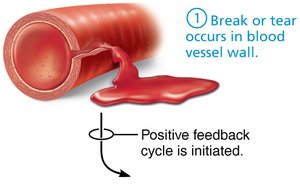
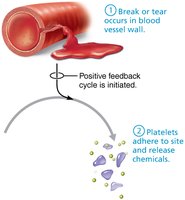
Example: Labor contractions (oxytocin), platelet plug formation and blood clotting.
May exhibit a cascade or amplifying effect.
Homeostatic Imbalance
Disturbances in homeostasis increase the risk of disease and contribute to aging. If negative feedback mechanisms are overwhelmed, destructive positive feedback may occur, such as in heart failure.
Control systems become less efficient with age.
Imbalance can lead to pathological conditions.
