 Back
Chapter 1: The Human Body – An Orientation (Mini-Textbook Study Notes)
Study Guide - Smart Notes
 Tailored notes based on your materials, expanded with key definitions, examples, and context.
Introduction to Human Anatomy and Physiology
Course Overview
This course introduces the foundational concepts of human anatomy and physiology, focusing on the structure and function of the human body. Students will explore the organization of the body, the interrelationships among organ systems, and the mechanisms that maintain homeostasis.
Anatomy: The study of the structure of body parts and their relationships to one another.
Physiology: The study of the function of body parts and how they work to carry out life-sustaining activities.
Levels of Structural Organization
Hierarchy of Complexity
The human body is organized into a hierarchy of structural levels, each building on the previous one:
Chemical Level: Atoms combine to form molecules.
Cellular Level: Cells are made up of molecules.
Tissue Level: Tissues consist of similar types of cells.
Organ Level: Organs are made up of different types of tissues.
Organ System Level: Organ systems consist of different organs that work together closely.
Organismal Level: The human organism is made up of many organ systems.
Form and Function
Relationship Between Structure and Function
Structure determines function in anatomy and physiology. The shape and composition of a body part enable it to perform specific tasks.
Example: The sharp edges of incisors are ideal for cutting, while the flat surfaces of molars are suited for grinding food.
Necessary Life Functions
Basic Functions Required for Life
All living organisms must perform certain functions to sustain life:
Maintaining Boundaries: Separation between internal and external environments (e.g., skin, plasma membranes).
Movement: Muscular and skeletal systems enable movement of the body and substances within it.
Responsiveness: Ability to sense and respond to stimuli.
Digestion: Breakdown and absorption of nutrients.
Metabolism: All chemical reactions within the body, including catabolism and anabolism.
Excretion: Removal of wastes (e.g., urea, CO2, feces).
Reproduction: Cellular division and production of offspring.
Growth: Increase in size and number of cells.
Survival Needs
Essential Requirements for Human Survival
Nutrients: Carbohydrates, proteins, fats, vitamins, and minerals are required for energy, cell building, and chemical reactions.
Oxygen: Essential for cellular respiration and energy production.
Water: Most abundant chemical in the body; necessary for chemical reactions and as a fluid base.
Normal Body Temperature: Required for optimal rates of metabolic reactions (about 37°C).
Appropriate Atmospheric Pressure: Necessary for proper breathing and gas exchange in the lungs.
Homeostasis
Maintaining Internal Balance
Homeostasis is the maintenance of relatively stable internal conditions despite continuous changes in the environment. It is a dynamic state of equilibrium, maintained by all organ systems.
Components of Homeostatic Control:
Receptor: Detects changes (stimuli).
Control Center: Determines the set point and processes information.
Effector: Carries out the response to restore balance.
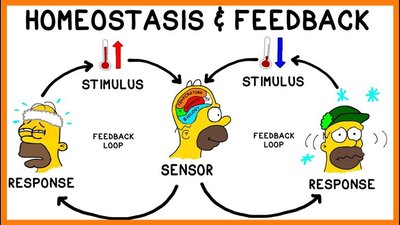
Negative and Positive Feedback Mechanisms
Negative Feedback: The response reduces or shuts off the original stimulus (e.g., regulation of body temperature, blood glucose levels).
Positive Feedback: The response enhances the original stimulus (e.g., blood clotting, labor contractions).
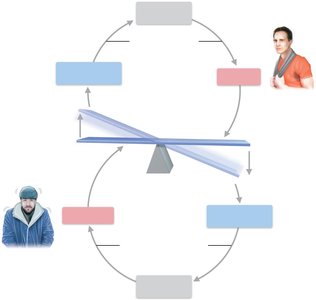
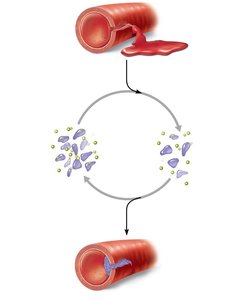
Homeostatic Imbalance
Disturbances in homeostasis increase the risk of disease and contribute to aging. If negative feedback mechanisms are overwhelmed, harmful positive feedback may occur (e.g., heart failure).
Body Systems Overview
Major Organ Systems Covered in A&P I
Integumentary System: Protects the body, synthesizes vitamin D, and houses sensory receptors and glands.
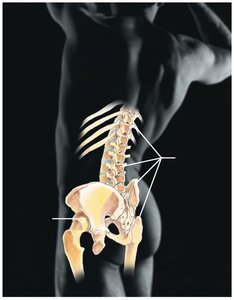
Skeletal System: Supports and protects organs, provides a framework for movement, forms blood cells, and stores minerals.
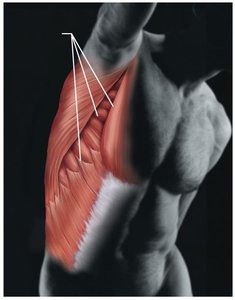
Muscular System: Enables movement, maintains posture, and produces heat.
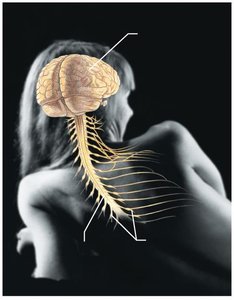
Nervous System: Fast-acting control system that responds to internal and external changes.
Orientation and Directional Terms
Describing Locations in the Body
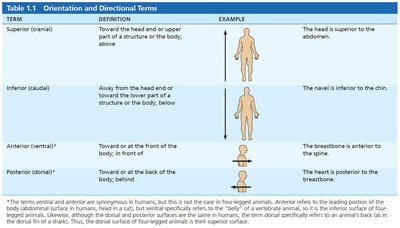
Directional terms are used to explain where one body structure is in relation to another.
Term | Definition | Example |
|---|---|---|
Superior (cranial) | Toward the head end or upper part of a structure or the body; above | The head is superior to the abdomen. |
Inferior (caudal) | Away from the head end or toward the lower part of a structure or the body; below | The navel is inferior to the chin. |
Anterior (ventral) | Toward or at the front of the body; in front of | The breastbone is anterior to the spine. |
Posterior (dorsal) | Toward or at the back of the body; behind | The heart is posterior to the breastbone. |
Term | Definition | Example |
|---|---|---|
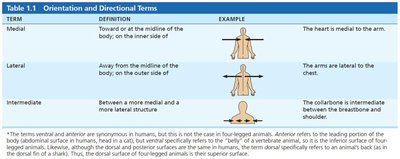
Medial | Toward or at the midline of the body; on the inner side of | The heart is medial to the arm. |
Lateral | Away from the midline of the body; on the outer side of | The arms are lateral to the chest. |
Intermediate | Between a more medial and a more lateral structure | The collarbone is intermediate between the breastbone and shoulder. |
Term | Definition | Example |
|---|---|---|
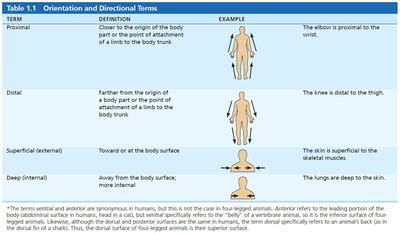
Proximal | Closer to the origin of the body part or the point of attachment of a limb to the body trunk | The elbow is proximal to the wrist. |
Distal | Farther from the origin of a body part or the point of attachment of a limb to the body trunk | The knee is distal to the thigh. |
Superficial (external) | Toward or at the body surface | The skin is superficial to the skeletal muscles. |
Deep (internal) | Away from the body surface; more internal | The lungs are deep to the skin. |
Regional Terms
Body Divisions and Regions
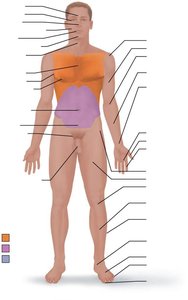
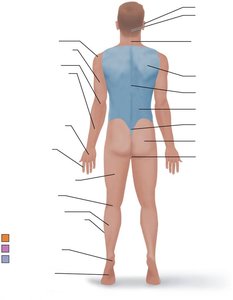
The body is divided into two major regions:
Axial: Head, neck, and trunk.
Appendicular: Limbs (arms and legs).
Regional terms specify particular areas within these divisions.
Body Planes and Sections
Standard Anatomical Planes
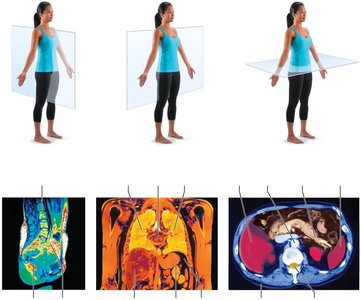
Sagittal Plane: Divides the body into right and left parts. A midsagittal (median) plane is exactly in the midline; a parasagittal plane is off-center.
Frontal (Coronal) Plane: Divides the body into anterior and posterior (front and back) parts.
Transverse (Horizontal) Plane: Divides the body into superior and inferior (top and bottom) parts; produces a cross-section.
Oblique Section: Cuts made at angles other than 90° to the vertical plane.
Body Cavities and Membranes
Major Body Cavities
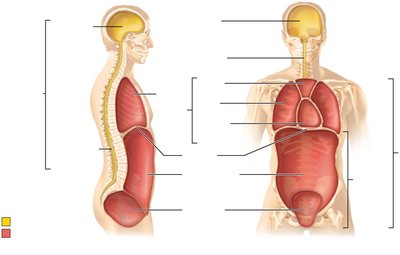
Dorsal Body Cavity: Protects the nervous system; includes the cranial cavity (brain) and vertebral cavity (spinal cord).
Ventral Body Cavity: Houses internal organs (viscera); includes the thoracic cavity (heart and lungs) and abdominopelvic cavity (digestive, urinary, and reproductive organs).
Serous Membranes
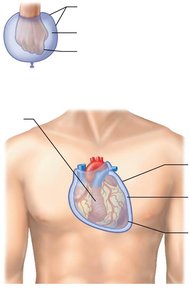
Serous membranes line body cavities and cover organs. The parietal serosa lines the cavity walls, while the visceral serosa covers the organs. Serous fluid between these layers reduces friction.
Abdominopelvic Quadrants and Regions
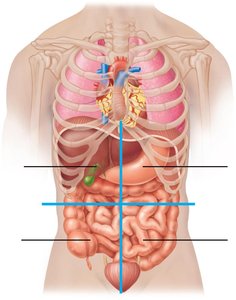
The abdominopelvic cavity is divided into four quadrants (RUQ, LUQ, RLQ, LLQ) and nine regions for clinical and anatomical reference.
Clinical Application: Homeostatic Imbalance
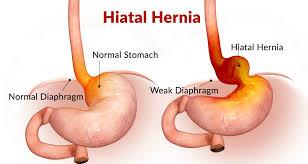
Example: Hiatal Hernia
A hiatal hernia occurs when part of the stomach protrudes through the diaphragm into the thoracic cavity, potentially causing heartburn and requiring surgical repair in severe cases.
Other Body Cavities
Additional Cavities
Exposed to Environment: Oral and digestive cavities, nasal cavity, orbital cavities, middle ear cavities.
Not Exposed: Synovial cavities (joint cavities).
Additional info: These foundational concepts are essential for understanding subsequent chapters on cells, tissues, and organ systems in human anatomy and physiology.
