 Back
BackChapter 1: The Human Body—An Orientation (Study Notes)
Study Guide - Smart Notes
 Tailored notes based on your materials, expanded with key definitions, examples, and context.
Form (Anatomy) Determines Function (Physiology)
Definitions and Relationship
Anatomy: The study of the structure of body parts and their relationships to one another.
Physiology: The study of the function of body parts; how they work to carry out life-sustaining activities.
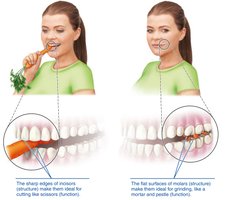
These disciplines are inseparable: function always reflects structure (the principle of complementarity of structure and function).
Example: The shape of teeth determines their function in cutting or grinding food.
Topics and Subdivisions of Anatomy and Physiology
Subdivisions of Anatomy
Gross (macroscopic) anatomy: Study of large body structures visible to the naked eye.
Regional anatomy: Examines all structures in a particular area of the body.
System anatomy: Focuses on one system (e.g., cardiovascular, nervous).
Surface anatomy: Studies internal structures as they relate to the overlying skin.
Microscopic anatomy: Structures too small to be seen with the naked eye.
Cytology: Study of cells.
Histology: Study of tissues.
Developmental anatomy: Traces structural changes throughout the lifespan.
Embryology: Study of developmental changes before birth.
Subdivisions of Physiology
Based on organ systems (e.g., renal, neurophysiology, cardiovascular physiology).
Often focuses on cellular or molecular events and chemical reactions in cells.
Pathophysiology: Studies physiological processes following disease or injury.
The Body’s Organization: Levels of Structural Organization
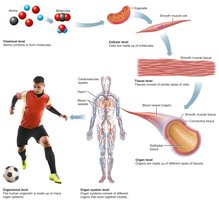
Hierarchy from Atoms to Organism
Chemical level: Atoms combine to form molecules.
Cellular level: Cells are made up of molecules and organelles.
Tissue level: Groups of similar cells with a common function.
Organ level: Organs are made of different types of tissues.
Organ system level: Different organs work together closely.
Organismal level: The human organism is made up of many organ systems.
The Body’s Organ Systems and Their Major Functions
Overview of the 11 Organ Systems
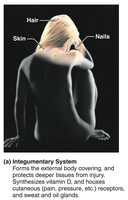
Integumentary System: Forms the external body covering, protects deeper tissues, synthesizes vitamin D, houses receptors and glands.
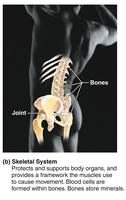
Skeletal System: Protects and supports body organs, provides a framework for muscles, forms blood cells, stores minerals.
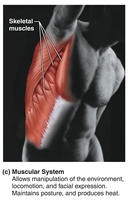
Muscular System: Allows manipulation, locomotion, facial expression, maintains posture, produces heat.
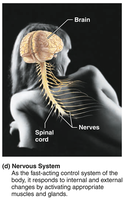
Nervous System: Fast-acting control system, responds to internal/external changes by activating muscles and glands.
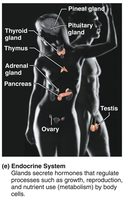
Endocrine System: Glands secrete hormones that regulate growth, reproduction, metabolism.
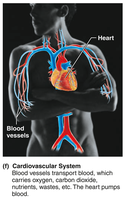
Cardiovascular System: Blood vessels transport blood, heart pumps blood.
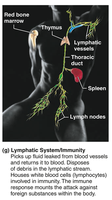
Lymphatic System/Immunity: Picks up fluid leaked from blood vessels, disposes of debris, houses white blood cells, mounts immune response.
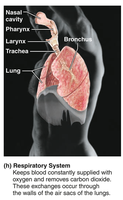
Respiratory System: Keeps blood supplied with oxygen, removes carbon dioxide.
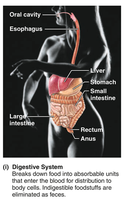
Digestive System: Breaks down food, absorbs nutrients, eliminates indigestible foodstuffs.
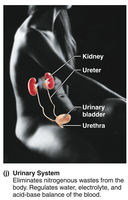
Urinary System: Eliminates nitrogenous wastes, regulates water, electrolyte, and acid-base balance.
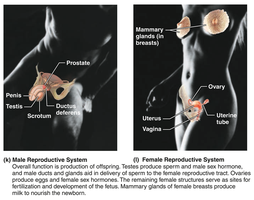
Reproductive System: Production of offspring, delivery of sperm/egg, development of fetus, nourishment of newborn.
Requirements for Life
Necessary Life Functions
Maintaining boundaries: Separation between internal and external environments (e.g., plasma membranes, skin).
Movement: Of body parts (skeletal muscles), substances (cardiac/smooth muscle), and cells.
Responsiveness: Ability to sense and respond to stimuli (e.g., withdrawal reflex, breathing rate).
Digestion: Breakdown of food and absorption of nutrients.
Metabolism: All chemical reactions in body cells, including catabolism (breakdown) and anabolism (synthesis).
Excretion: Removal of wastes (e.g., urea, carbon dioxide, feces).
Reproduction: Cellular division for growth/repair; organismal reproduction for offspring.
Growth: Increase in size of a body part or organism.
Survival Needs
Nutrients: Chemicals for energy and cell building (carbohydrates, proteins, fats, vitamins, minerals).
Oxygen: Essential for energy release from foods.
Water: Most abundant chemical in the body; environment for chemical reactions.
Normal body temperature: Necessary for proper metabolic reactions.
Appropriate atmospheric pressure: Required for breathing and gas exchange.
Homeostasis: Maintaining Stable Internal Conditions
Definition and Mechanisms
Homeostasis: Maintenance of relatively stable internal conditions despite continuous environmental changes.
Dynamic equilibrium: Internal conditions vary within narrow limits.
Law of mass balance: Input equals output for substances in the body.
Maintained by all organ systems, especially nervous and endocrine systems.
Homeostatic Control Components
Receptor: Monitors environment, responds to stimuli, sends input to control center.
Control center: Determines set point, analyzes input, determines response, sends output to effector.
Effector: Receives output, provides means to respond, response reduces (negative feedback) or enhances (positive feedback) stimulus.
Types of Feedback
Negative feedback: Most common; response reduces or shuts off original stimulus (e.g., regulation of body temperature, blood glucose).
Positive feedback: Response enhances original stimulus (e.g., labor contractions, blood clotting).
Feedforward (anticipatory) response: Occurs in anticipation of a change (e.g., salivation before eating).
Homeostatic Imbalance
Disturbance of homeostasis increases risk of disease, contributes to aging, and may allow destructive positive feedback mechanisms (e.g., heart failure).
Anatomical Terms: Body Directions, Regions, and Planes
Anatomical Position and Directional Terms
Anatomical position: Body erect, feet slightly apart, palms forward, thumbs away from body.
Directional terms: Describe location of one body part relative to another (e.g., superior, inferior, anterior, posterior, medial, lateral, proximal, distal, superficial, deep).
Regional Terms
Axial part: Head, neck, trunk.
Appendicular part: Limbs (arms and legs).
Specific regional terms designate areas within these divisions (e.g., axillary, femoral, patellar, etc.).
Body Planes and Sections
Sagittal plane: Divides body into right and left parts (midsagittal = midline; parasagittal = offset from midline).
Frontal (coronal) plane: Divides body into anterior and posterior parts.
Transverse (horizontal) plane: Divides body into superior and inferior parts.
Oblique section: Cuts made at angles other than 90° to the vertical plane.
Body Cavities and Membranes
Major Body Cavities
Dorsal body cavity: Protects nervous system; includes cranial cavity (brain) and vertebral cavity (spinal cord), covered by meninges.
Ventral body cavity: Houses internal organs (viscera); includes thoracic cavity (pleural, pericardial, mediastinum) and abdominopelvic cavity (abdominal and pelvic cavities).
Membranes in the Ventral Body Cavity
Serosa (serous membrane): Thin, double-layered; parietal serosa lines cavity walls, visceral serosa covers organs; serous fluid lubricates between layers.
Named for specific cavities: pleura (lungs), pericardium (heart), peritoneum (abdominopelvic organs).
Abdominopelvic Regions and Quadrants
Medical personnel use four quadrants: RUQ, LUQ, RLQ, LLQ.
Anatomists use nine regions: umbilical, epigastric, pubic (hypogastric), right/left inguinal (iliac), right/left lateral (lumbar), right/left hypochondriac.
Other Body Cavities
Open cavities: oral, nasal, orbital, middle ear.
Closed cavities: synovial (joint) cavities.
Table: Orientation and Directional Terms
Term | Definition |
|---|---|
Superior (cranial) | Toward the head end or upper part of a structure or the body; above |
Inferior (caudal) | Away from the head end or toward the lower part of a structure or the body; below |
Anterior (ventral) | Toward or at the front of the body; in front of |
Posterior (dorsal) | Toward or at the back of the body; behind |
Medial | Toward or at the midline of the body; on the inner side of |
Lateral | Away from the midline of the body; on the outer side of |
Proximal | Closer to the origin of the body part or the point of attachment of a limb to the body trunk |
Distal | Farther from the origin of a body part or the point of attachment of a limb to the body trunk |
Superficial (external) | Toward or at the body surface |
Deep (internal) | Away from the body surface; more internal |
Additional info: This summary covers all major topics from Chapter 1, including definitions, organ systems, requirements for life, homeostasis, anatomical terminology, body planes, and cavities. Images are included only where they directly reinforce the explanation.
