 Back
Chapter 1: The Human Body—An Orientation chap 1
Study Guide - Smart Notes
 Tailored notes based on your materials, expanded with key definitions, examples, and context.
Form and Function of Anatomy & Physiology
Definitions and Scope
Anatomy is the study of the structure of body parts and their relationships to one another, while physiology is the study of the function of body parts and how they carry out life-sustaining activities. Understanding both is essential for a comprehensive knowledge of the human body.
Anatomy focuses on what body parts are called, where they are located, and how they are organized.
Physiology explains how those parts work individually and together to maintain life.
The principle of complementarity states that function always reflects structure; what a structure can do depends on its specific form.
Additional info: For example, the structure of the heart's chambers enables it to pump blood efficiently throughout the body.
Topics and Subdivisions of Anatomy
Major Subdivisions
Gross (macroscopic) anatomy: Study of large, visible structures.
Regional anatomy: Examines all structures in a particular area of the body.
System anatomy: Focuses on one system (e.g., cardiovascular, nervous).
Surface anatomy: Studies internal structures as related to overlying skin.
Microscopic anatomy: Structures too small to see with the naked eye, including:
Cytology: Study of cells.
Histology: Study of tissues.
Developmental anatomy: Anatomical and physiological development throughout life, including embryology (development before birth).
To study anatomy, one must use anatomical terminology and be able to observe, manipulate, palpate, and auscultate body structures.
Topics of Physiology
Subdivisions and Focus
Physiology is often divided by organ systems (e.g., renal, cardiovascular physiology).
It frequently focuses on cellular and molecular levels, examining how chemical reactions in cells drive bodily functions.
Understanding physiology requires knowledge of basic physical (e.g., pressure, movement) and chemical principles.
Structural Organization of the Human Body
Levels of Organization
The human body is organized from the smallest chemical level to the entire organism:
Chemical level: Atoms, molecules, and organelles.
Cellular level: Single cells.
Tissue level: Groups of similar cells.
Organ level: Two or more types of tissues.
Organ system level: Organs that work closely together.
Organismal level: All organ systems combined to make the whole organism.
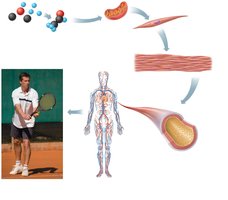
Example: Muscle cells (cellular level) form muscle tissue (tissue level), which is part of the heart (organ level), contributing to the cardiovascular system (organ system level), and ultimately the whole body (organismal level).
Necessary Life Functions
Basic Functions Required for Life
Maintaining boundaries: Separation between internal and external environments (e.g., skin).
Movement: Muscular system allows movement of body parts and substances.
Responsiveness: Ability to sense and respond to stimuli.
Digestion: Breakdown of ingested foodstuffs.
Metabolism: All chemical reactions in the body.
Excretion: Removal of wastes.
Reproduction: Cellular division and production of offspring.
Growth: Increase in size of a body part or organism.
All cells depend on organ systems to meet their survival needs. There are 11 organ systems that work together to maintain life.
The Body’s Organ Systems and Their Major Functions
Overview of Organ Systems
Integumentary System: Protects body, synthesizes vitamin D, houses receptors and glands.
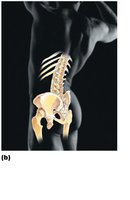
Skeletal System: Supports and protects organs, provides framework, forms blood cells, stores minerals.
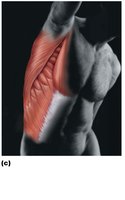
Muscular System: Allows movement, maintains posture, produces heat.
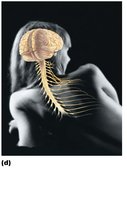
Nervous System: Fast-acting control system, responds to changes, activates muscles and glands.
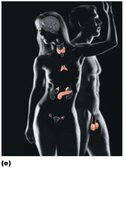
Endocrine System: Glands secrete hormones for regulation of growth, reproduction, metabolism.
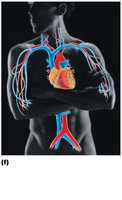
Cardiovascular System: Transports blood, carries oxygen, nutrients, wastes; heart pumps blood.
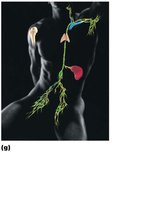
Lymphatic System/Immunity: Returns leaked fluids, disposes of debris, houses immune cells.
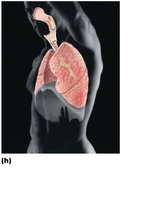
Respiratory System: Supplies blood with oxygen, removes carbon dioxide.
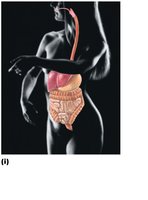
Digestive System: Breaks down food, absorbs nutrients, eliminates waste.
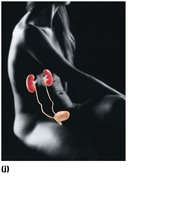
Urinary System: Eliminates nitrogenous wastes, regulates water, electrolytes, acid-base balance.
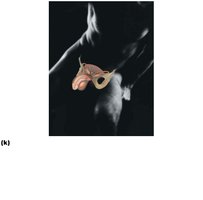
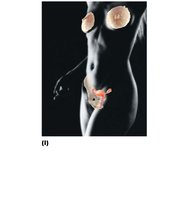
Reproductive System: Produces offspring, sex hormones, and supports development of fetus.

Survival Needs
Essential Factors for Human Survival
Nutrients: Chemicals for energy and cell building.
Oxygen: Essential for energy release (ATP production).
Water: Most abundant chemical in the body; environment for chemical reactions.
Normal body temperature: Necessary for proper metabolic reactions.
Appropriate atmospheric pressure: Required for adequate breathing and gas exchange.
Homeostasis
Definition and Importance
Homeostasis is the maintenance of relatively stable internal conditions despite continuous changes in the environment. It is a dynamic state of equilibrium, maintained by all organ systems.
Homeostatic Controls
Involves constant monitoring and regulation by the nervous and endocrine systems.
Variables (e.g., blood sugar, temperature) are regulated by three components:
Receptor: Monitors environment and responds to stimuli.
Control center: Determines set point, analyzes input, determines response.
Effector: Carries out response to restore balance.
Negative Feedback
Most common mechanism; response reduces or shuts off original stimulus.
Examples: Regulation of body temperature, blood glucose by insulin.
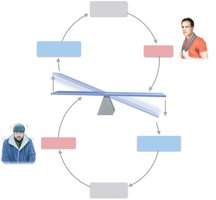
Example: When blood glucose rises, receptors signal the pancreas (control center) to release insulin, causing cells to absorb glucose (effector), lowering blood glucose.
Positive Feedback
Response enhances or exaggerates the original stimulus.
Usually controls infrequent events (e.g., labor contractions, blood clotting).
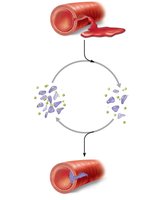
Example: Platelet plug formation in blood clotting is regulated by positive feedback, where platelets attract more platelets until a clot is formed.
Homeostatic Imbalance
Disturbance increases risk of disease and contributes to aging.
If negative feedback is overwhelmed, destructive positive feedback may occur (e.g., heart failure).
Anatomical Terms
Anatomical Position and Directional Terms
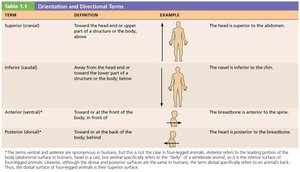
Standard anatomical position: Body erect, feet slightly apart, palms forward, thumbs away from body.
Directional terms describe the location of one body part relative to another.
Right and left refer to the body being viewed, not the observer.
Orientation and Directional Terms
Term | Definition | Example |
|---|---|---|
Superior (cranial) | Toward the head or upper part of a structure | The head is superior to the abdomen. |
Inferior (caudal) | Away from the head or toward the lower part of a structure | The navel is inferior to the chin. |
Anterior (ventral) | Toward or at the front of the body | The breastbone is anterior to the spine. |
Posterior (dorsal) | Toward or at the back of the body | The heart is posterior to the breastbone. |
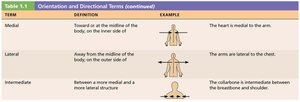
Term | Definition | Example |
|---|---|---|
Medial | Toward or at the midline of the body | The heart is medial to the arm. |
Lateral | Away from the midline of the body | The arms are lateral to the chest. |
Intermediate | Between a more medial and a more lateral structure | The collarbone is intermediate between the breastbone and shoulder. |
Term | Definition | Example |
|---|---|---|
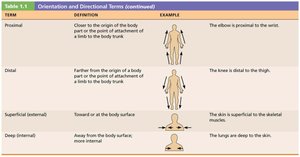
Proximal | Closer to the origin of the body part or point of attachment | The elbow is proximal to the wrist. |
Distal | Farther from the origin of a body part or point of attachment | The knee is distal to the thigh. |
Superficial (external) | Toward or at the body surface | The skin is superficial to the skeletal muscles. |
Deep (internal) | Away from the body surface, more internal | The lungs are deep to the skin. |
Regional Terms
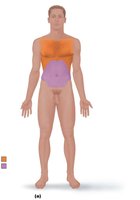
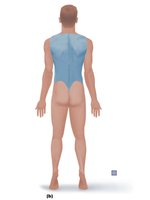
Axial: Head, neck, trunk.
Appendicular: Limbs (arms and legs).
Regional terms designate specific areas within these divisions.
Body Planes and Sections
Major Body Planes
Sagittal plane: Divides body into right and left parts.
Midsagittal (median) plane: Cut on the midline.
Parasagittal plane: Cut off-center from the midline.
Frontal (coronal) plane: Divides body into anterior and posterior parts.
Transverse (horizontal) plane: Divides body into superior and inferior parts (cross section).
Oblique section: Cut at an angle other than 90° to vertical plane.
Body Cavities and Membranes
Major Body Cavities
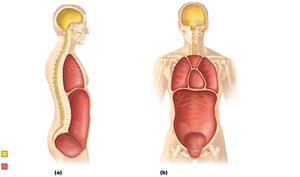
Dorsal body cavity: Protects nervous system; includes cranial cavity (brain) and vertebral cavity (spinal cord).
Ventral body cavity: Houses internal organs (viscera); includes thoracic and abdominopelvic cavities, separated by the diaphragm.
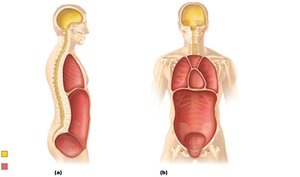
Ventral Body Cavity Subdivisions
Thoracic cavity: Two pleural cavities (lungs), mediastinum (contains pericardial cavity and other thoracic organs), pericardial cavity (heart).
Abdominopelvic cavity: Abdominal cavity (digestive organs), pelvic cavity (urinary bladder, reproductive organs, rectum).
Membranes in the Ventral Body Cavity
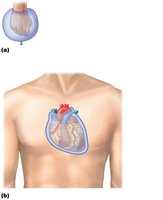
Serosa (serous membrane): Thin, double-layered membrane covering ventral cavity surfaces.
Parietal serosa: Lines cavity walls.
Visceral serosa: Covers organs.
Layers separated by serous fluid for lubrication.
Named for associated organs: Pericardium (heart), Pleurae (lungs), Peritoneum (abdominopelvic cavity).
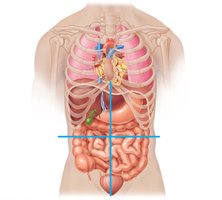
Abdominopelvic Quadrants and Regions
Quadrants: Right upper (RUQ), left upper (LUQ), right lower (RLQ), left lower (LLQ).
Nine regions: Right/left hypochondriac, epigastric, right/left lumbar, umbilical, right/left iliac (inguinal), hypogastric (pubic).
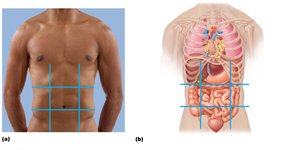
Other Body Cavities
Oral and digestive cavities
Nasal cavity
Orbital cavities
Middle ear cavities
Synovial cavities (joint cavities; not exposed to environment)
