 Back
BackChapter 1: The Human Body—An Orientation (Study Notes)
Study Guide - Smart Notes
 Tailored notes based on your materials, expanded with key definitions, examples, and context.
Introduction to Anatomy and Physiology
Overview of Anatomy and Physiology
Anatomy and physiology are foundational sciences in understanding the human body. Anatomy is the study of body structure, while physiology focuses on body function. Both disciplines are closely linked, as structure determines function.
Anatomy Subdivisions:
Gross (macroscopic) anatomy: Study of large body structures visible to the naked eye (e.g., regional, systemic, surface anatomy).
Microscopic anatomy: Study of structures too small to be seen with the naked eye (e.g., cytology, histology).
Developmental anatomy: Study of structural changes throughout the lifespan (e.g., embryology).
Physiology Subdivisions: Based on organ systems (e.g., renal, cardiovascular physiology). Focuses on cellular and molecular mechanisms.
To study anatomy, mastery of terminology, observation, manipulation, palpation, and auscultation are essential. Physiology requires understanding of physical and chemical principles at multiple levels.
Principle of Complementarity
The principle of complementarity states that function always reflects structure. What a structure can do depends on its specific form. Thus, anatomy and physiology are inseparable in understanding the human body.
Levels of Structural Organization
Hierarchy of Organization
The human body is organized into a hierarchy of structural levels, each building on the previous one:
Chemical level: Atoms combine to form molecules and organelles.
Cellular level: Cells are made up of molecules.
Tissue level: Tissues consist of similar types of cells.
Organ level: Organs are made of two or more tissue types.
Organ system level: Organ systems consist of different organs that work together.
Organismal level: The human organism is made up of many organ systems.
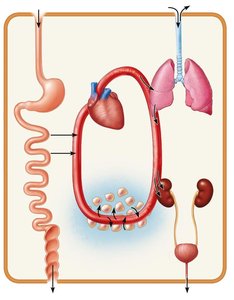
Necessary Life Functions
Basic Life Functions
All living organisms must perform certain functions to maintain life:
Maintaining boundaries: Separation between internal and external environments (e.g., plasma membranes, skin).
Movement: Muscular system allows movement of body parts and substances.
Responsiveness: Ability to sense and respond to stimuli (e.g., withdrawal reflex, control of breathing rate).
Digestion: Breakdown of ingested food and absorption of nutrients.
Metabolism: All chemical reactions in the body, including catabolism (breakdown) and anabolism (synthesis).
Excretion: Removal of wastes (e.g., urea, carbon dioxide, feces).
Reproduction: Cellular division for growth/repair and production of offspring.
Growth: Increase in size of a body part or organism.
Organ Systems of the Human Body
Overview of the 11 Organ Systems
The human body is composed of 11 organ systems, each with specific functions:
Integumentary System: Protects body, synthesizes vitamin D, houses receptors and glands.
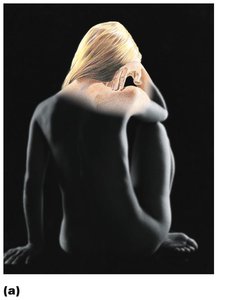
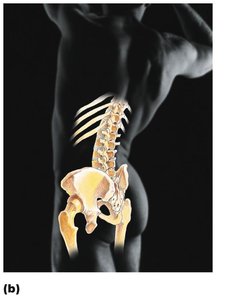
Skeletal System: Supports and protects organs, provides framework, forms blood cells, stores minerals.
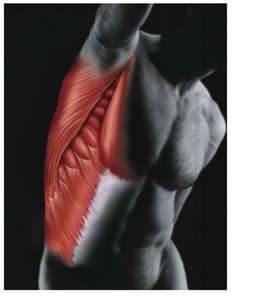
Muscular System: Allows movement, maintains posture, produces heat.
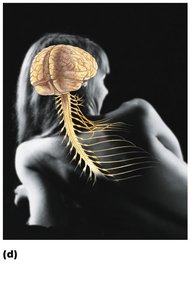
Nervous System: Fast-acting control system, responds to stimuli by activating muscles/glands.
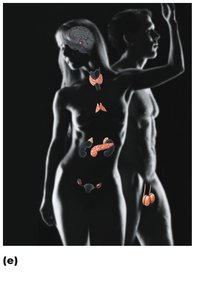
Endocrine System: Glands secrete hormones for regulation of growth, metabolism, reproduction.
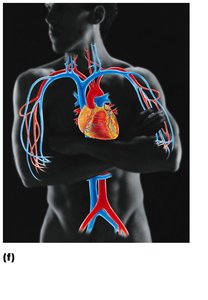
Cardiovascular System: Blood vessels transport blood; heart pumps blood.
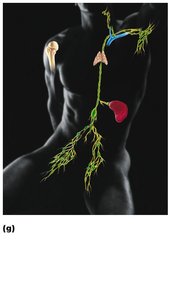
Lymphatic System/Immunity: Returns leaked fluids to blood, disposes of debris, houses immune cells.
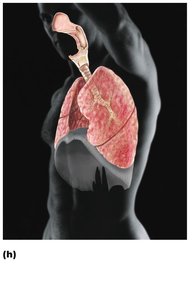
Respiratory System: Supplies blood with oxygen, removes carbon dioxide.
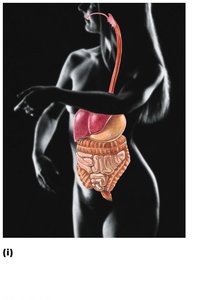
Digestive System: Breaks down food, absorbs nutrients, eliminates waste.
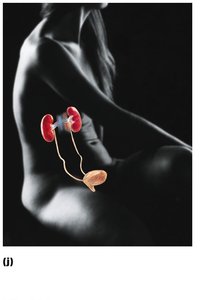
Urinary System: Eliminates nitrogenous wastes, regulates water, electrolytes, acid-base balance.
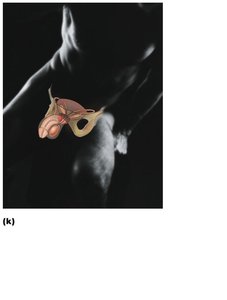
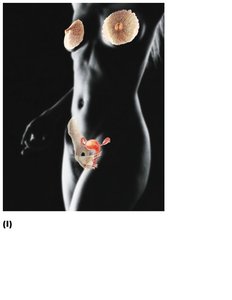
Reproductive System: Produces offspring; testes produce sperm, ovaries produce eggs and hormones.
Survival Needs
Essential Requirements for Life
To survive, the body requires certain factors in appropriate amounts:
Nutrients: Chemicals for energy and cell building (carbohydrates, fats, proteins, vitamins, minerals).
Oxygen: Required for ATP production and energy release.
Water: Most abundant chemical in the body; solvent for reactions, fluid base for secretions/excretions.
Normal body temperature: 37°C; necessary for proper metabolic reactions.
Appropriate atmospheric pressure: Required for adequate breathing and gas exchange.
Homeostasis
Definition and Importance
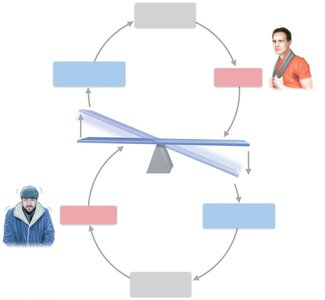
Homeostasis is the maintenance of relatively stable internal conditions despite continuous environmental changes. It is a dynamic equilibrium maintained by all organ systems.
Homeostatic Control Mechanisms
Homeostatic regulation involves:
Receptor (sensor): Monitors environment and responds to stimuli.
Control center: Determines set point, analyzes input, determines response.
Effector: Carries out response to restore homeostasis.
Communication is achieved via the nervous and endocrine systems.
Feedback Mechanisms
Negative feedback: Most common; response reduces or shuts off original stimulus. Example: regulation of body temperature and blood volume.
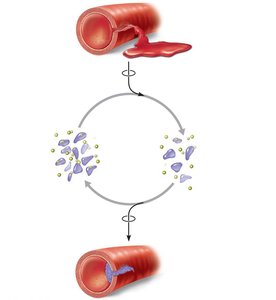
Positive feedback: Response enhances original stimulus; usually controls infrequent events (e.g., labor contractions, blood clotting).
Homeostatic Imbalance
Disturbance of homeostasis increases risk of disease, contributes to aging, and may result in destructive positive feedback mechanisms (e.g., heart failure).
Anatomical Terminology and Body Organization
Anatomical Position and Directional Terms
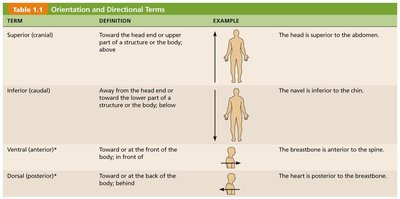
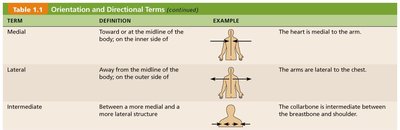
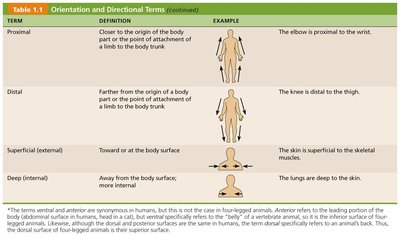
The anatomical position is the standard reference: body erect, feet slightly apart, palms facing forward, thumbs away from body. Directional terms describe locations of structures relative to others.
Orientation and Directional Terms Table
Term | Definition | Example |
|---|---|---|
Superior (cranial) | Toward the head end or upper part of a structure; above | The head is superior to the abdomen. |
Inferior (caudal) | Away from the head end or toward the lower part; below | The navel is inferior to the chin. |
Ventral (anterior) | Toward or at the front of the body; in front of | The breastbone is anterior to the spine. |
Dorsal (posterior) | Toward or at the back of the body; behind | The heart is posterior to the breastbone. |
Medial | Toward or at the midline of the body; on the inner side | The heart is medial to the arm. |
Lateral | Away from the midline of the body; on the outer side | The arms are lateral to the chest. |
Intermediate | Between a more medial and a more lateral structure | The collarbone is intermediate between the breastbone and shoulder. |
Proximal | Closer to the origin of the body part or point of attachment | The elbow is proximal to the wrist. |
Distal | Farther from the origin of a body part or point of attachment | The knee is distal to the thigh. |
Superficial (external) | Toward or at the body surface | The skin is superficial to the skeletal muscles. |
Deep (internal) | Away from the body surface; more internal | The lungs are deep to the skin. |
Body Planes and Sections
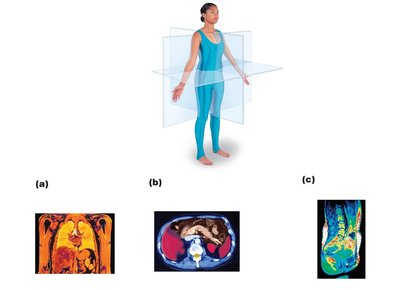
Body planes are imaginary flat surfaces used to divide the body for anatomical study:
Sagittal plane: Divides body into right and left parts (midsagittal = equal halves; parasagittal = unequal).
Frontal (coronal) plane: Divides body into anterior and posterior parts.
Transverse (horizontal) plane: Divides body into superior and inferior parts (cross section).
Oblique section: Cuts at angles other than 90° to vertical plane.
Body Cavities and Membranes
The body contains internal cavities that protect organs:
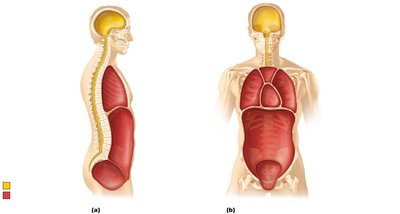
Dorsal body cavity: Cranial cavity (brain) and vertebral cavity (spinal cord).
Ventral body cavity: Thoracic cavity (heart, lungs) and abdominopelvic cavity (digestive, urinary, reproductive organs).
Serous Membranes
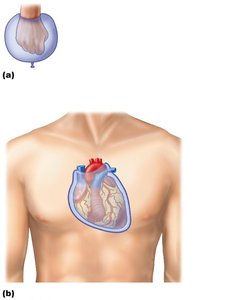
Serous membranes (serosa) are thin, double-layered membranes that cover organs and line cavities. The parietal serosa lines cavity walls, while the visceral serosa covers organs. Serous fluid between layers reduces friction.
Pericardium: Heart
Pleurae: Lungs
Peritoneum: Abdominopelvic cavity
Abdominopelvic Quadrants and Regions
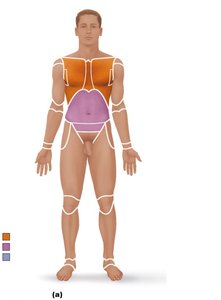
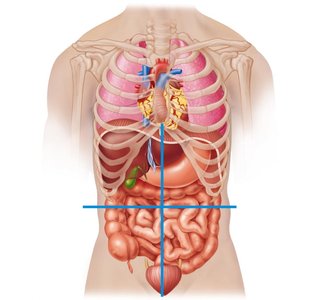
The abdominopelvic cavity is divided for clinical and anatomical reference:
Quadrants: Right upper (RUQ), left upper (LUQ), right lower (RLQ), left lower (LLQ).
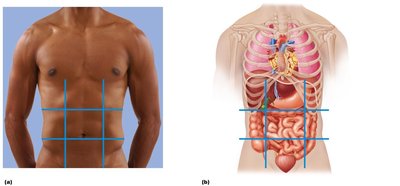
Regions: Nine regions (e.g., right hypochondriac, epigastric, umbilical, left iliac, etc.) for more precise localization.
Other Body Cavities
Exposed to environment: Oral, digestive, nasal, orbital, middle ear cavities.
Not exposed: Synovial cavities (joint cavities).
Additional info: This chapter provides the foundational terminology and concepts necessary for all subsequent study in anatomy and physiology, including the importance of homeostasis, the organization of the body, and the language used to describe anatomical relationships.
