 Back
BackChapter 2: Basic Chemistry – Essentials of Human Anatomy & Physiology
Study Guide - Smart Notes
 Tailored notes based on your materials, expanded with key definitions, examples, and context.
Basic Chemistry
Introduction to Matter
Chemistry is fundamental to understanding the structure and function of the human body. Matter is anything that occupies space and has mass, and it exists in three states: solid, liquid, and gas.
Solid: Definite shape and volume.
Liquid: Definite volume, takes the shape of its container.
Gas: Neither definite shape nor volume.
Physical and Chemical Changes
Physical changes: Do not alter the basic nature of a substance (e.g., changes in state).
Chemical changes: Alter the chemical composition of a substance (e.g., burning, rusting).
Composition of Matter
Elements and Atoms
Elements are the fundamental units of matter. The human body is primarily composed of four elements: oxygen, carbon, hydrogen, and nitrogen. Each element is represented by a unique atomic symbol.
Oxygen (O): 65% of body mass
Carbon (C)
Hydrogen (H)
Nitrogen (N)
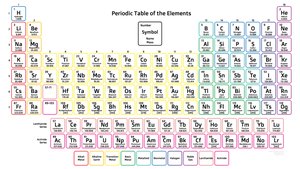
Atoms are the building blocks of elements, composed of subatomic particles:
Protons: Positively charged
Neutrons: Neutral (no charge)
Electrons: Negatively charged
Atoms are electrically neutral when the number of protons equals the number of electrons. Ions are atoms that have lost or gained electrons, resulting in a net charge.
Identifying Elements
Atomic number: Number of protons in the nucleus (also equals the number of electrons in a neutral atom).
Atomic mass number: Sum of protons and neutrons in the nucleus.
Atomic weight: Approximately equal to the mass number of the most abundant isotope.
Molecules and Compounds
Definitions
Molecule: Two or more atoms of the same element chemically combined (e.g., O2).
Compound: Two or more atoms of different elements chemically combined (e.g., H2O).
Chemical Bonds and Chemical Reactions
Role of Electrons
Electrons occupy energy levels (shells) around the nucleus. The electrons in the outermost shell (valence electrons) are most involved in chemical bonding.
Types of Chemical Bonds
Covalent bonds: Atoms share electrons to achieve stability. Electrons may be shared in single, double, or triple pairs.
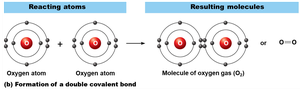
Ionic bonds: Electrons are completely transferred from one atom to another, resulting in charged ions that attract each other.
Hydrogen bonds: Weak bonds formed when a hydrogen atom is attracted to a negative portion of a polar molecule (important in water and protein structure).
Biochemistry: The Chemical Composition of Living Matter
Inorganic Compounds
Inorganic compounds: Generally lack carbon; include water, salts, acids, and bases.
Water: Most abundant inorganic compound; excellent solvent, involved in chemical reactions (hydrolysis), and provides cushioning (e.g., cerebrospinal fluid).
pH: Measures the concentration of hydrogen ions in solution. The pH scale ranges from 0 (acidic) to 14 (basic), with 7 being neutral. Buffers help regulate pH changes in the body.
Organic Compounds
Organic compounds: Contain carbon; include carbohydrates, lipids, proteins, and nucleic acids.
Polymers: Large molecules made of repeating units (monomers). Formed by dehydration synthesis and broken down by hydrolysis.
Carbohydrates
Monosaccharides: Simple sugars (e.g., glucose, fructose).
Disaccharides: Two monosaccharides joined by dehydration synthesis (e.g., sucrose, lactose).
Polysaccharides: Long chains of monosaccharides (e.g., starch, glycogen); function as energy storage.
Lipids
Triglycerides: Composed of glycerol and fatty acids; main form of stored energy.
Saturated fats: Only single bonds; solid at room temperature.
Unsaturated fats: One or more double bonds; liquid at room temperature.
Phospholipids: Form cell membranes; have hydrophilic heads and hydrophobic tails.
Steroids: Four interlocking rings; include cholesterol, hormones, and vitamin D.
Proteins
Amino acids: Building blocks of proteins; contain amine and acid groups.
Protein structure: Primary (sequence), secondary (alpha helix, beta sheet), tertiary (globular), quaternary (multiple chains).
Fibrous proteins: Structural roles (e.g., collagen, keratin).
Globular proteins: Functional roles (e.g., enzymes, antibodies).
Enzymes: Biological catalysts; speed up reactions without being consumed.
Nucleic Acids
DNA: Double-stranded helix; genetic material in the nucleus; bases are adenine, thymine, cytosine, guanine.
RNA: Single-stranded; involved in protein synthesis; bases are adenine, uracil, cytosine, guanine.
Nucleotides: Building blocks of nucleic acids; consist of a nitrogenous base, pentose sugar, and phosphate group.
Adenosine Triphosphate (ATP)
ATP: Main energy currency of the cell; composed of adenine, ribose, and three phosphate groups.
Energy is released when a high-energy phosphate bond is broken.
Equation for ATP hydrolysis:
