 Back
Chapter 2: Chemical Level of Organization – Study Notes
Study Guide - Smart Notes
 Tailored notes based on your materials, expanded with key definitions, examples, and context.
Chapter 2: Chemical Level of Organization
Module 2.1: Atoms
Atoms are the smallest stable units of matter and serve as the fundamental building blocks for all substances. They are composed of three types of subatomic particles: protons, neutrons, and electrons.
Protons: Positively charged particles found in the nucleus.
Neutrons: Electrically neutral particles also located in the nucleus.
Electrons: Negatively charged particles that orbit the nucleus in an electron cloud.
Nucleus: Central core of the atom containing protons and neutrons; most of the atom's mass is here.
Electron Cloud: Region surrounding the nucleus where electrons are likely to be found.
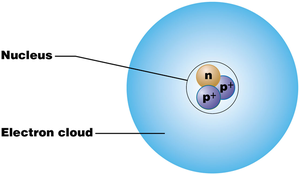
Atoms interact via their electrons, forming larger and more complex structures essential for life.
Module 2.2: Atoms, Elements, and Isotopes
Atoms are defined by the number of protons they contain, known as the atomic number. Elements are substances composed of only one type of atom. Isotopes are atoms of the same element with different numbers of neutrons.
Atomic Number: Number of protons in an atom.
Mass Number: Total number of protons and neutrons.
Isotopes: Atoms with the same number of protons but different numbers of neutrons; they have identical chemical properties but different masses.
Atomic Mass: Actual mass of a specific isotope, measured in atomic mass units (amu) or daltons.
Atomic Weight: Average mass of all isotopes of an element, weighted by their abundance.
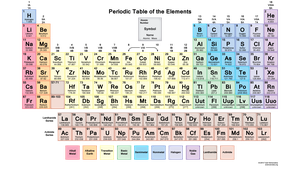
Elements are represented by chemical symbols (e.g., H for hydrogen). The human body contains 13 principal elements and several trace elements.
Module 2.3: Electrons and Energy Levels
Electrons occupy specific energy levels or shells around the nucleus. The arrangement of electrons determines an atom's chemical properties and reactivity.
Valence Shell: Outermost electron shell; determines chemical reactivity.
Reactive Atoms: Atoms with unfilled valence shells tend to react to achieve stability (e.g., hydrogen, lithium).
Inert Atoms: Atoms with full valence shells are stable and unreactive (e.g., noble gases like helium and neon).
Ions: Atoms that gain or lose electrons, acquiring a net charge. Cations are positively charged (lost electrons), and anions are negatively charged (gained electrons).
Module 2.4: Chemical Bonds
Atoms combine through chemical bonds to form compounds. The main types of bonds are ionic and covalent bonds.
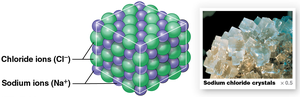
Ionic Bonds: Formed by the transfer of electrons from one atom to another, resulting in attraction between oppositely charged ions (e.g., sodium chloride, NaCl).
Covalent Bonds: Formed by the sharing of electrons between atoms. Can be single, double, or triple bonds depending on the number of shared electron pairs.
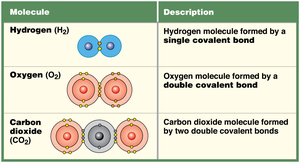
Nonpolar Covalent Bonds: Electrons are shared equally; no charge difference across the molecule.
Polar Covalent Bonds: Electrons are shared unequally, creating partial charges (e.g., water molecule).
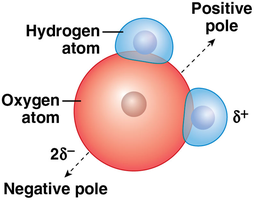
Module 2.5: States of Matter and Hydrogen Bonds
Water is unique in that it exists as a solid, liquid, and gas at temperatures compatible with life. Hydrogen bonds are weak attractions between the positive hydrogen of one molecule and the negative atom of another polar molecule.
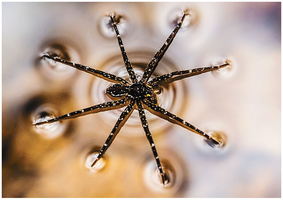
Hydrogen Bonds: Responsible for many of water's properties, including high surface tension, expansion upon freezing, and slow evaporation.
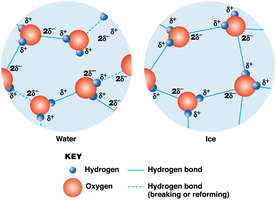
Surface Tension: The cohesive force at the surface of water due to hydrogen bonding.
Module 2.6: Water as a Solvent
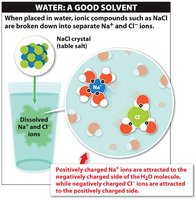
Water's polarity allows it to dissolve many substances, making it an excellent solvent for ionic and polar compounds. This property is essential for physiological processes.
Hydration Spheres: Layers of water molecules that surround ions in solution, aiding in dissolution.
Module 2.7: Chemical Notation and Reactions
Chemical notation provides a concise way to represent atoms, molecules, and reactions. Chemical equations must be balanced, with the same number of each atom on both sides.
Reactants: Substances present at the start of a reaction.
Products: Substances formed by the reaction.
Types of Reactions: Decomposition (breakdown), synthesis (building), and exchange (rearrangement).
Example of a balanced equation:
Module 2.8: Types of Chemical Reactions
Three main types of chemical reactions are important in physiology:
Decomposition Reactions: Break molecules into smaller fragments (e.g., hydrolysis).
Synthesis Reactions: Combine smaller molecules into larger ones (e.g., dehydration synthesis).
Exchange Reactions: Parts of molecules are shuffled to produce new products.
Many reactions are reversible and reach equilibrium when the rates of forward and reverse reactions are equal.
Module 2.9: Enzymes and Metabolism
Enzymes are proteins that catalyze chemical reactions by lowering activation energy. They are essential for metabolic pathways, which are series of interconnected reactions in the body.
Activation Energy: Minimum energy required to start a reaction.
Enzyme Specificity: Each enzyme catalyzes only one type of reaction.
Metabolites: Substances involved in or produced by metabolic reactions.
Module 2.11: Water and Physiological Systems
Water is vital for physiological processes, including ionization and the formation of hydration spheres. Electrolytes are ions that conduct electrical current in solution and are essential for nerve and muscle function.
Hydrophilic: Molecules that interact with water (e.g., glucose).
Hydrophobic: Molecules that do not interact with water (e.g., fats, oils).
Colloid: Solution with large molecules that remain dispersed (e.g., Jell-O).
Suspension: Solution with large particles that settle out (e.g., whole blood).
Module 2.12: pH and Buffers
pH measures the concentration of hydrogen ions in a solution. The body tightly regulates pH to maintain homeostasis.
Acid: Substance that releases hydrogen ions (H+); proton donor.
Base: Substance that removes hydrogen ions; proton acceptor.
Salt: Compound formed from an acid and a base; dissociates into ions in water.
Buffer: Compound that stabilizes pH by removing or replacing H+ ions.
Normal blood pH is 7.35–7.45. Deviations can cause acidosis or alkalosis, which are dangerous to health.
Module 2.13: Organic Compounds
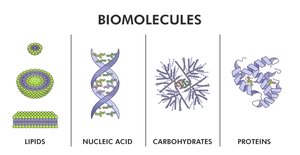
Organic compounds always contain carbon and hydrogen, and often oxygen. They include carbohydrates, lipids, proteins, and nucleic acids. Functional groups attached to carbon skeletons determine the properties of organic molecules.
Module 2.14: Carbohydrates
Carbohydrates are important energy sources and are classified by the number of sugar units.
Monosaccharides: Simple sugars (e.g., glucose, fructose).
Disaccharides: Two monosaccharides joined by dehydration synthesis (e.g., sucrose).
Polysaccharides: Long chains of monosaccharides (e.g., starch, glycogen).
Module 2.15–2.16: Lipids
Lipids are hydrophobic molecules that include fats, oils, and waxes. They serve as energy reserves, structural components, and signaling molecules.
Fatty Acids: Long hydrocarbon chains with a carboxyl group; can be saturated or unsaturated.
Glycerides: Fatty acids attached to glycerol (mono-, di-, or triglycerides).
Eicosanoids: Signaling molecules derived from arachidonic acid (e.g., prostaglandins).
Steroids: Four-ring structures (e.g., cholesterol, sex hormones).
Phospholipids and Glycolipids: Important for cell membrane structure; have hydrophilic heads and hydrophobic tails.
Module 2.17–2.18: Proteins and Enzymes
Proteins are polymers of amino acids and perform a vast array of functions in the body. Their structure determines their function.
Primary Structure: Sequence of amino acids.
Secondary Structure: Alpha-helices and beta-sheets formed by hydrogen bonding.
Tertiary Structure: Overall 3D shape of a single polypeptide.
Quaternary Structure: Arrangement of multiple polypeptide subunits.
Denaturation: Loss of protein structure and function due to extreme conditions.
Enzymes: Proteins that catalyze biochemical reactions with high specificity.
Module 2.19: High-Energy Compounds
High-energy compounds, such as ATP (adenosine triphosphate), store and transfer energy for cellular processes.
ATP: Main energy currency of the cell; formed from ADP and phosphate.
Energy Release: Breaking high-energy phosphate bonds releases energy for cellular work.
Module 2.20: Nucleic Acids
Nucleic acids store and transfer genetic information. DNA and RNA are polymers of nucleotides, each consisting of a phosphate group, a five-carbon sugar, and a nitrogenous base.
DNA: Double-stranded helix; stores genetic information; bases are adenine, thymine, cytosine, guanine.
RNA: Single-stranded; involved in protein synthesis; bases are adenine, uracil, cytosine, guanine.
Summary Table: Major Biomolecules
Type | Monomer | Function | Example |
|---|---|---|---|
Carbohydrates | Monosaccharide | Energy source | Glucose, starch |
Lipids | Fatty acid, glycerol | Energy storage, membranes | Triglyceride, phospholipid |
Proteins | Amino acid | Catalysis, structure, transport | Enzyme, collagen |
Nucleic Acids | Nucleotide | Genetic information | DNA, RNA |
Additional info: This guide covers the chemical level of organization, foundational for understanding anatomy and physiology. Mastery of these concepts is essential for further study of cellular and tissue-level organization.
