Back
Chapter 2: Chemical Level of Organization – Study Notes
Study Guide - Smart Notes
 Tailored notes based on your materials, expanded with key definitions, examples, and context.
Chapter 2: Chemical Level of Organization
Module 2.1: Atoms
Atoms are the smallest stable units of matter and serve as the fundamental building blocks for all substances. Each atom is composed of subatomic particles: protons, neutrons, and electrons.
Protons: Positively charged particles located in the nucleus.
Neutrons: Electrically neutral particles also found in the nucleus.
Electrons: Negatively charged particles that orbit the nucleus in the electron cloud.
Nucleus: Central core of the atom containing protons and neutrons; most of the atom's mass is here.
Electron cloud: Region surrounding the nucleus where electrons are likely to be found.
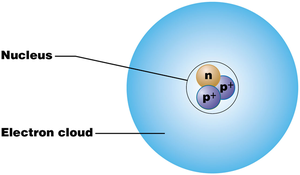
Atoms interact via their electrons, forming larger and more complex structures essential for life.
Module 2.2: Atoms, Elements, and Isotopes
Atoms are defined by the number of protons they contain, which determines the element. Elements are substances made of only one type of atom.
Atomic number: Number of protons in an atom.
Mass number: Total number of protons and neutrons in an atom.
Isotopes: Atoms of the same element with different numbers of neutrons, resulting in different mass numbers but identical chemical properties.
Atomic mass: Actual mass of a specific isotope, measured in atomic mass units (amu) or daltons.
Atomic weight: Average mass of all isotopes of an element, weighted by their abundance.
Elements are represented by chemical symbols (e.g., H for hydrogen). The human body contains 13 principal elements and several trace elements.
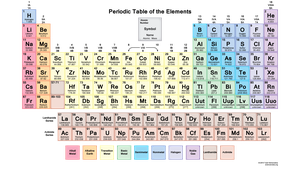
Module 2.3: Electron Energy Levels and Ions
Electrons occupy specific energy levels or shells around the nucleus. The arrangement of electrons determines an atom's chemical properties and reactivity.
Valence shell: Outermost electron shell; atoms with unfilled valence shells are reactive.
Cation: Atom that has lost one or more electrons, resulting in a positive charge.
Anion: Atom that has gained one or more electrons, resulting in a negative charge.
Noble gases: Atoms with full outer shells; chemically inert and stable (e.g., helium, neon).
Module 2.4: Chemical Bonds
Atoms combine to form compounds through chemical bonds, which are classified as ionic or covalent.
Ionic bonds: Formed by the transfer of electrons from one atom to another, resulting in attraction between oppositely charged ions (e.g., NaCl).
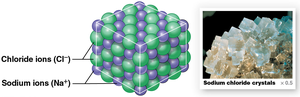
Covalent bonds: Formed by the sharing of electrons between atoms. Can be single, double, or triple bonds depending on the number of shared electron pairs.
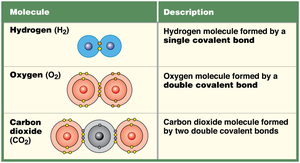
Nonpolar covalent bonds: Electrons are shared equally; no charge separation.
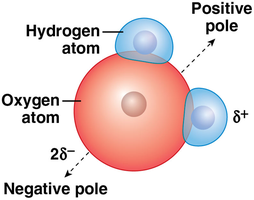
Polar covalent bonds: Electrons are shared unequally, creating partial charges (e.g., water molecule).
Module 2.5: States of Matter and Hydrogen Bonds
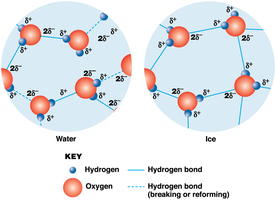
Water is unique in existing as a solid, liquid, and gas at temperatures compatible with life. Hydrogen bonds, which are weak attractions between polar molecules, play a crucial role in water's properties.
Hydrogen bond: Attraction between a slightly positive hydrogen atom and a slightly negative atom in another molecule.
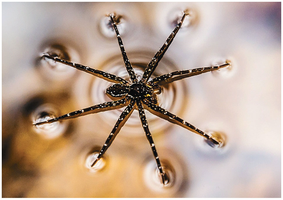
Hydrogen bonds are responsible for water's high surface tension, expansion upon freezing, and slow evaporation.
Module 2.6: Water as a Solvent
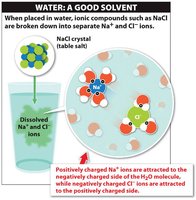
Water's polarity allows it to dissolve many substances, making it an excellent solvent for inorganic and organic compounds. This property is essential for physiological processes.
Hydration sphere: Layer of water molecules surrounding an ion in solution, facilitating dissolution.
Electrolytes: Substances that dissociate into ions in water and conduct electricity (e.g., NaCl).
Module 2.7: Chemical Notation and Reactions
Chemical notation provides a concise way to represent atoms, molecules, and reactions. Chemical equations must be balanced, with the same number of each atom on both sides.
Reactants: Substances present at the start of a reaction.
Products: Substances formed by the reaction.
Chemical equation: Representation of a chemical reaction using symbols and formulas.
Example of a balanced equation:
Module 2.8: Types of Chemical Reactions
Three main types of chemical reactions are important in physiology:
Decomposition reactions: Break molecules into smaller fragments (e.g., hydrolysis).
Synthesis reactions: Combine smaller molecules to form larger ones (e.g., dehydration synthesis).
Exchange reactions: Parts of molecules are shuffled to produce new products.
Reversible reactions: Can proceed in both directions until equilibrium is reached.
Hydrolysis and dehydration synthesis are especially important for breaking down and building biological macromolecules.
Module 2.9: Enzymes and Metabolism
Enzymes are proteins that catalyze chemical reactions by lowering activation energy, allowing reactions to proceed rapidly under physiological conditions.
Activation energy: Minimum energy required to start a reaction.
Catalyst: Substance that increases reaction rate without being consumed.
Metabolic pathway: Series of enzyme-controlled reactions in the body.
Exergonic reactions: Release energy (e.g., catabolism).
Endergonic reactions: Absorb energy (e.g., anabolism).
Module 2.11: Water and Physiological Systems
Water is essential for physiological processes, including ionization, hydration spheres, and electrical conductivity in body fluids.
Hydrophilic: Molecules that interact with water (e.g., glucose).
Hydrophobic: Molecules that do not interact with water (e.g., fats, oils).
Colloid: Solution with large molecules that remain dispersed (e.g., Jell-O).
Suspension: Solution with large particles that settle out (e.g., whole blood).
Module 2.12: pH and Buffers
pH measures the concentration of hydrogen ions in a solution, indicating its acidity or alkalinity. The body tightly regulates pH for homeostasis.
Acid: Substance that releases hydrogen ions (H+); proton donor.
Base: Substance that removes hydrogen ions; proton acceptor.
Salt: Compound formed from an acid and a base; dissociates into ions in water.
Buffer: Compound that stabilizes pH by removing or releasing H+ as needed.
Normal blood pH is 7.35–7.45. Deviations can cause acidosis or alkalosis, which are dangerous to health.
Module 2.13: Organic Compounds and Functional Groups
Organic compounds contain carbon and hydrogen, often with oxygen. Functional groups attached to carbon skeletons determine the properties and reactivity of organic molecules.
Module 2.14: Carbohydrates
Carbohydrates are important energy sources, consisting of carbon, hydrogen, and oxygen.
Monosaccharides: Simple sugars (e.g., glucose, fructose).
Disaccharides: Two monosaccharides joined by dehydration synthesis (e.g., sucrose).
Polysaccharides: Long chains of monosaccharides (e.g., starch, glycogen).
Module 2.15–2.16: Lipids
Lipids are hydrophobic molecules, including fats, oils, waxes, steroids, and phospholipids. They serve as energy reserves, structural components, and signaling molecules.
Fatty acids: Long hydrocarbon chains with a carboxyl group; can be saturated or unsaturated.
Glycerides: Fatty acids attached to glycerol (mono-, di-, or triglycerides).
Steroids: Four-ring structures (e.g., cholesterol, hormones).
Phospholipids and glycolipids: Major components of cell membranes; amphipathic (hydrophilic head, hydrophobic tail).
Module 2.17–2.18: Proteins
Proteins are polymers of amino acids, essential for structure, function, and regulation of tissues and organs.
Amino acids: 20 types, each with a central carbon, amino group, carboxyl group, hydrogen, and R group.
Peptide bonds: Covalent bonds linking amino acids.
Protein structure: Four levels—primary (sequence), secondary (alpha-helix, beta-sheet), tertiary (3D folding), quaternary (multiple polypeptides).
Denaturation: Loss of protein structure and function due to extreme conditions.
Module 2.19: High-Energy Compounds
High-energy compounds, such as ATP, store and transfer energy for cellular processes.
ATP (adenosine triphosphate): Main energy currency of the cell; energy is released when ATP is hydrolyzed to ADP.
Module 2.20: Nucleic Acids
Nucleic acids store and transfer genetic information. Two main types are DNA and RNA.
DNA (deoxyribonucleic acid): Double helix; stores genetic instructions.
RNA (ribonucleic acid): Single strand; involved in protein synthesis.
Nucleotides: Building blocks of nucleic acids, each consisting of a phosphate group, a five-carbon sugar, and a nitrogenous base.
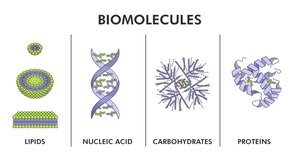
Summary Table: Major Biomolecules
Type | Monomer | Function |
|---|---|---|
Carbohydrates | Monosaccharide | Energy source, structure |
Lipids | Fatty acid, glycerol | Energy storage, membranes, signaling |
Proteins | Amino acid | Structure, enzymes, transport |
Nucleic acids | Nucleotide | Genetic information, protein synthesis |