 Back
Chapter 2: Chemistry Comes Alive – Structured Study Notes
Study Guide - Smart Notes
 Tailored notes based on your materials, expanded with key definitions, examples, and context.
Chemistry Comes Alive
Introduction
Chemistry forms the foundation of all physiological processes in the human body. Understanding basic chemistry and biochemistry is essential for comprehending movement, digestion, heart function, and nervous system activity. This chapter explores the nature of matter, energy, atomic structure, chemical bonds, and the major classes of biological molecules.
Basic Chemistry
2.1 Matter and Energy
Matter is anything that has mass and occupies space. It exists in three states: solid, liquid, and gas. Energy is the capacity to do work or put matter into motion, and it exists as kinetic (in action) or potential (stored) energy. Energy can be transformed between these forms, but some is always lost as heat.
States of Matter: Solid (definite shape/volume), Liquid (definite volume, changeable shape), Gas (changeable shape/volume).
Forms of Energy: Chemical, electrical, mechanical, radiant/electromagnetic.
Energy Conversion: Always inefficient; some energy lost as heat.
Atoms and Elements
2.2 Atoms and Elements
All matter is composed of elements, which are substances that cannot be broken down by ordinary chemical methods. Atoms are the smallest units of elements, each with unique properties. Four elements (carbon, oxygen, hydrogen, nitrogen) make up 96% of the human body.
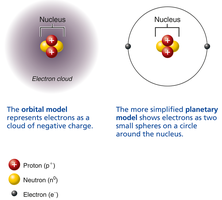
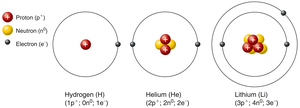
Atomic Structure: Atoms consist of protons (+), neutrons (0), and electrons (-).
Atomic Symbol: One- or two-letter shorthand (e.g., O for oxygen).
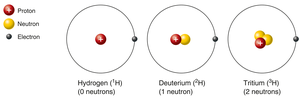
Isotopes: Variants of elements with different numbers of neutrons.
Radioisotopes: Unstable isotopes that emit energy as they decay.
Combining Matter
2.3 Molecules, Compounds, and Mixtures
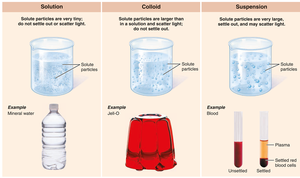
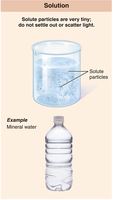
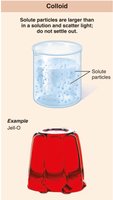
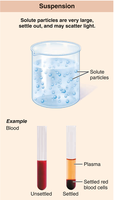
Atoms combine to form molecules and compounds. Molecules are two or more atoms bonded together; compounds are molecules with different types of atoms. Most matter exists as mixtures: solutions, colloids, and suspensions.
Solutions: Homogeneous mixtures; solute particles are tiny and evenly distributed.
Colloids: Heterogeneous mixtures; larger particles that do not settle out.
Suspensions: Heterogeneous mixtures; large particles that settle out.
Chemical Bonds
2.4 Chemical Bonds
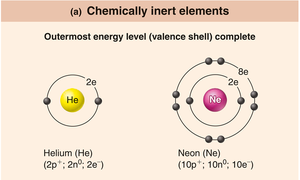
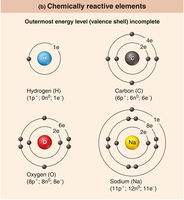
Chemical bonds are energy relationships between electrons of reacting atoms. Electrons occupy shells around the nucleus, with the outermost shell (valence shell) involved in bonding. Atoms seek stability by achieving a full valence shell (octet rule).
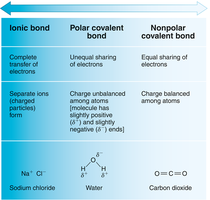
Types of Bonds: Ionic, covalent, hydrogen.
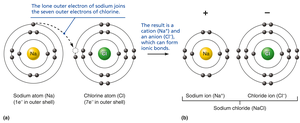
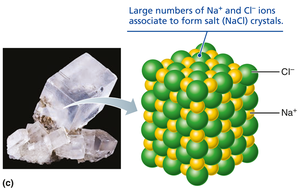
Ionic Bonds: Transfer of electrons; forms charged ions (cations and anions).
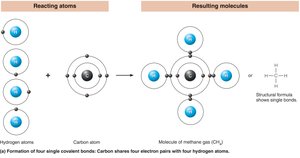
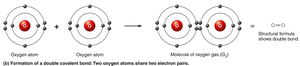
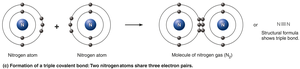
Covalent Bonds: Sharing of electrons; can be single, double, or triple bonds.
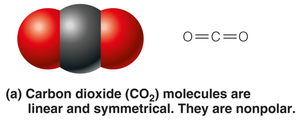
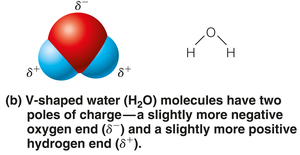
Polar vs. Nonpolar Covalent Bonds: Polar bonds have unequal sharing; nonpolar bonds have equal sharing.
Hydrogen Bonds: Weak attractions between electropositive hydrogen and electronegative atoms.
Chemical Reactions
2.5 Chemical Reactions
Chemical reactions involve the formation, rearrangement, or breaking of chemical bonds. They are represented by chemical equations, showing reactants and products. Three main types: synthesis, decomposition, and exchange reactions.
Synthesis: Building larger molecules (anabolic).
Decomposition: Breaking down molecules (catabolic).
Exchange: Both synthesis and decomposition.
Redox Reactions: Involve electron transfer; reduction (gain electrons), oxidation (lose electrons).
Energy Flow: Exergonic (release energy), endergonic (absorb energy).
Reaction Rate Influencers: Temperature, concentration, particle size, catalysts (enzymes).
Biochemistry: Organic and Inorganic Compounds
2.6 Inorganic Compounds
Inorganic compounds include water, salts, acids, and bases. Water is the most abundant and vital compound, with properties such as high heat capacity, solvent abilities, reactivity, and cushioning. Salts dissociate into ions (electrolytes), essential for physiological functions. Acids and bases regulate pH, with buffers maintaining homeostasis.
2.7 Organic Compounds: Synthesis and Hydrolysis
Organic molecules contain carbon and are often polymers made of monomers. They are synthesized by dehydration synthesis and broken down by hydrolysis.
Carbohydrates
2.8 Carbohydrates
Carbohydrates are sugars and starches, composed of carbon, hydrogen, and oxygen. They are classified as monosaccharides (single sugars), disaccharides (double sugars), and polysaccharides (many sugars).
Monosaccharides: Simple sugars (glucose, ribose).
Disaccharides: Sucrose, maltose, lactose.
Polysaccharides: Starch (plants), glycogen (animals).
Lipids
2.9 Lipids
Lipids are hydrophobic molecules including triglycerides, phospholipids, steroids, and eicosanoids. Triglycerides are energy storage molecules; phospholipids are key components of cell membranes; steroids include cholesterol; eicosanoids regulate physiological functions.
Proteins
2.10 Proteins
Proteins are polymers of amino acids, essential for structure, function, and regulation. They have four structural levels: primary, secondary, tertiary, and quaternary. Proteins can be fibrous (structural) or globular (functional). Enzymes are globular proteins that catalyze biochemical reactions.
Nucleic Acids
2.11 Nucleic Acids
Nucleic acids (DNA and RNA) store and transmit genetic information. DNA is a double helix in the nucleus; RNA is single-stranded and involved in protein synthesis.
ATP: Cellular Energy
2.12 ATP (Adenosine Triphosphate)
ATP is the primary energy carrier in cells, providing immediate energy for cellular work. It consists of an adenine nucleotide and three phosphate groups. Energy is released when phosphate groups are removed.
Summary Table: Types of Chemical Bonds
Bond Type | Electron Sharing/Transfer | Example | Properties |
|---|---|---|---|
Ionic | Complete transfer | NaCl (sodium chloride) | Forms ions, strong in dry state |
Polar Covalent | Unequal sharing | H2O (water) | Dipole, partial charges |
Nonpolar Covalent | Equal sharing | CO2 (carbon dioxide) | Electrically balanced |
Key Equations
Molarity:
pH:
ATP Hydrolysis:
Additional info: These notes expand upon the original lecture slides, providing definitions, examples, and academic context for each topic. Images included are directly relevant to the explanations and reinforce key concepts.
