 Back
Chapter 2: Chemistry Comes Alive – Study Notes for ANP College Students
Study Guide - Smart Notes
 Tailored notes based on your materials, expanded with key definitions, examples, and context.
2.1 Matter and Energy
Definition and Properties of Matter
Matter is anything that occupies space and has mass. The mass of an object is equal to the amount of matter it contains. Matter exists in three states: solid, liquid, and gas.
Solid: Definite shape and volume.
Liquid: Definite volume, shape conforms to container.
Gas: Neither definite shape nor volume.

Energy and Its Forms
Energy is the capacity to do work and exists in two main forms: kinetic (energy of movement) and potential (stored energy). Energy can be converted from one form to another, but some is always lost as heat.
Chemical energy: Stored in chemical bonds (e.g., food molecules).
Electrical energy: Results from movement of charged particles (e.g., ions across membranes).
Mechanical energy: Directly involved in moving matter (e.g., muscle contraction).
Radiant (electromagnetic) energy: Travels in waves (e.g., light).

2.2 Atoms and Elements
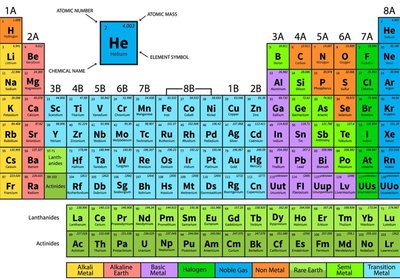
Elements and the Periodic Table
Elements are unique substances that cannot be broken down into simpler substances. Four elements—carbon, hydrogen, oxygen, and nitrogen—make up about 96% of body weight. Each element is composed of atoms, which are the smallest units retaining the properties of the element.
There are 118 recognized elements, each with a one- or two-letter atomic symbol.
Atoms of each element have unique properties.
Atomic Structure
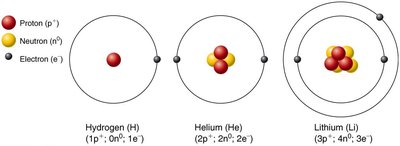
Atoms consist of a central nucleus (containing protons and neutrons) and electrons in orbitals around the nucleus.
Protons: Positive charge, 1 atomic mass unit (amu).
Neutrons: No charge, 1 amu.
Electrons: Negative charge, negligible mass.
Identifying Elements
Atomic number: Number of protons.
Mass number: Protons + neutrons.
Isotopes: Atoms with the same number of protons but different numbers of neutrons.
Radioisotopes: Unstable isotopes that decay, releasing radiation.
2.3 Molecules, Compounds, and Mixtures
Molecules and Compounds
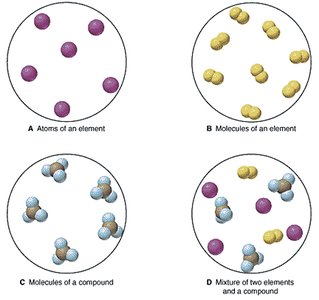
A molecule is a combination of two or more atoms. If the atoms are the same element, it is a molecule of that element; if different, it is a compound.
Mixtures
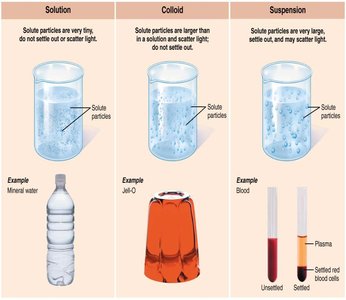
Mixtures are physical combinations of two or more substances. Types include:
Solutions: Homogeneous mixtures; solute particles are tiny and do not settle out.
Colloids: Heterogeneous mixtures; solute particles are larger and do not settle out (e.g., Jell-O).
Suspensions: Heterogeneous mixtures; large particles settle out (e.g., blood).
2.4 Chemical Bonds
Types of Chemical Bonds
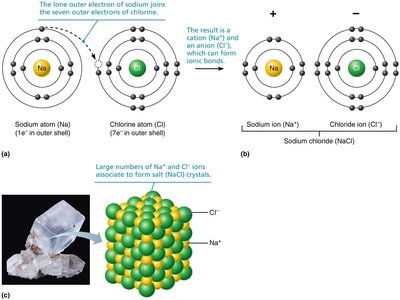
Chemical bonds are energy relationships between electrons of reacting atoms. Electrons occupy energy levels (shells) around the nucleus. The octet rule states that atoms are stable with eight electrons in their outer shell (except for the first shell, which is stable with two).
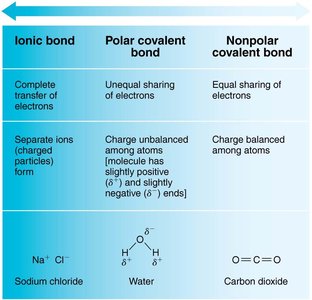
Ionic bonds: Formed by transfer of electrons from one atom to another, creating ions (cations and anions).
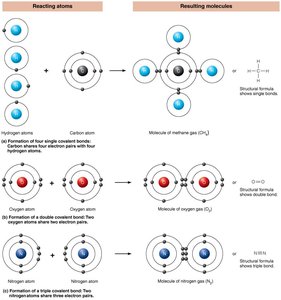
Covalent bonds: Formed by sharing electrons between atoms; can be single, double, or triple bonds.
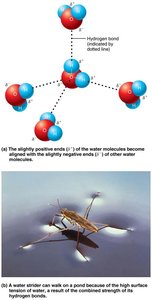
Hydrogen bonds: Weak attractions between a hydrogen atom (already covalently bonded) and an electronegative atom.
Polar and Nonpolar Covalent Bonds
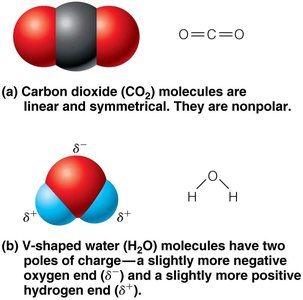
Covalent bonds can be nonpolar (equal sharing of electrons) or polar (unequal sharing, resulting in partial charges).
Hydrogen Bonds
Hydrogen bonds are responsible for water's surface tension and the stabilization of large molecules' three-dimensional structures.
2.5 Chemical Reactions
Types of Chemical Reactions
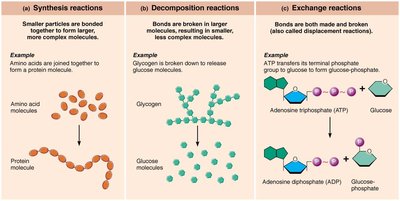
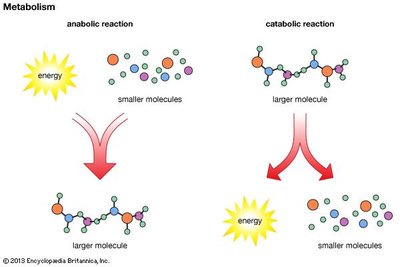
Synthesis (anabolic) reactions: Atoms or molecules combine to form larger, more complex molecules.
Decomposition (catabolic) reactions: Molecules are broken down into smaller molecules or atoms.
Exchange (displacement) reactions: Involve both synthesis and decomposition; atoms are exchanged between molecules.
Oxidation-reduction (redox) reactions: Electrons are transferred between reactants; essential for energy production in cells.
Reversibility and Chemical Equilibrium
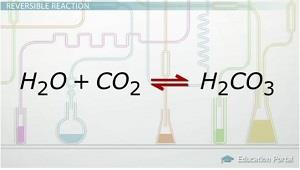
Some reactions are reversible, indicated by double arrows. Chemical equilibrium occurs when the rate of the forward reaction equals the rate of the reverse reaction.
Factors Influencing Reaction Rates
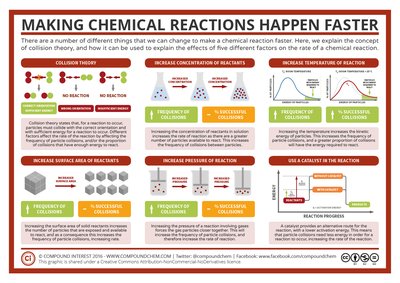
Temperature: Higher temperature increases reaction rate.
Concentration: Higher concentration increases reaction rate.
Particle size: Smaller particles react faster.
Catalysts: Increase reaction rate without being consumed (e.g., enzymes).
2.6 Inorganic Compounds: Water, Salts, Acids, and Bases
Water
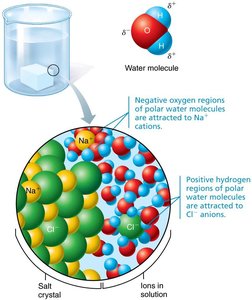
Water is the most important inorganic molecule, making up 60–80% of cell volume. It has high heat capacity, high heat of vaporization, is a universal solvent, and participates in chemical reactions.
Salts
Salts are ionic compounds that dissociate in water to form electrolytes, which conduct electrical currents in solution.
Acids, Bases, and Buffers
Acids: Proton donors; release H+ ions in solution.
Bases: Proton acceptors; absorb H+ ions.
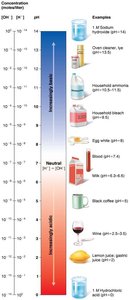
pH scale: Measures hydrogen ion concentration; ranges from 0 (acidic) to 14 (basic), with 7 as neutral.
Buffers: Resist changes in pH by releasing or binding H+ ions.
2.7 Organic Compounds: Synthesis and Breakdown
Dehydration Synthesis and Hydrolysis
Organic compounds are formed by dehydration synthesis (removal of water to form bonds) and broken down by hydrolysis (addition of water to break bonds).
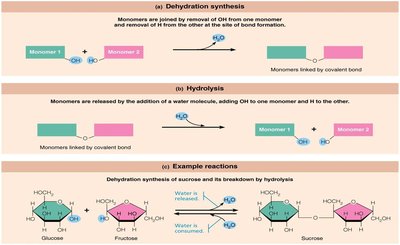
Macromolecules and Polymers
Many organic molecules are macromolecules (large, complex) and polymers (chains of monomers joined by dehydration synthesis).
2.8 Carbohydrates
Structure and Function
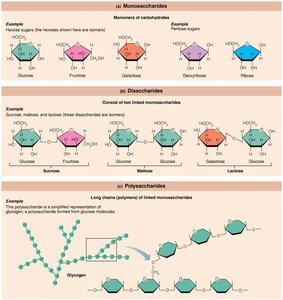
Carbohydrates are sugars and starches composed of carbon, hydrogen, and oxygen. They are classified as monosaccharides (simple sugars), disaccharides (two monosaccharides joined), and polysaccharides (long chains of monosaccharides).
Monosaccharides: Glucose, fructose, galactose, etc.
Disaccharides: Sucrose, maltose, lactose.
Polysaccharides: Starch, glycogen.
Function: Primary energy source for cells.
2.9 Lipids
Structure and Types
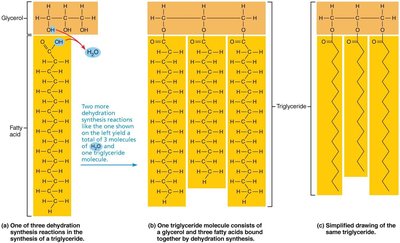
Lipids are insoluble in water and include triglycerides, phospholipids, steroids, and eicosanoids.
Triglycerides: Glycerol + 3 fatty acids; energy storage, insulation, protection.
Fatty acids: Saturated (single bonds) or unsaturated (one or more double bonds).
Phospholipids: Glycerol + 2 fatty acids + phosphate group; main component of cell membranes.
Steroids: Four interlocking rings; cholesterol, hormones.
Eicosanoids: Derived from arachidonic acid; involved in inflammation and other functions.
2.10 Proteins
Structure and Function
Proteins are polymers of amino acids joined by peptide bonds. They serve as the body's basic structural material and perform many vital functions.
Levels of structure: Primary (amino acid sequence), secondary (alpha helices, beta sheets), tertiary (folded structure), quaternary (multiple polypeptides).
Fibrous proteins: Structural, insoluble (e.g., collagen).
Globular proteins: Functional, soluble (e.g., enzymes, antibodies).
Enzymes
Enzymes are globular proteins that act as biological catalysts, lowering activation energy and speeding up reactions. They are highly specific for their substrates and are not consumed in the reaction.
Mechanism: Substrate binds to active site, enzyme-substrate complex forms, reaction occurs, product is released.
2.11 Nucleic Acids
DNA and RNA
Nucleic acids store and transmit genetic information. DNA is double-stranded and found in the nucleus; RNA is single-stranded and involved in protein synthesis.
DNA: Bases are adenine (A), thymine (T), guanine (G), cytosine (C); sugar is deoxyribose.
RNA: Bases are adenine (A), uracil (U), guanine (G), cytosine (C); sugar is ribose.
Nucleotides: Building blocks of nucleic acids; consist of a nitrogenous base, pentose sugar, and phosphate group.
2.12 ATP: The Energy Currency of the Cell
Structure and Function
ATP (adenosine triphosphate) is the primary energy transfer molecule in cells. It consists of adenine, ribose, and three phosphate groups. Energy is released when the terminal phosphate is removed (hydrolysis), powering cellular work.
ATP hydrolysis:
Cellular work: Transport, mechanical, and chemical work are driven by ATP.
