 Back
Chapter 2: Chemistry Comes Alive – Study Notes
Study Guide - Smart Notes
 Tailored notes based on your materials, expanded with key definitions, examples, and context.
Chapter 2: Chemistry Comes Alive
Introduction to Chemistry in Anatomy & Physiology
Chemistry forms the foundation for understanding physiological processes in the human body. All bodily functions, from movement to digestion, are governed by chemical and biochemical reactions. This chapter introduces the essential chemical principles relevant to anatomy and physiology.
2.1 Matter and Energy
Matter
Matter is anything that has mass and occupies space. It can be seen, smelled, or felt.
States of Matter:
Solid: Definite shape and volume.
Liquid: Changeable shape, definite volume.
Gas: Changeable shape and volume.
Energy
Energy is the capacity to do work or put matter into motion.
Exists as kinetic energy (energy in action) and potential energy (stored energy).
Forms of energy include:
Chemical energy: Stored in bonds of chemical substances.
Electrical energy: Movement of charged particles.
Mechanical energy: Directly involved in moving matter.
Radiant/electromagnetic energy: Travels in waves (e.g., light, X-rays).
Energy conversions are inefficient; some energy is lost as heat.
2.2 Atoms and Elements
Elements
Elements are substances that cannot be broken down into simpler substances by ordinary chemical methods.
Four elements make up 96% of the human body: Oxygen (O), Carbon (C), Hydrogen (H), Nitrogen (N).
Other elements are present in lesser or trace amounts and are essential for various physiological functions.
Atoms
Atoms are the smallest units of elements that retain the properties of that element.
Composed of three subatomic particles:
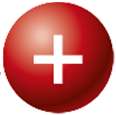
Protons (p+): Positive charge, 1 amu, located in nucleus.
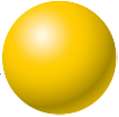
Neutrons (n0): No charge, 1 amu, located in nucleus.
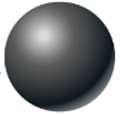
Electrons (e-): Negative charge, ~0 amu, orbit nucleus.
Atoms are electrically neutral when protons equal electrons.
Atomic Models
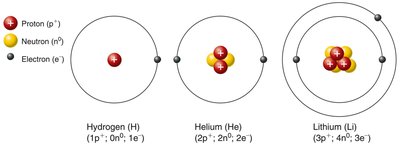
Planetary Model: Electrons orbit the nucleus in fixed paths (simplified, outdated).
Orbital Model: Electrons are found in regions of probability called orbitals, forming an electron cloud.

Atomic Structure Examples
Hydrogen (H): 1 proton, 0 neutrons, 1 electron
Helium (He): 2 protons, 2 neutrons, 2 electrons
Lithium (Li): 3 protons, 4 neutrons, 3 electrons
2.3 Combining Matter: Molecules, Compounds, and Mixtures
Molecules and Compounds
Molecule: Two or more atoms bonded together (e.g., O2).
Compound: Molecule with two or more different kinds of atoms (e.g., H2O).
Mixtures
Most matter exists as mixtures: two or more components physically intermixed.
Three basic types:
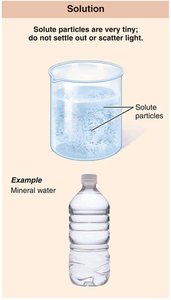
Solutions: Homogeneous mixtures; solute particles are tiny and do not settle out or scatter light (e.g., mineral water).
Colloids: Heterogeneous mixtures; solute particles are larger, scatter light, do not settle out (e.g., Jell-O).
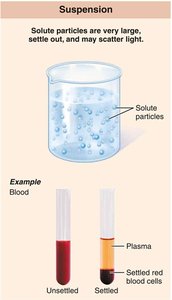
Suspensions: Heterogeneous mixtures; large solute particles settle out (e.g., blood).


2.4 Chemical Bonds
Types of Chemical Bonds
Ionic Bonds: Transfer of electrons from one atom to another, forming ions (cations and anions).
Covalent Bonds: Sharing of electrons between atoms. Can be single, double, or triple bonds. Subtypes:
Nonpolar Covalent: Equal sharing of electrons (e.g., O2).
Polar Covalent: Unequal sharing, resulting in partial charges (e.g., H2O).
Hydrogen Bonds: Weak attraction between a hydrogen atom and an electronegative atom (e.g., between water molecules).
2.5 Chemical Reactions
Types of Chemical Reactions
Synthesis (Combination): Atoms/molecules combine to form larger molecules.
Decomposition: Molecule is broken down into smaller molecules/atoms.
Exchange (Displacement): Bonds are both made and broken.
Energy Flow in Reactions
Exergonic: Release energy (products have less energy than reactants).
Endergonic: Absorb energy (products have more energy than reactants).
Factors Affecting Reaction Rate
Temperature, concentration, particle size, and catalysts (e.g., enzymes) affect reaction speed.
2.6 Inorganic Compounds
Water
Most abundant inorganic compound in the body (60–80% of cell volume).
Properties:
High heat capacity and vaporization
Polar solvent properties
Reactivity (hydrolysis and dehydration synthesis)
Cushioning (protects organs)
Salts
Ionic compounds that dissociate in water to form electrolytes (conduct electrical currents).
Vital for physiological functions (e.g., Na+, K+, Ca2+).
Acids and Bases
Acids: Proton donors; release H+ ions (e.g., HCl).
Bases: Proton acceptors; release OH- ions (e.g., NaOH).
pH Scale: Measures H+ concentration; ranges from 0 (acidic) to 14 (basic), with 7 as neutral.
Buffers: Resist changes in pH by releasing or binding H+ ions.
2.7 Organic Compounds
Major Classes
Carbohydrates: Sugars and starches; energy source.
Lipids: Fats, oils, phospholipids, steroids; energy storage, cell membranes.
Proteins: Structural, enzymatic, and regulatory roles.
Nucleic Acids: DNA and RNA; genetic information storage and transfer.
Polymerization
Organic molecules are often polymers, built by dehydration synthesis and broken down by hydrolysis.
2.8 Carbohydrates
Monosaccharides: Simple sugars (e.g., glucose, ribose).
Disaccharides: Two monosaccharides joined (e.g., sucrose, lactose).
Polysaccharides: Long chains of monosaccharides (e.g., starch, glycogen).
2.9 Lipids
Triglycerides: Glycerol + 3 fatty acids; energy storage.
Phospholipids: Glycerol + 2 fatty acids + phosphate; major component of cell membranes.
Steroids: Four interlocking rings; cholesterol is a key steroid.
Eicosanoids: Derived from arachidonic acid; involved in inflammation and other functions.
2.10 Proteins
Composed of amino acids linked by peptide bonds.
Four structural levels: primary, secondary, tertiary, quaternary.
Fibrous (structural) and globular (functional) proteins.
Denaturation: loss of structure and function due to environmental changes.
Enzymes: biological catalysts that lower activation energy for reactions.
2.11 Nucleic Acids
DNA: Double helix; genetic blueprint; bases A, T, C, G.
RNA: Single-stranded; involved in protein synthesis; bases A, U, C, G.
2.12 ATP (Adenosine Triphosphate)
ATP stores and releases energy for cellular work.
Structure: adenine, ribose, and three phosphate groups.
Energy is released when phosphate bonds are broken (ATP → ADP → AMP).
