 Back
Chapter 2: Chemistry Comes Alive – Study Notes for Anatomy & Physiology
Study Guide - Smart Notes
 Tailored notes based on your materials, expanded with key definitions, examples, and context.
Chapter 2: Chemistry Comes Alive
2.1 Matter and Energy
Understanding matter and energy is foundational to the study of anatomy and physiology, as all living and nonliving things are composed of matter and require energy for function.
Matter: Anything that has mass and occupies space. It can be seen, smelled, or felt. Weight is the effect of gravity on mass.
States of Matter:
Solid: Definite shape and volume (e.g., bones).
Liquid: Definite volume, changeable shape (e.g., blood plasma).
Gas: Changeable shape and volume (e.g., oxygen, carbon dioxide).
Energy: The capacity to do work or put matter into motion.
Kinetic Energy: Energy in action.
Potential Energy: Stored energy.
Forms of Energy: Chemical (stored in bonds), electrical (movement of charged particles), mechanical (movement of matter), radiant/electromagnetic (travels in waves, e.g., light).
Energy Conversion: Energy can be transformed from one form to another, but some is always lost as heat.
2.2 Atoms and Elements
All matter is composed of elements, which are substances that cannot be broken down by ordinary chemical means. Elements are made of atoms, the smallest units retaining the properties of the element.
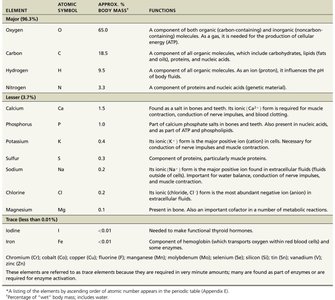
Major Elements of the Human Body: Oxygen, carbon, hydrogen, and nitrogen make up about 96% of body mass.
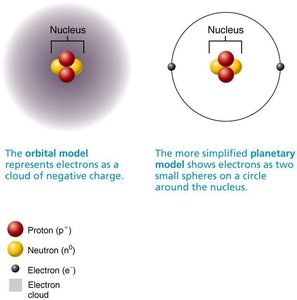
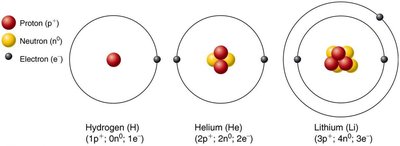
Atomic Structure: Atoms consist of protons (+), neutrons (0), and electrons (−). Protons and neutrons are in the nucleus; electrons orbit in shells.
Atomic Number: Number of protons in the nucleus.
Mass Number: Sum of protons and neutrons.
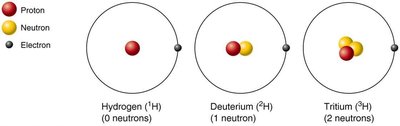
Isotopes: Variants of an element with different numbers of neutrons.
Atomic Weight: Average mass of all isotopes of an element.
Radioisotopes
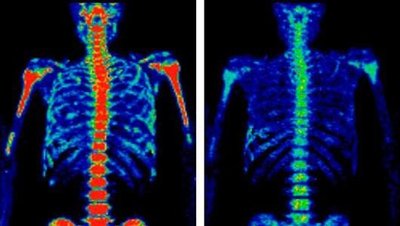
Radioisotopes are unstable isotopes that decompose to more stable forms, emitting radiation. They are used in medical diagnosis and treatment but can also damage living tissue.
2.3 Mixtures and Compounds
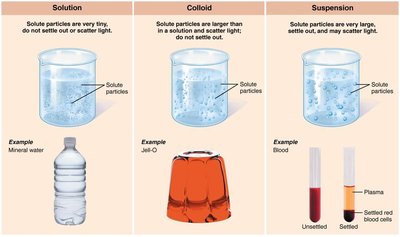
Mixtures are combinations of two or more substances that are not chemically bonded. Compounds are substances formed by the chemical bonding of two or more elements.
Types of Mixtures:
Solutions: Homogeneous mixtures (e.g., mineral water).
Colloids: Heterogeneous mixtures with larger particles (e.g., Jell-O).
Suspensions: Heterogeneous mixtures with large particles that settle out (e.g., blood).
2.4 Chemical Bonds
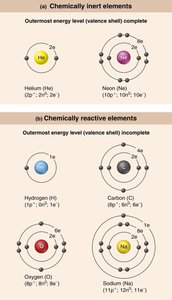
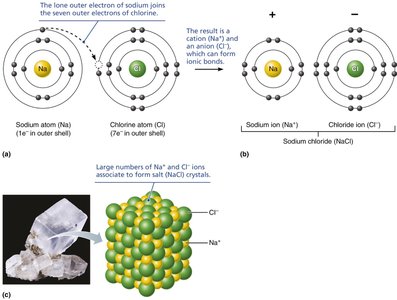
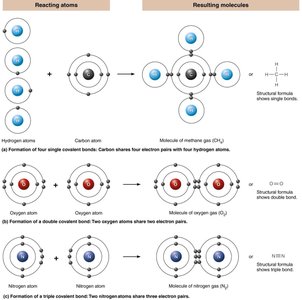
Chemical bonds are energy relationships between electrons of reacting atoms. Electrons in the outermost shell (valence shell) determine chemical reactivity.
Electron Shells: Shell 1 holds 2 electrons, shell 2 holds 8, shell 3 holds 18.
Octet Rule: Atoms are most stable with 8 electrons in their valence shell (except H and He, which are stable with 2).
Types of Bonds:
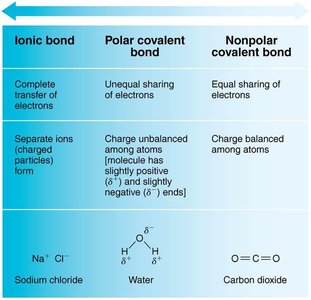
Ionic Bonds: Transfer of electrons from one atom to another, forming ions (cations and anions).
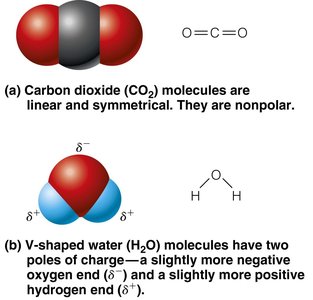
Covalent Bonds: Sharing of electrons between atoms. Can be single, double, or triple bonds. Includes polar (unequal sharing) and nonpolar (equal sharing) types.
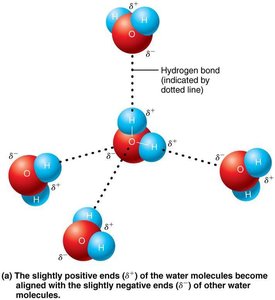
Hydrogen Bonds: Weak attractions between a hydrogen atom and an electronegative atom (e.g., between water molecules).
2.5 Chemical Reactions
Chemical reactions involve the formation, rearrangement, or breaking of chemical bonds. They are represented by chemical equations showing reactants and products.
Types of Chemical Reactions:
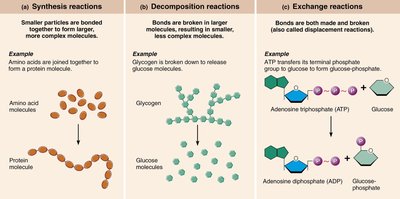
Synthesis (Anabolic): Building larger molecules from smaller ones.
Decomposition (Catabolic): Breaking down larger molecules into smaller ones.
Exchange (Displacement): Both synthesis and decomposition occur.
Energy Flow:
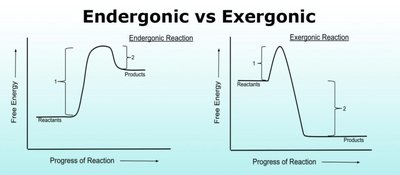
Exergonic: Release energy (products have less energy than reactants).
Endergonic: Absorb energy (products have more energy than reactants).
Catalysts: Substances that increase reaction rates without being consumed. Enzymes are biological catalysts.
2.6 Inorganic Compounds
Inorganic compounds do not contain carbon (with exceptions like CO2 and CO). Water, salts, acids, and bases are key inorganic compounds in the body.
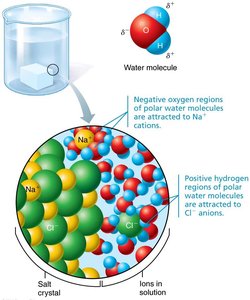
Water: Most abundant inorganic compound in the body. Properties include high heat capacity, high heat of vaporization, polar solvent abilities, reactivity, and cushioning.
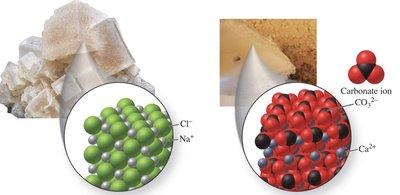
Salts: Ionic compounds that dissociate in water to form electrolytes, essential for nerve impulse transmission and muscle contraction.
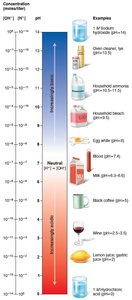
Acids and Bases: Acids are proton donors (release H+), bases are proton acceptors (release OH−). The pH scale measures hydrogen ion concentration.
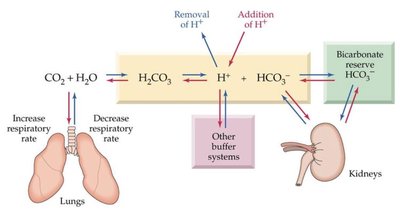
Buffers: Compounds that resist changes in pH by releasing or binding H+ ions.
2.7 Organic Compounds: Synthesis and Hydrolysis
Organic compounds contain carbon and are typically large, covalently bonded molecules. Major classes include carbohydrates, lipids, proteins, and nucleic acids.
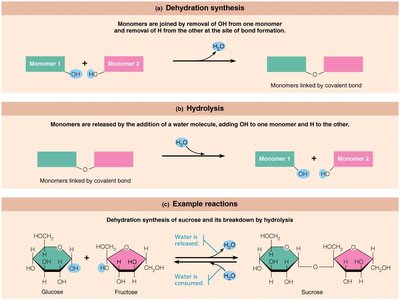
Polymers: Chains of monomers joined by dehydration synthesis (removal of water) and broken down by hydrolysis (addition of water).
2.8 Carbohydrates
Carbohydrates are sugars and starches, serving as a major energy source. They contain C, H, and O, usually in a 2:1 ratio of H to O.
Monosaccharides: Simple sugars (e.g., glucose).
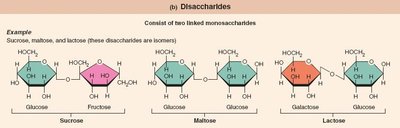
Disaccharides: Two monosaccharides joined together (e.g., sucrose, lactose, maltose).
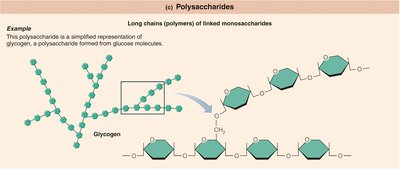
Polysaccharides: Long chains of monosaccharides (e.g., glycogen, starch).
2.9 Lipids
Lipids are hydrophobic molecules including fats, oils, phospholipids, and steroids. They contain C, H, and O, but less O than carbohydrates, and sometimes P.
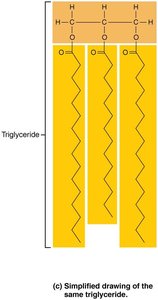
Triglycerides: Composed of glycerol and three fatty acids. Main functions are energy storage, insulation, and protection.
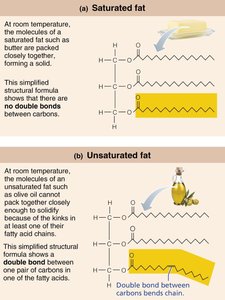
Saturated Fats: No double bonds between carbons; solid at room temperature (e.g., butter).
Unsaturated Fats: One or more double bonds; liquid at room temperature (e.g., olive oil).
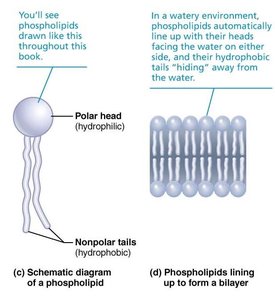
Phospholipids: Glycerol, two fatty acids, and a phosphate group; major component of cell membranes.
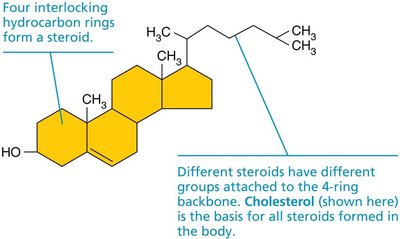
Steroids: Four interlocking hydrocarbon rings; cholesterol is the most important steroid, precursor for vitamin D, steroid hormones, and bile salts.
2.10 Proteins
Proteins are polymers of amino acids and perform a vast array of functions, including structural support, catalysis, transport, and defense.
Amino Acids: 20 types, each with an amine group, acid group, and unique R group.
Peptide Bonds: Covalent bonds joining amino acids.
Protein Structure: Four levels—primary, secondary, tertiary, and quaternary.
Fibrous Proteins: Structural roles (e.g., collagen).
Globular Proteins: Functional roles (e.g., enzymes, antibodies).
Enzymes: Biological catalysts that speed up reactions by lowering activation energy.
2.11 Nucleic Acids
Nucleic acids (DNA and RNA) store and transmit genetic information. They are polymers of nucleotides, each containing a nitrogen base, pentose sugar, and phosphate group.
DNA: Double-stranded helix, found in the nucleus, contains deoxyribose sugar, bases A, T, G, C.
RNA: Single-stranded, contains ribose sugar, bases A, U, G, C; types include mRNA, tRNA, rRNA.
2.12 ATP (Adenosine Triphosphate)
ATP is the primary energy currency of the cell, providing immediate energy for cellular processes. It consists of adenine, ribose, and three phosphate groups. Energy is released when phosphate bonds are broken.
ATP Cycle: ATP → ADP + Pi (inorganic phosphate) + energy.
