 Back
BackChapter 2: Chemistry Comes Alive – Study Notes
Study Guide - Smart Notes
 Tailored notes based on your materials, expanded with key definitions, examples, and context.
Chemistry and Physiological Reactions
Chemistry is fundamental to understanding physiological processes in the human body. All bodily functions, from movement to digestion and neural activity, are governed by chemical principles. The study of chemistry in physiology is divided into basic chemistry and biochemistry.
2.1 Matter and Energy
Matter
Matter is defined as anything that has mass and occupies space. It can be detected by our senses and exists in three states:
Solid: Definite shape and volume.
Liquid: Definite volume, changeable shape.
Gas: Changeable shape and volume.
Energy
Energy is the capacity to do work or put matter into motion. It exists in two main forms:
Kinetic energy: Energy in action.
Potential energy: Stored energy, which can be converted to kinetic energy.
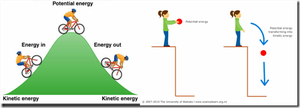
Forms of Energy
Chemical energy: Stored in chemical bonds.
Electrical energy: Movement of charged particles.
Mechanical energy: Directly involved in moving matter.
Radiant or electromagnetic energy: Travels in waves (e.g., light).
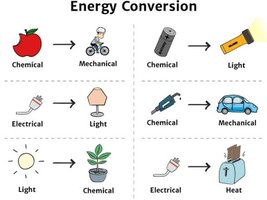
Energy Conversion
Energy can be converted from one form to another, but some energy is always lost as heat, making the process inefficient.
2.2 Atoms and Elements
Elements
Elements are substances that cannot be broken down into simpler substances by ordinary chemical means. Four elements—carbon, oxygen, hydrogen, and nitrogen—make up 96% of the human body.
Atoms
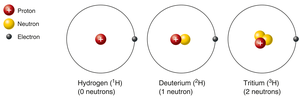
Atoms are the smallest units of elements that retain their properties. Each atom consists of:
Protons: Positive charge, 1 atomic mass unit (amu).
Neutrons: No charge, 1 amu.
Electrons: Negative charge, negligible mass.
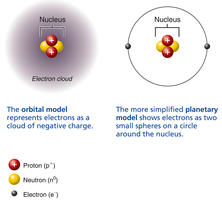
Atomic Structure
Protons and neutrons are located in the nucleus, while electrons orbit the nucleus. The planetary model is a simplified depiction, while the orbital model shows regions of probable electron location.
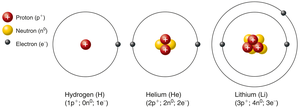
Isotopes and Atomic Weight
Isotopes are atoms of the same element with different numbers of neutrons. Atomic weight is the average mass of all isotopes of an element.
2.3 Combining Matter
Molecules and Compounds
Molecule: Two or more atoms bonded together.
Compound: Molecule with two or more different kinds of atoms.
Mixtures
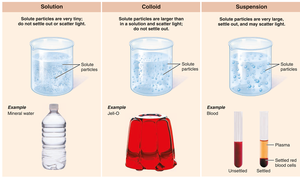
Mixtures are combinations of two or more substances physically intermixed. Types include:
Solutions: Homogeneous mixtures (e.g., mineral water).
Colloids: Heterogeneous mixtures with larger particles (e.g., Jell-O).
Suspensions: Heterogeneous mixtures with large particles that settle out (e.g., blood).
2.4 Chemical Bonds
Chemical bonds are energy relationships between electrons of reacting atoms. The main types are:
Ionic bonds: Transfer of electrons between atoms, forming ions.
Covalent bonds: Sharing of electrons between atoms.
Hydrogen bonds: Weak attractions between electropositive hydrogen and electronegative atoms.
Electron Shells and the Octet Rule
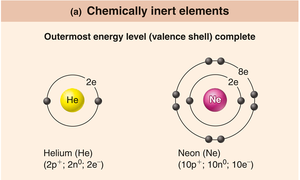
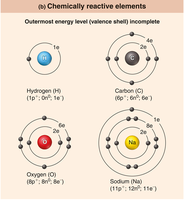
Electrons occupy shells around the nucleus. The outermost shell (valence shell) determines chemical reactivity. Atoms tend to fill their valence shell (usually 8 electrons) by gaining, losing, or sharing electrons.
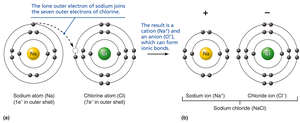
Ionic Bonds
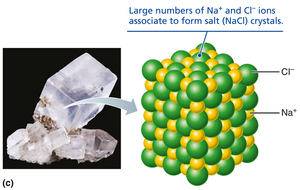
Ionic bonds form when electrons are transferred from one atom to another, creating cations (positive) and anions (negative). The attraction between oppositely charged ions forms the bond.
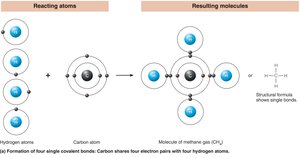
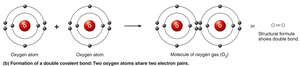
Covalent Bonds
Covalent bonds involve the sharing of electrons. They can be single, double, or triple bonds depending on the number of shared electron pairs.
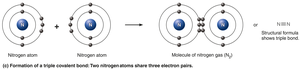
Polar and Nonpolar Covalent Bonds
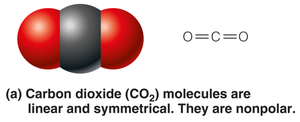
Nonpolar: Equal sharing of electrons (e.g., O2, CO2).
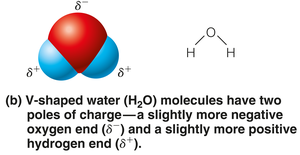
Polar: Unequal sharing, resulting in partial charges (e.g., H2O).
2.5 Chemical Reactions
Chemical Equations
Chemical reactions involve the formation, rearrangement, or breaking of chemical bonds. They are represented by chemical equations showing reactants and products.
Types of Chemical Reactions
Synthesis (Combination): Atoms or molecules combine to form a larger molecule. Example:
Decomposition: Molecule is broken down into smaller molecules or atoms. Example:
Exchange (Displacement): Bonds are both made and broken. Example:
Redox reactions involve the transfer of electrons between atoms.
Energy Flow in Chemical Reactions
Exergonic: Release energy (products have less energy than reactants).
Endergonic: Absorb energy (products have more energy than reactants).
Factors Affecting Reaction Rate
Temperature (higher increases rate)
Concentration (higher increases rate)
Particle size (smaller increases rate)
Catalysts (increase rate without being consumed; enzymes are biological catalysts)
2.6 Inorganic Compounds
Water
Water is the most abundant inorganic compound in the body, accounting for 60–80% of cell volume. Its properties include:
High heat capacity
High heat of vaporization
Polar solvent properties
Reactivity (hydrolysis and dehydration synthesis)
Cushioning (protects organs)
Salts
Salts are ionic compounds that dissociate in water to form electrolytes, which conduct electrical currents. Examples include NaCl, KCl, and calcium phosphates.
Acids and Bases
Acids: Proton donors; release H+ ions.
Bases: Proton acceptors; release OH- ions.
The pH scale measures hydrogen ion concentration, ranging from 0 (acidic) to 14 (basic), with 7 being neutral.
2.7 Organic Compounds: Synthesis and Hydrolysis
Organic molecules contain carbon and include carbohydrates, lipids, proteins, and nucleic acids. Many are polymers formed by dehydration synthesis and broken down by hydrolysis.
2.8 Carbohydrates
Carbohydrates are sugars and starches composed of C, H, and O. They are classified as:
Monosaccharides: Simple sugars (e.g., glucose, ribose).
Disaccharides: Double sugars (e.g., sucrose, lactose).
Polysaccharides: Many sugars (e.g., starch, glycogen).
2.9 Lipids
Lipids are hydrophobic molecules including:
Triglycerides: Energy storage, insulation, protection.
Phospholipids: Major component of cell membranes.
Steroids: Cholesterol, hormones, vitamin D.
Eicosanoids: Signaling molecules (e.g., prostaglandins).
2.10 Proteins
Proteins are polymers of amino acids and perform structural, enzymatic, and regulatory functions. They have four levels of structure: primary, secondary, tertiary, and quaternary. Denaturation disrupts protein function.
2.11 Nucleic Acids
Nucleic acids (DNA and RNA) store and transmit genetic information. They are polymers of nucleotides, each containing a nitrogen base, a pentose sugar, and a phosphate group.
2.12 ATP (Adenosine Triphosphate)
ATP is the primary energy carrier in cells. It stores energy in phosphate bonds, which is released to power cellular work when these bonds are broken.
