 Back
Chapter 2: The Cell – Structure & Function (Biomolecules and Cell Anatomy)
Study Guide - Smart Notes
 Tailored notes based on your materials, expanded with key definitions, examples, and context.
The Cell: Structure & Function
Introduction to Biomolecules
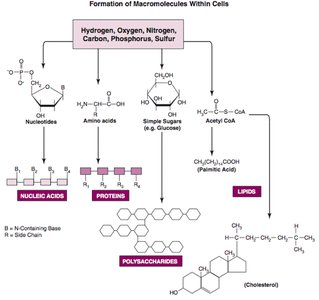
Biomolecules are organic molecules produced by living organisms, essential for cellular structure and function. They are primarily composed of carbon, hydrogen, oxygen, nitrogen, phosphorus, and sulfur. Carbon's ability to form four covalent bonds makes it ideal for constructing complex biological molecules.
Key Biomolecule Classes: Carbohydrates, lipids, proteins, and nucleic acids.
Importance: Serve as building blocks for cellular structures and mediate biochemical reactions.
Functional Groups in Biomolecules
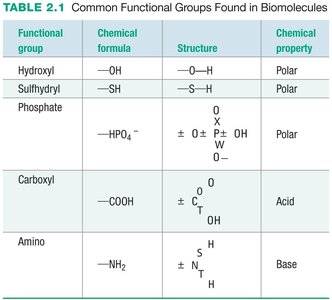
Functional groups are specific groupings of atoms within molecules that confer characteristic chemical properties and reactivity. They are critical in determining the behavior of biomolecules in aqueous environments.
Functional Group | Chemical Formula | Structure | Chemical Property |
|---|---|---|---|
Hydroxyl | –OH | O–H | Polar |
Sulfhydryl | –SH | S–H | Polar |
Phosphate | –HPO42– | O–P–O– || O | Polar |
Carboxyl | –COOH | O=C–OH | Acid |
Amino | –NH2 | N–H | H | Base |
Carbohydrates
Structure and Types
Carbohydrates are polar molecules composed of carbon, hydrogen, and oxygen, typically in a 1:2:1 ratio. They are water-soluble and serve as energy sources and structural components.
Monosaccharides: Simple sugars (e.g., glucose, fructose, galactose).
Disaccharides: Two monosaccharides linked (e.g., sucrose, lactose).
Polysaccharides: Long chains of monosaccharides (e.g., glycogen in animals).

Lipids
Structure and Types
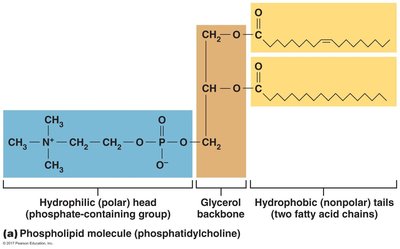
Lipids are non-polar molecules, generally insoluble in water. Some lipids are amphipathic, containing both polar and non-polar regions. Major types include triglycerides, phospholipids, eicosanoids, and steroids.
Triglycerides: Composed of a glycerol backbone and three fatty acids; primary energy storage molecules.
Phospholipids: Contain a phosphate group, forming the basis of cellular membranes due to their amphipathic nature.
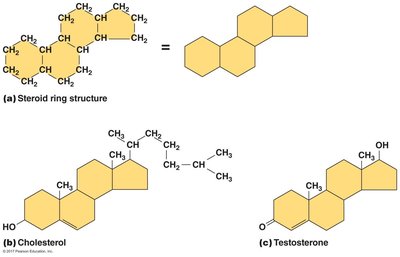
Steroids: Characterized by a four-ring structure; includes cholesterol and hormones like testosterone.



Proteins
Amino Acids and Protein Structure
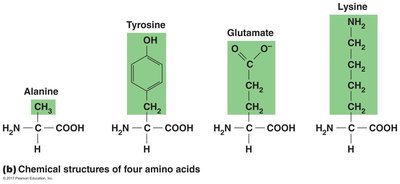
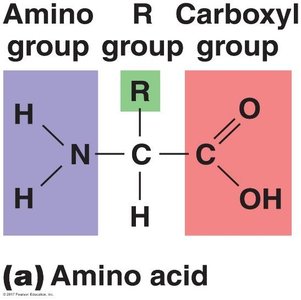
Proteins are polymers of amino acids, each containing an amino group, a carboxyl group, and a variable R-group. The sequence and properties of amino acids determine protein structure and function.
Primary Structure: Linear sequence of amino acids.
Secondary Structure: Local folding (α-helix, β-sheet) stabilized by hydrogen bonds.
Tertiary Structure: Overall 3D shape of a single polypeptide.
Quaternary Structure: Arrangement of multiple polypeptide subunits.

Protein Types
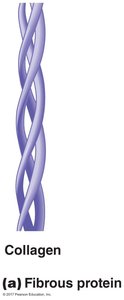
Fibrous Proteins: Structural roles (e.g., collagen).
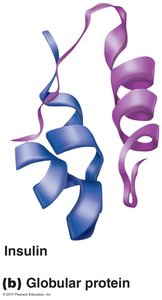
Globular Proteins: Functional roles (e.g., enzymes, insulin).
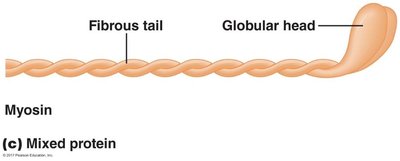
Mixed Proteins: Contain both fibrous and globular regions (e.g., myosin).
Nucleotides and Nucleic Acids
Nucleotide Structure and Function
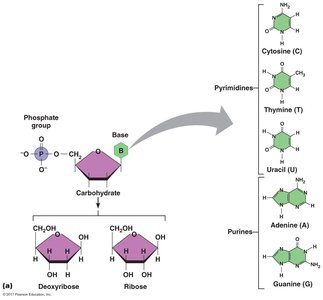
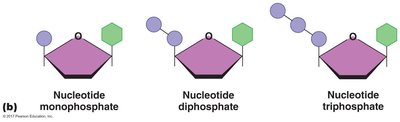
Nucleotides are composed of a five-carbon sugar, a phosphate group, and a nitrogenous base. They function in energy transfer, intracellular signaling, and as building blocks for nucleic acids.
Energy Transfer: ATP, ADP, NAD, FAD.
Intracellular Signaling: Cyclic AMP (cAMP).
Genetic Material: DNA and RNA.


Nucleic Acids: DNA and RNA
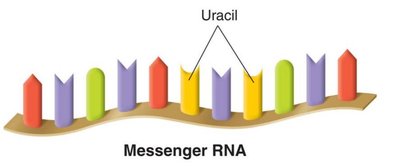
DNA and RNA are polymers of nucleotides that store and transmit genetic information. DNA is double-stranded and contains deoxyribose; RNA is single-stranded and contains ribose.
DNA Bases: Adenine, Thymine, Guanine, Cytosine.
RNA Bases: Adenine, Uracil, Guanine, Cytosine.
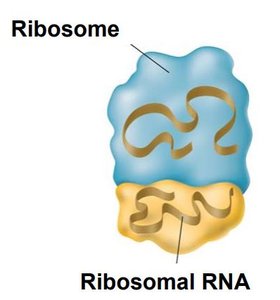
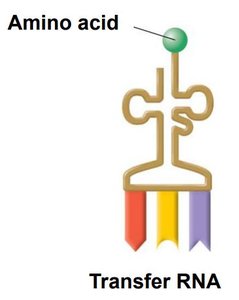
Types of RNA: Messenger RNA (mRNA), Ribosomal RNA (rRNA), Transfer RNA (tRNA).

Cell Structure Overview
Basic Cell Anatomy
Cells are composed of three main regions: the plasma membrane, cytoplasm, and nucleus. Each region contains specialized structures essential for cellular function.
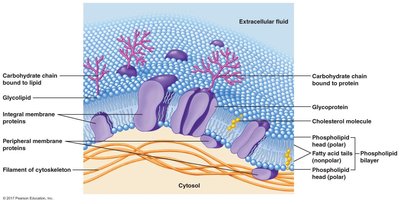
Plasma Membrane: Phospholipid bilayer with embedded proteins, carbohydrates, and cholesterol; regulates entry and exit of substances.
Cytoplasm: Includes cytosol (fluid) and organelles (membranous and non-membranous).
Nucleus: Contains genetic material (DNA) and controls cellular activities.



Membranous Organelles
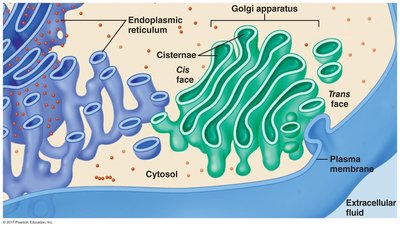
Endoplasmic Reticulum (ER): Rough ER (protein synthesis), Smooth ER (lipid synthesis, detoxification).
Golgi Apparatus: Modifies, sorts, and packages proteins and lipids for secretion or delivery to other organelles.
Mitochondria: Site of ATP production via aerobic respiration; inner membrane forms cristae to increase surface area.
Lysosomes: Contain digestive enzymes for breakdown of macromolecules and cellular debris.
Peroxisomes: Involved in lipid metabolism and detoxification of harmful substances.


Non-Membranous Organelles and Cytoskeleton
Ribosomes: Sites of protein synthesis; can be free-floating or bound to rough ER.
Cytoskeleton: Network of protein filaments (microfilaments, intermediate filaments, microtubules) providing structural support, cell shape, and movement.
Cell-to-Cell Junctions
Tight Junctions: Seal adjacent cells to prevent leakage of extracellular fluid.
Desmosomes: Anchor cells together to resist mechanical stress.
Gap Junctions: Allow direct communication between cells via passage of ions and small molecules.
General Cell Functions
Metabolism
Metabolism encompasses all chemical reactions within the cell, divided into anabolism (building molecules, requires energy) and catabolism (breaking down molecules, releases energy). Enzymes regulate metabolic pathways.
Anabolism: Synthesis of large molecules from smaller ones.
Catabolism: Breakdown of large molecules into smaller ones.
Membrane Transport
Cells regulate the movement of substances across the plasma membrane through various mechanisms:
Diffusion: Movement of small non-polar and some small polar molecules.
Carrier Proteins: Transport large polar molecules.
Channels: Allow passage of water and ions.
Vesicular Transport: Endocytosis and exocytosis for macromolecules.
Intercellular Communication
Cells communicate to maintain homeostasis via direct (gap junctions) or indirect (chemical messengers) mechanisms. Chemical messengers bind to receptors on target cells to elicit responses.
Gene Expression and Protein Synthesis
The nucleus controls cellular activity by storing DNA, which encodes proteins. Gene expression involves transcription (DNA to RNA) and translation (RNA to protein). Proteins are synthesized in the cytoplasm and may undergo post-translational modifications in the ER and Golgi apparatus.
Transcription: Synthesis of RNA from DNA template.
Translation: Assembly of polypeptides using mRNA as a template.
Post-Translational Modification: Processing and packaging of proteins for their final destinations.
Additional info: This chapter provides foundational knowledge for understanding cellular physiology, metabolism, and molecular biology, which are essential for advanced topics in anatomy and physiology.
