 Back
BackChapter 2: The Chemical Level of Organization – Structured Study Notes
Study Guide - Smart Notes
 Tailored notes based on your materials, expanded with key definitions, examples, and context.
Chemistry: The Chemical Level of Organization
Overview
This chapter introduces the foundational concepts of chemistry as they relate to anatomy and physiology. Understanding the chemical basis of life is essential for comprehending cellular structure, function, and the physiological processes that sustain life.
Matter
States and Properties of Matter
Matter is anything that has mass and takes up space. It exists in three primary states: solid, liquid, and gas. All physical objects, including living organisms, are composed of matter.
Mass: The amount of matter in an object; remains constant regardless of location.
Weight: The force exerted by gravity on an object's mass; varies with location.
States of Matter: Solid (fixed shape and volume), liquid (fixed volume, variable shape), gas (variable shape and volume).
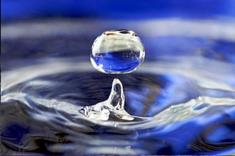


Example: Water can exist as ice (solid), liquid water, or water vapor (gas).
Elements
Definition and Classification
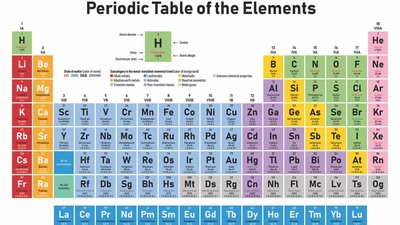
Elements are pure substances that cannot be broken down by ordinary chemical means. There are 92 naturally occurring elements, and many more have been synthesized. The periodic table organizes elements by their atomic structure.
Element: A substance composed of only one type of atom.
Periodic Table: A chart displaying all known elements, their atomic numbers, and properties.
Elements in the Human Body
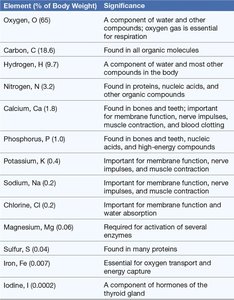
About 25 elements are essential for human life. Four elements—carbon, hydrogen, nitrogen, and oxygen—make up approximately 96% of body mass.
Major Elements: Oxygen (O), Carbon (C), Hydrogen (H), Nitrogen (N)
Minor Elements: Calcium (Ca), Phosphorus (P), Potassium (K), Sodium (Na), Chlorine (Cl), Magnesium (Mg), Sulfur (S), Iron (Fe), Iodine (I)
Atoms
Structure and Subatomic Particles
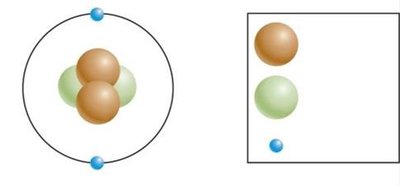
Atoms are the smallest units of matter that retain the properties of an element. Each atom consists of a nucleus (containing protons and neutrons) and electrons orbiting the nucleus.
Proton: Positively charged particle, mass = 1 amu
Neutron: Neutral particle, mass = 1 amu
Electron: Negatively charged particle, mass is negligible
Atomic Number and Mass
Atomic Number: Number of protons in the nucleus; defines the element.
Atomic Mass: Sum of protons and neutrons.
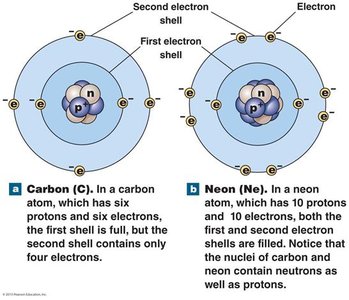
Example: Carbon has 6 protons (atomic number 6) and typically 6 neutrons (atomic mass 12).
Isotopes and Radioactivity
Isotopes are atoms of the same element with different numbers of neutrons. Some isotopes are unstable and radioactive, emitting energy as they decay.
Isotope: Same atomic number, different atomic mass.
Radioactive Isotope: Unstable, emits radiation, used in medical imaging and cancer treatment.
Atomic Models and Electron Shells
Electron Shells and Valence Electrons
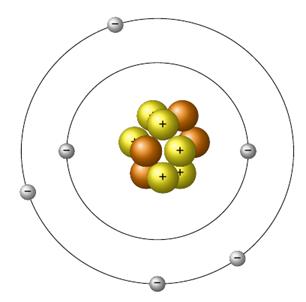
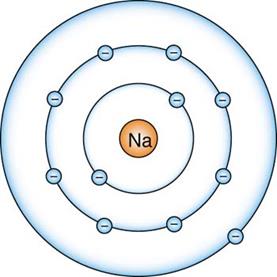
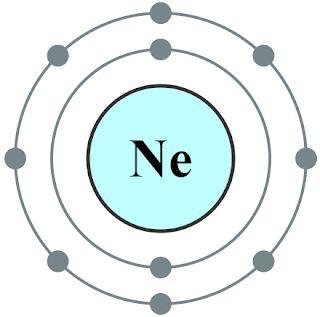
Electrons occupy specific energy levels called shells. The outermost shell is the valence shell, and its electrons determine chemical reactivity.
First shell: Holds up to 2 electrons.
Second shell: Holds up to 8 electrons.
Valence Electrons: Electrons in the outermost shell; responsible for chemical bonding.
Molecules and Compounds
Formation and Types
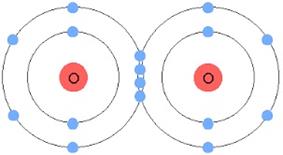
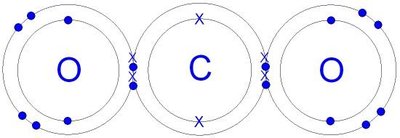
Molecules are formed when two or more atoms bond together. If the atoms are of different elements, the molecule is a compound.
Molecule: Two or more atoms bonded (e.g., O2, H2).
Compound: Molecule with atoms of different elements (e.g., H2O, CO2).
Chemical Bonds
Ionic Bonds
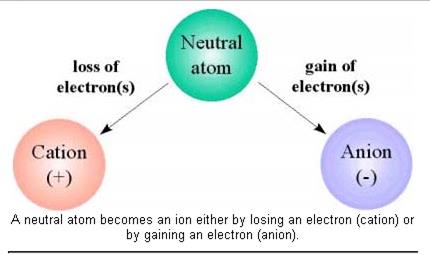
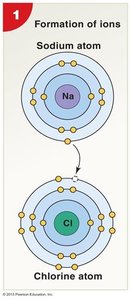
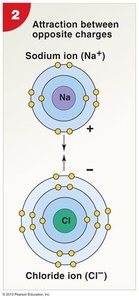
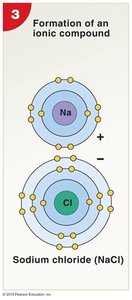
Ionic bonds form when atoms transfer electrons, resulting in charged ions. Opposite charges attract, forming a stable compound.
Cation: Positively charged ion (lost electrons).
Anion: Negatively charged ion (gained electrons).
Covalent Bonds
Covalent bonds form when atoms share electrons. These bonds can be single, double, or triple, depending on the number of shared electron pairs.
Single Covalent Bond: One pair of electrons shared.
Double Covalent Bond: Two pairs of electrons shared.
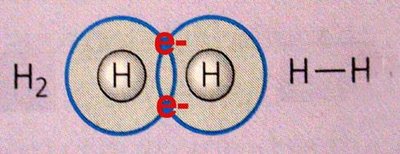
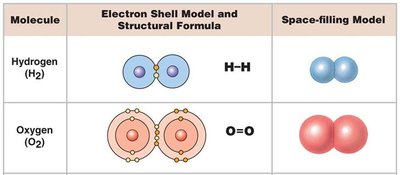
Types of Covalent Bonds
Nonpolar Covalent Bond: Electrons shared equally.
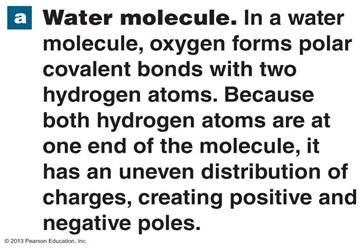
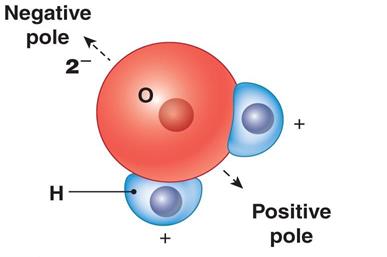
Polar Covalent Bond: Electrons shared unequally; one atom is more electronegative.
Polar Molecules and Hydrogen Bonds
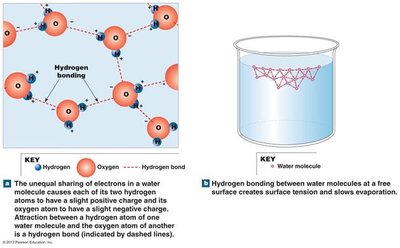
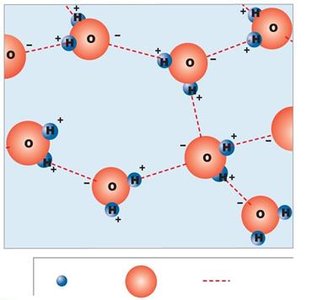
Polar covalent bonds create molecules with distinct positive and negative regions. Hydrogen bonds form between polar molecules, such as water.
Polar Molecule: Has regions of partial positive and negative charge.
Hydrogen Bond: Weak attraction between hydrogen (positive) and oxygen/nitrogen (negative) in adjacent molecules.
Chemical Reactions
Types of Chemical Reactions
Decomposition Reaction: AB → A + B (breaks molecules apart; hydrolysis)
Synthesis Reaction: A + B → AB (builds larger molecules; dehydration synthesis)
Reversible Reaction: Can proceed in both directions.
Enzymes and Activation Energy
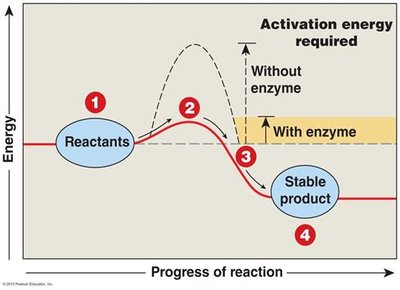
Enzymes are biological catalysts that lower the activation energy required for reactions, speeding up chemical processes without being consumed.
Activation Energy: Minimum energy needed to start a reaction.
Enzyme: Protein that catalyzes reactions.
Inorganic and Organic Molecules
Classification
Inorganic Compounds: Small molecules, usually lack C-H bonds (e.g., water, CO2).
Organic Compounds: Larger, complex molecules with C-H bonds (e.g., carbohydrates, proteins, lipids, nucleic acids).
Water: Properties and Importance
Role in Physiology
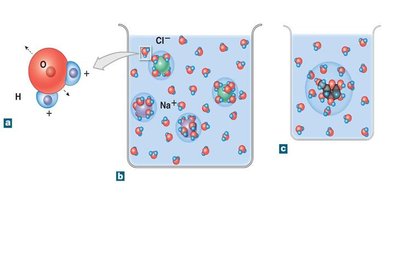
Water is essential for life, making up 70–90% of living organisms. Its polarity allows for hydrogen bonding, making it a liquid at typical Earth temperatures and an excellent solvent.
High Heat Capacity: Absorbs and retains heat, stabilizing temperature.
Solvent Properties: Dissolves ionic and polar substances.
Reactant: Participates in hydrolysis and dehydration synthesis.
Acids, Bases, Salts, pH, and Buffers
Acids and Bases
Acid: Releases H+ ions in solution; proton donor.
Base: Releases OH- ions or accepts H+; proton acceptor.
Salt: Ionic compound formed from acid and base reaction; dissociates in water.
pH Scale
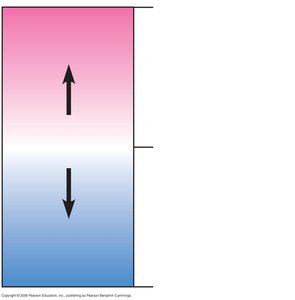
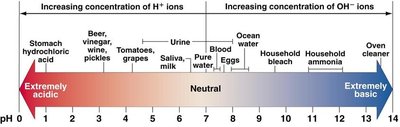
pH measures the concentration of H+ ions in solution, ranging from 0 (acidic) to 14 (basic). Neutral pH is 7.
Formula:
Acidic: pH < 7
Basic: pH > 7
Buffers
Buffers resist changes in pH by absorbing or releasing H+ ions. The bicarbonate buffer system maintains blood pH at 7.4.
Buffer: Substance that stabilizes pH.
Bicarbonate Buffer: HCO3- and H2CO3 pair in blood.
Organic Molecules and Biomolecules
Monomers and Polymers
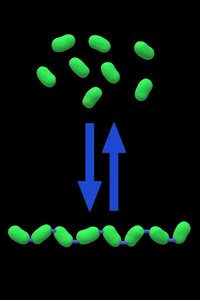
Biomolecules are large organic molecules made from smaller units called monomers. Polymers are chains of monomers.
Monomer: Small molecule, building block of polymers.
Polymer: Large molecule made of repeating monomers.
Biomolecule Synthesis and Hydrolysis
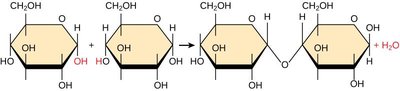
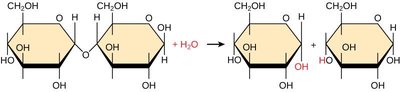
Dehydration Synthesis: Joins monomers by removing water.
Hydrolysis: Breaks polymers into monomers by adding water.
Carbohydrates
Types and Functions
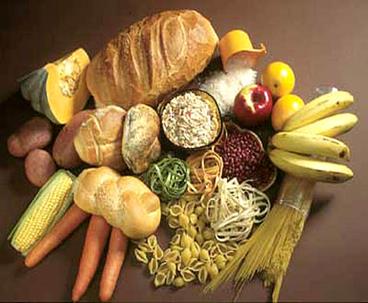
Carbohydrates are classified by the number of monomers: monosaccharides (simple sugars), disaccharides, and polysaccharides (complex carbohydrates).
Monosaccharide: Single sugar unit (e.g., glucose, ribose).
Disaccharide: Two monosaccharides joined (e.g., maltose, lactose, sucrose).
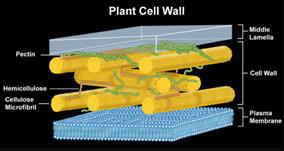
Polysaccharide: Many monosaccharides joined (e.g., glycogen, cellulose, starch).
Functions: Energy source, structural support, signaling, storage.
Lipids
Types and Functions
Lipids are hydrophobic molecules, including fatty acids, triglycerides, phospholipids, and steroids. They serve as energy storage, cell membrane components, and hormones.
Fatty Acid: Long hydrocarbon chain with carboxyl group.
Saturated: Single bonds, solid at room temperature.
Unsaturated: Double bonds, liquid at room temperature.
Triglyceride: Three fatty acids attached to glycerol.
Phospholipid: Main component of cell membranes.
Steroid: Four fused carbon rings (e.g., cholesterol).
Proteins
Structure and Function
Proteins are polymers of amino acids. They provide structural support, movement, transport, buffering, metabolic regulation, control, and defense.
Amino Acid: Monomer of proteins; 20 types.
Peptide Bond: Covalent bond joining amino acids.
Levels of Structure: Primary, secondary, tertiary, quaternary.
Denaturation: Loss of protein shape and function due to pH or temperature changes.
Enzyme: Protein catalyst for specific reactions.
Nucleic Acids
Structure and Function
Nucleic acids (DNA and RNA) are polymers of nucleotides. They store genetic information and direct protein synthesis.
Nucleotide: Monomer with sugar, phosphate, and nitrogenous base.
DNA: Double-stranded, stores genetic information.
RNA: Single-stranded, involved in protein synthesis.
Adenosine Triphosphate (ATP)
Structure and Role
ATP is the primary energy carrier in cells. It consists of adenosine (adenine + ribose) and three phosphate groups. Energy is released when the third phosphate is removed.
ATP Cycle: ATP ↔ ADP + phosphate + energy
Hydrolysis: Releases energy for cellular activities.
Equation:
Example: Muscle contraction, active transport, and biosynthesis all require ATP.
