 Back
BackChapter 2: The Chemical Level of Organization - Study Notes
Study Guide - Smart Notes
 Tailored notes based on your materials, expanded with key definitions, examples, and context.
The Chemical Level of Organization
An Introduction to the Chemical Level of Organization
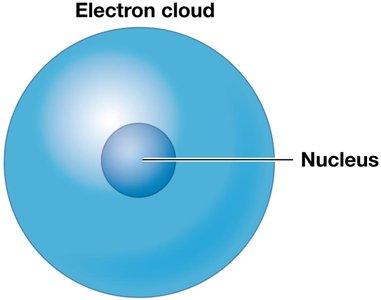
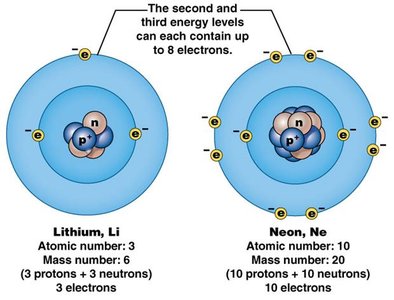
The chemical level of organization forms the foundation for understanding anatomy and physiology. Chemistry is the science that deals with the structure of matter, which is anything that takes up space and has mass. Atoms are the smallest stable units of matter and are composed of subatomic particles: protons (positively charged), neutrons (neutral), and electrons (negatively charged). Protons and neutrons are found in the nucleus, while electrons orbit around the nucleus in the electron cloud.
Atom: Smallest stable unit of matter.
Atomic number: Number of protons in an atom.
Electron cloud: Area around the nucleus containing electrons.
Electron shell: Two-dimensional representation of the electron cloud.
Elements and Isotopes
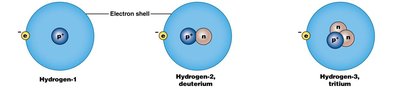
An element is a pure substance composed of atoms of one kind, which cannot be broken down into simpler substances by ordinary physical means. The human body consists of 13 main elements and 14 trace elements. Isotopes are versions of an element with different numbers of neutrons, and radioisotopes have unstable nuclei that undergo radioactive decay.
Element: Pure substance with unique atomic number.
Isotope: Atoms of the same element with different numbers of neutrons.
Radioisotope: Isotope with unstable nucleus; used in diagnostic procedures.
Half-life: Time required for half of a given amount of isotope to decay.
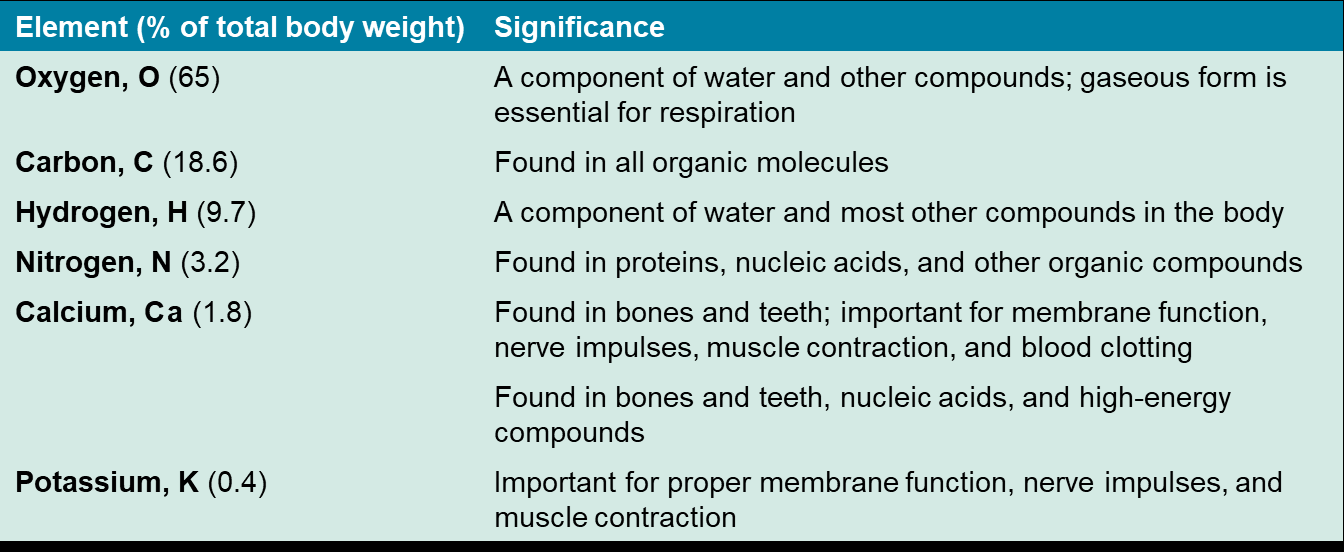
Element (% of total body weight) | Significance |
|---|---|
Oxygen, O (65) | A component of water and other compounds; essential for respiration |
Carbon, C (18.6) | Found in all organic molecules |
Hydrogen, H (9.7) | A component of water and most other compounds in the body |
Nitrogen, N (3.2) | Found in proteins, nucleic acids, and other organic compounds |
Calcium, Ca (1.8) | Found in bones and teeth; important for membrane function, nerve impulses, muscle contraction, and blood clotting |
Potassium, K (0.4) | Important for proper membrane function, nerve impulses, and muscle contraction |
Atomic Weight, Moles, and Electron Shells
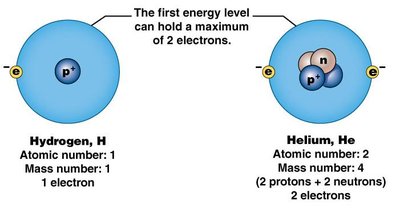
Atomic weight is the average of the different atomic masses and proportions of isotopes. A mole is a specific quantity that weighs grams equal to the atomic weight of the element and contains Avogadro’s number of atoms (6.023 x 10²³). Electron shells are energy levels that can hold a limited number of electrons, and the outermost shell (valence shell) determines chemical properties.
Atomic weight: Average mass of isotopes.
Mole: Contains Avogadro’s number of atoms.
Electron shell: First shell holds 2 electrons, second 8, third 18.
Valence shell: Outermost shell; determines reactivity.
Chemical Notation
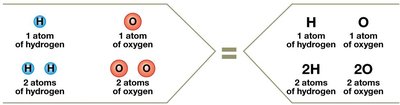
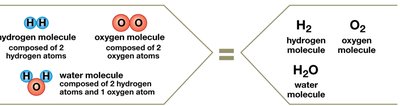
Chemical notation is used to represent atoms, molecules, and reactions. It helps describe the composition and interactions of substances.
Atoms: Represented by symbols (H, O).
Molecules: Represented by formulas (H2O).
Molecules and Compounds
Ionic Bonds
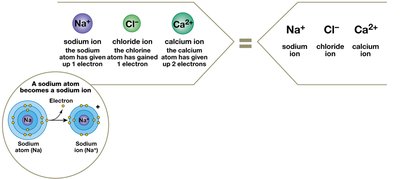
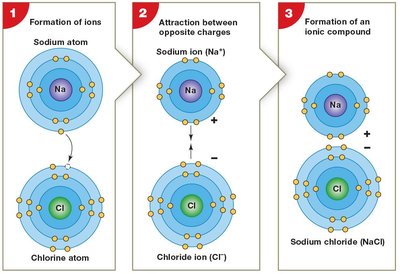
Ionic bonds are formed by the attraction between positive and negative ions. An ion is an atom with an electric charge. Ionic compounds are formed when one atom donates electrons (cation) and another accepts electrons (anion).
Cation: Positively charged ion (electron donor).
Anion: Negatively charged ion (electron acceptor).
Ionic compound: Held together by electrostatic attraction.
Covalent Bonds
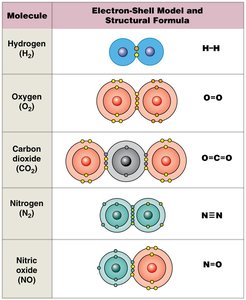
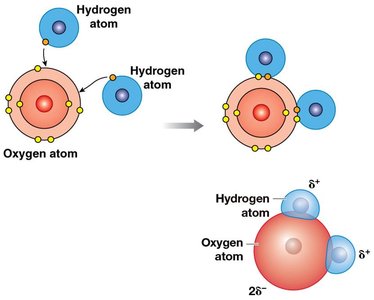
Covalent bonds are strong bonds formed when atoms share electrons. Single, double, and triple covalent bonds involve sharing one, two, or three pairs of electrons, respectively. Nonpolar covalent bonds involve equal sharing, while polar covalent bonds involve unequal sharing, resulting in polar molecules.
Single covalent bond: One pair of shared electrons.
Double covalent bond: Two pairs of shared electrons.
Triple covalent bond: Three pairs of shared electrons.
Nonpolar: Equal sharing.
Polar: Unequal sharing; partial charges.
Hydrogen Bonds
Hydrogen bonds are weak electrical attractions between the partial positive charge of hydrogen in a polar covalent bond and the partial negative charge of another atom (oxygen, nitrogen, or fluorine). They are important in water and large molecules like DNA.
Hydrogen bond: Weak attraction; responsible for water’s surface tension.
Biological importance: Stabilizes DNA and protein structures.
States of Matter
Matter exists in three states: solid (constant volume and shape), liquid (constant volume, no fixed shape), and gas (no constant volume or shape).
Solid: Definite shape and volume.
Liquid: Definite volume, variable shape.
Gas: Variable shape and volume.
Chemical Reactions
Types of Chemical Reactions
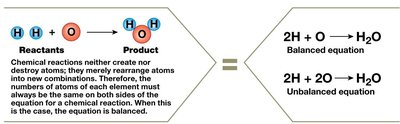
Chemical reactions result in the formation or breaking of bonds. Reactants are substances entering the reaction, and products are the resulting substances. Metabolism encompasses all chemical reactions in cells and tissues.
Decomposition: Breaks molecules into smaller fragments (catabolism).
Synthesis: Assembles larger molecules from smaller ones (anabolism).
Exchange: Rearranges components into new products.
Reversible: Can proceed in both directions; seeks equilibrium.
Decomposition reaction: Hydrolysis: Synthesis reaction: Dehydration synthesis: Exchange reaction: Reversible reaction:
Enzymes and Activation Energy
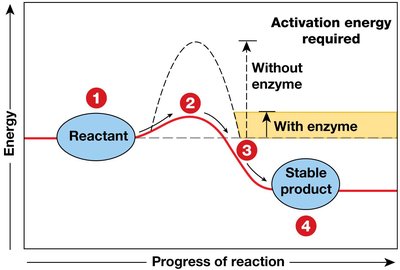
Biochemical reactions require activation energy. Enzymes are catalysts that lower activation energy and speed up reactions without being consumed. Enzymes are specific, can be regulated, and often work in series.
Activation energy: Energy needed to start a reaction.
Enzyme: Protein catalyst; lowers activation energy.
Exergonic: Net release of energy.
Endergonic: Net absorption of energy.
Inorganic and Organic Compounds
Nutrients and Metabolites
Nutrients are substances from food necessary for physiological function. Metabolites are involved in metabolism. Inorganic compounds do not contain carbon-hydrogen bonds, while organic compounds do.
Inorganic: CO2, O2, water, acids, bases, salts.
Organic: Carbohydrates, proteins, lipids, nucleic acids.
Properties of Water
Water as a Universal Solvent
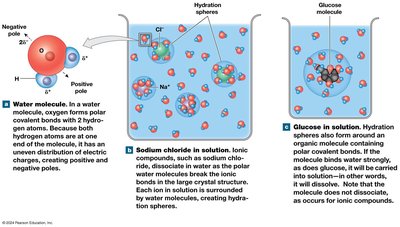
Water is the most important substance in the body, accounting for up to two-thirds of total body weight. It is a universal solvent, participates in chemical reactions, has high heat capacity, and provides lubrication.
Solution: Uniform mixture; solute dissolved in solvent.
Aqueous solution: Water is the solvent.
Reactivity: Water participates in hydrolysis and dehydration synthesis.
High heat capacity: Water changes temperature slowly.
Lubrication: Reduces friction.
Electrolytes and Body Fluids
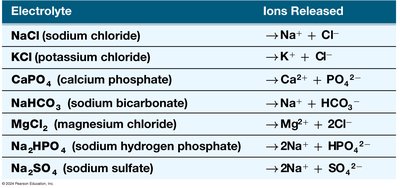
Electrolytes are soluble inorganic substances whose ions conduct electricity in solution. Electrolyte balance is vital for body function.
Electrolyte | Ions Released |
|---|---|
NaCl (sodium chloride) | Na+ + Cl- |
KCl (potassium chloride) | K+ + Cl- |
CaPO4 (calcium phosphate) | Ca2+ + PO42- |
NaHCO3 (sodium bicarbonate) | Na+ + HCO3- |
MgCl2 (magnesium chloride) | Mg2+ + 2Cl- |
Na2HPO4 (sodium hydrogen phosphate) | 2Na+ + HPO42- |
Na2SO4 (sodium sulfate) | 2Na+ + SO42- |
Hydrophilic and Hydrophobic Compounds
Hydrophilic compounds interact readily with water (ions, polar molecules), while hydrophobic compounds do not (nonpolar molecules, fats, oils).
Colloid: Solution with dispersed proteins or large molecules (e.g., blood plasma).
Suspension: Contains large particles that settle out (e.g., whole blood).
Solution: Particles remain evenly dispersed (e.g., salt solution).
pH and Homeostasis
pH Scale
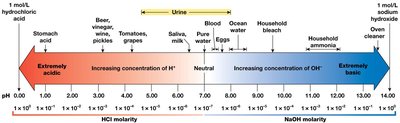
pH is the negative logarithm of the hydrogen ion concentration [H+] in moles per liter. Neutral pH is 7.0, acidic pH is less than 7, and basic (alkaline) pH is greater than 7. Human blood pH ranges from 7.35 to 7.45.
Acidic: More H+ than OH-.
Basic: Fewer H+, more OH-.
Inverse relationship: More H+ = lower pH.
Acids, Bases, and Salts
Acids, Bases, Salts, and Buffers
Acids are proton donors, bases are proton acceptors, and salts are ionic compounds that dissociate into cations and anions other than H+ and OH-. Buffers stabilize pH by neutralizing acids or bases.
Strong acids/bases: Dissociate completely.
Weak acids/bases: Do not dissociate completely.
Buffer system: Carbonic acid–bicarbonate system is important in humans.
Monomers, Polymers, and Functional Groups
Macromolecules and Functional Groups
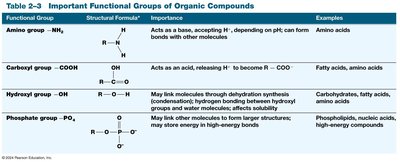
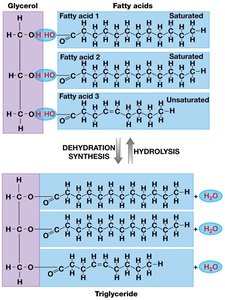
Macromolecules are large complex molecules made of monomers joined by dehydration synthesis and broken down by hydrolysis. Functional groups are specific groupings of atoms that influence the properties of organic compounds.
Functional Group | Structural Formula | Importance | Examples |
|---|---|---|---|
Amino group – NH2 | R–NH2 | Acts as a base, accepting H+ | Amino acids |
Carboxyl group – COOH | R–COOH | Acts as an acid, releasing H+ | Fatty acids, amino acids |
Hydroxyl group – OH | R–OH | May link molecules through dehydration synthesis | Carbohydrates, fatty acids |
Phosphate group – PO4 | R–PO4 | May store energy in high-energy bonds | Phospholipids, nucleic acids |
Carbohydrates
Types of Carbohydrates
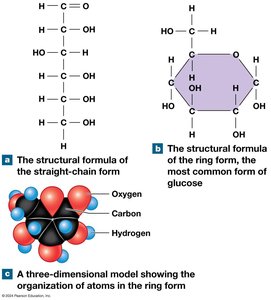
Carbohydrates are organic macromolecules containing C, H, and O in a 1:2:1 ratio. They are the most important energy source in the body and include monosaccharides, disaccharides, and polysaccharides.
Monosaccharides: Simple sugars (glucose, fructose); hydrophilic.
Disaccharides: Two monosaccharides joined by dehydration synthesis (sucrose).
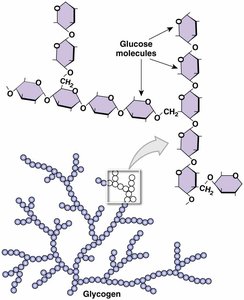
Polysaccharides: Polymers of many monosaccharides (cellulose, starch, glycogen).


Lipids
Types of Lipids
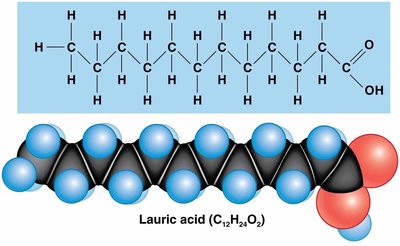
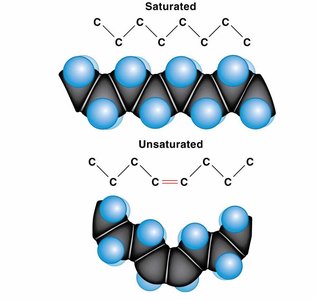
Lipids are organic macromolecules mainly hydrophobic, containing C and H at a 1:2 ratio and a little O. They serve as structural components and energy storage molecules. Types include fatty acids, eicosanoids, glycerides, steroids, phospholipids, and glycolipids.
Fatty acids: Long chains with carboxyl group; can be saturated or unsaturated.
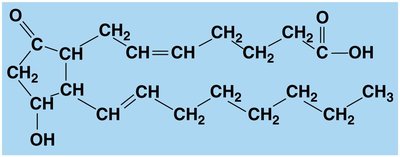
Eicosanoids: Derived from arachidonic acid; include leukotrienes and prostaglandins.
Glycerides: Fatty acids attached to glycerol; include mono-, di-, and triglycerides.
Steroids: Four-ringed structure; includes cholesterol, hormones, bile salts.
Phospholipids and glycolipids: Structural lipids; form micelles in water.
Proteins
Structure and Function of Proteins
Proteins are the most abundant and important organic molecules in the body, composed of C, H, O, and N. Amino acids are the monomers that form proteins. Functions include support, movement, transport, buffering, metabolic regulation, coordination, control, and defense.
Primary structure: Sequence of amino acids.
Secondary structure: Alpha helix or beta-sheet from hydrogen bonding.
Tertiary structure: Coiling and folding due to R group interactions.
Quaternary structure: Interaction between polypeptide chains.
Fibrous proteins: Extended sheets or strands; tough and insoluble.
Globular proteins: Compact, rounded; soluble in water.
Enzymes: Catalysts with specificity, saturation limits, and regulation.
Cofactors: Ions or molecules required for enzyme function.
Coenzymes: Nonprotein organic cofactors (e.g., vitamins).
Denaturation: Loss of structure and function due to pH or temperature changes.
Nucleic Acids
Structure and Function of Nucleic Acids
Nucleic acids are large organic molecules composed of C, H, O, N, and P. They store and process information and are used to produce proteins. Types include DNA and RNA, which are polymers of nucleotides.
DNA: Double helix; bases A, C, G, T; stores genetic information.
RNA: Single strand; bases A, C, G, U; types include mRNA, tRNA, rRNA.
High-Energy Compounds
ATP and Energy Storage
High-energy compounds are derived from nucleotides and contain high-energy bonds. Phosphorylation is the addition of a phosphate group. ATP (adenosine triphosphate) is the most important energy storage molecule, and ATPase catalyzes its breakdown to ADP.
AMP: Adenosine monophosphate; one phosphate group.
ADP: Adenosine diphosphate; two phosphate groups.
ATP: Adenosine triphosphate; three phosphate groups.
ATPase: Enzyme that breaks down ATP.
